
ISPM 15 wood packaging: why server pallets get held at customs and how to avoid it
By Comex IOR Services · Published · Last updated · 14 min read

In this guide
- What is ISPM 15 wood packaging and why does it matter for servers?
- What does a valid ISPM 15 mark look like?
- Why do server pallets get held at customs?
- What happens to non-compliant wood packaging in each destination?
- Who pays when a server pallet fails inspection?
- How do you avoid ISPM 15 holds on hardware shipments?
- Are plywood crates and plastic pallets a safe alternative?
- Shipping servers without a local importer?
- Frequently asked questions
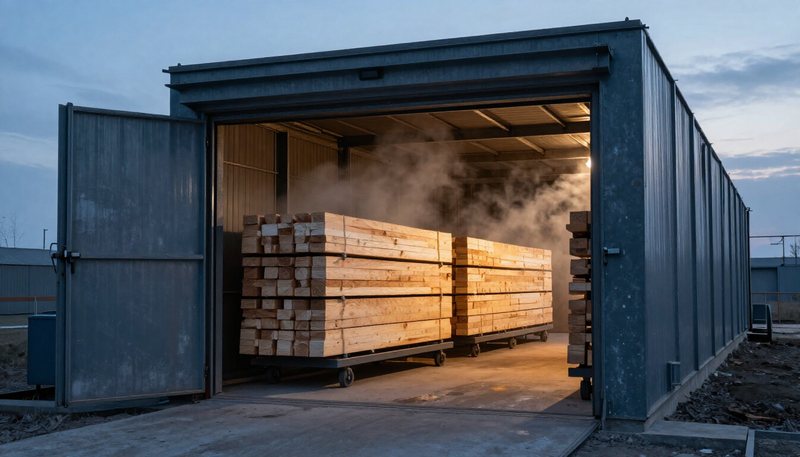
ISPM 15 wood packaging is any pallet, crate, skid or dunnage made of solid wood that has been debarked, treated against pests under the international standard ISPM 15 and stamped with the IPPC mark. Server pallets get held at customs when that mark is missing, unreadable or wrong, or when inspectors find bark or live insects in the wood.
It sounds like a detail, and for most of the supply chain it is. Nobody in procurement thinks about the pallet under a rack of GPU servers. But plant health inspectors do, and they inspect the packaging separately from the goods. A server shipment with a perfect commercial invoice, the right HS code and every license in place can still sit in a port shed for days because a single skid under one crate has no stamp. In the worst case the authorities order the packaging destroyed or the whole shipment sent back.
This guide explains what ISPM 15 requires, how to read the mark, why hardware shipments fail the check, what each of the five destinations Comex IOR Services covers does with non-compliant wood, and what to agree with your factory or integrator so the pallets never become the reason a deployment slips.
What is ISPM 15 wood packaging and why does it matter for servers?
ISPM 15 is the International Standard for Phytosanitary Measures No. 15, adopted under the International Plant Protection Convention (IPPC). It sets how solid wood packaging must be treated and marked before it crosses a border, so that wood-boring insects and other pests cannot travel with the cargo. Almost every country that imports hardware applies it.
The standard exists because raw wood is one of the oldest pest pathways in trade. Beetles that bore into timber, such as the Asian longhorned beetle, have spread to new continents inside pallets and crates, and once established they can kill urban trees and forests over large areas. Rather than inspect every board, the IPPC agreed on a treat-and-mark system: the wood is debarked, treated by an approved method, and stamped by a facility authorised by its national plant protection organisation. Customs and agriculture officers at the destination then check the stamp and look for signs of pests.
For servers, storage arrays, network switches and data center equipment, the rule matters because heavy hardware almost always ships on wood. A loaded AI server can weigh well over 100 kg, a full rack several hundred, and the cheapest strong platform is a wooden pallet or a custom crate with solid timber skids. Integrators also use wooden blocking and dunnage to keep crates from shifting inside containers, and that dunnage is wood packaging too.
The two main treatments are heat treatment and fumigation. Heat treatment, coded HT, requires the core of the wood to reach at least 56°C for a minimum of 30 continuous minutes. Methyl bromide fumigation, coded MB, exposes the wood to the gas for at least 16 hours at the regulated dosage, although several countries are phasing it out for environmental reasons. The current text published by the IPPC also recognises other approved treatments, and the wood must be debarked whatever treatment is used. You can read the full text on the IPPC page for the ISPM 15 standard.
What does a valid ISPM 15 mark look like?
A valid mark has four elements inside a border: the IPPC symbol, the two-letter ISO code of the country where the wood was treated, a unique number that the national plant protection organisation assigned to the treatment facility or manufacturer, and the code of the treatment, such as HT or MB. It must be legible, permanent and visible on at least two opposite sides.
The symbol looks like a stylised wheat ear next to the letters IPPC, and it is a registered mark, so only authorised facilities may apply it. The mark is usually burned or stencilled onto the side of the pallet blocks or onto the crate skids. Paint and ink stamps are accepted when they are permanent; a handwritten marker or a paper label stuck to the crate is not.
Three details trip up hardware shippers. First, the mark goes on the wood packaging itself, not on the goods or the outer carton, so a server boxed in cardboard on an unmarked pallet still fails. Second, a crate assembled from new and old components needs every solid wood component to be compliant, including the cleats and the blocking added at the last minute. Third, repaired or remanufactured pallets have their own marking rules, and a pallet that was simply patched with untreated boards loses its compliance.
Experienced inspectors also look at whether the mark is plausible. A crisp stamp on wood that is visibly green, wet or full of bark, or a mark with a country code that does not match where the shipment was packed, invites a closer look.
Why do server pallets get held at customs?
Most holds come from four problems: no mark at all, a mark that is illegible or incomplete, bark or live insects found on marked wood, and wood packaging nobody declared because it was hidden under the goods. Each one can trigger an inspection order, and the shipment waits until the packaging issue is resolved.
The missing mark is the classic case, and it is more common with hardware than people expect. Factories in Asia and Mexico that ship regularly to the United States or Europe usually have treated pallets in stock. The trouble starts when the order is unusual: a refurbished lot packed in a broker's warehouse, a rack integrated by a smaller system builder, an RMA replacement shipped from a regional depot, or a crate built in a hurry to meet a vessel cut-off. Those are exactly the moments when someone grabs whatever pallet is on hand.
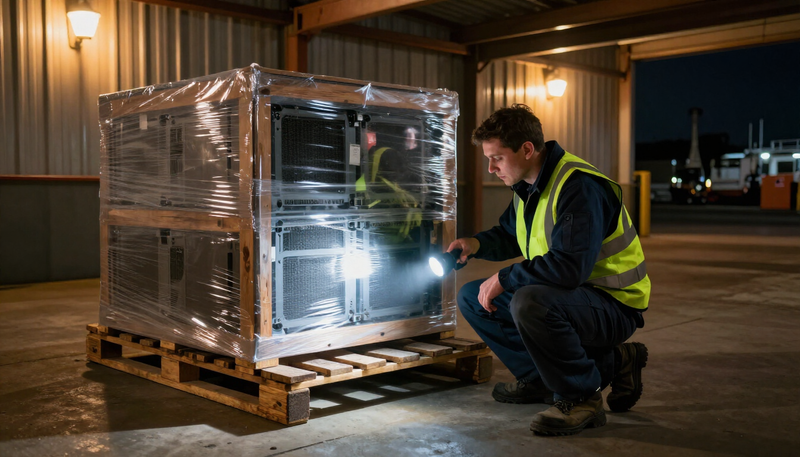
Illegible marks are the second problem. Stamps applied with too little ink, marks covered by stretch film or strapping, and marks on the inner face of a skid where nobody can read them without unloading the container all count against the shipment. Inspectors are not required to dismantle a crate to find the stamp.
The third problem is evidence of pests on wood that is marked. Live insects, fresh frass or exit holes, or more bark than the standard tolerates, tell the inspector the treatment did not happen or did not work, and the mark no longer protects the shipment. This is less common but more serious, because some authorities then treat the whole container as a pest risk.
Finally, dunnage and blocking are easy to forget. A container of servers may be on plastic pallets, but the timber braces used to hold the load in place are wood packaging, and they need the same treatment and mark. Our guide on how to import refurbished servers explains why used equipment lots, often repacked by brokers, are the shipments most exposed to this problem.
What happens to non-compliant wood packaging in each destination?
Every destination follows ISPM 15, but the consequences of a failed check differ. Depending on the country, the wood can be treated, separated from the goods and destroyed, or sent back with the cargo, and the costs usually fall on the importer or the operator holding the goods.
In the United States, the US Department of Agriculture's Animal and Plant Health Inspection Service (APHIS) sets the rules under 7 CFR 319.40-3 and US Customs and Border Protection (CBP) enforces them at the ports. APHIS states that shipments containing non-compliant wood packaging will not be allowed to enter. CBP issues an Emergency Action Notification, and the options include safeguarding the shipment, destroying the wood under supervision or re-exporting the shipment when it cannot be brought into compliance. CBP can also assess penalties against the responsible party.
In the European Union, the rules come from the Plant Health Regulation, Regulation (EU) 2016/2031, and its Implementing Regulation (EU) 2019/2072, which requires wood packaging from outside the Union to be treated and marked under ISPM 15. Implementing Regulation (EU) 2025/1953, which entered into force in December 2025, tightened the measures against two longhorned beetles, Anoplophora glabripennis and Anoplophora chinensis, including for wood packaging of certain tree genera coming from demarcated areas.
Brazil replaced its old rule with Portaria MAPA nº 514 of 8 November 2022, which governs the inspection and phytosanitary certification of wood packaging in imports and exports. The Ministry of Agriculture's international agricultural surveillance service, Vigiagro, inspects it at the border.
Argentina updated its regime this year. SENASA Resolution 873/2026, in force since 17 October 2026, replaced Resolution 614/2015 and Resolution 980/2025. Uruguay applies Decree 156/006, which covers wood packaging entering under any regime, free zones included.
| Destination | Main rule | What the importer must do | If the packaging fails |
|---|---|---|---|
| United States | APHIS, 7 CFR 319.40-3, enforced by CBP | Ensure all wood packaging is ISPM 15 treated and marked | Emergency Action Notification; safeguarding, destruction under supervision or re-export; possible CBP penalties |
| European Union | Regulation (EU) 2016/2031 and Implementing Regulation (EU) 2019/2072 | Ensure ISPM 15 treatment and marking; extra checks for some tree genera | Treatment, destruction or refusal of entry decided by the member state's plant health authority |
| Brazil | Portaria MAPA nº 514/2022 | Present the shipment for Vigiagro inspection when required | Return abroad or destruction, normally within 30 days of the agricultural notification, in customs-controlled areas |
| Argentina | SENASA Resolution 873/2026 | File the wood packaging sworn declaration in SIG-Embalajes before arrival | Treatment, fumigation, incineration, processing or return; destruction costs charged to the importer |
| Uruguay | Decree 156/006 | Ensure ISPM 15 compliance, including for free zone entries | Return to origin or destruction, at the operator's choice and cost |
Two points in the table deserve attention. Argentina's sworn declaration has to be filed by the customs broker or carrier agent before the packaging arrives, through SENASA's SIG-Embalajes system linked to the customs system, and it stays valid for 15 calendar days after payment. SENASA then uses a risk matrix to decide which shipments get a physical inspection. And in Brazil, any treatment, separation or destruction must happen in the customs-controlled area where the inspection took place, so the wood cannot be taken to a cheaper yard outside the port.
Who pays when a server pallet fails inspection?
In practice, the importer pays. The authorities deal with the party responsible for the goods at the border, and that is the importer of record, sometimes together with the carrier or the terminal operator. Who ultimately absorbs the cost depends on the sales contract, but the bill arrives at the importer first.
The direct costs are rarely the biggest item. Fumigation, destruction of a few pallets or re-palletising a crate costs money, but the real damage is time: storage at the terminal, demurrage on the container, a technician waiting on site, and, if the cargo has to be re-exported, a second international freight leg. For a cluster of AI servers bought to start generating revenue on a fixed date, a week of delay can cost far more than the pallets.
Argentina's new resolution states plainly that the costs of destroying non-compliant packaging are borne by the importer, or by the depot operator in some cases, and violations can lead to sanctions under Law 27.233. Uruguay's decree likewise puts all costs of return or destruction on the trade operator. In the United States, CBP penalties are assessed against the party responsible for the shipment, which is one more reason foreign vendors without a US entity use an Importer of Record instead of improvising a consignee.
That is why the packaging belongs in the contract. A clause requiring ISPM 15 compliant packaging for all solid wood components, with the cost of any non-compliance charged back to the shipper, turns a vague expectation into an obligation someone has to check before the goods leave.
How do you avoid ISPM 15 holds on hardware shipments?
Treat the packaging as part of the compliance file, not as a logistics afterthought. Ask for ISPM 15 packaging in writing, get photos of the marks before the container is closed, and make sure your importer and broker know what the shipment is packed on before it arrives.
A short checklist covers most of the risk:
- Write ISPM 15 compliance for all solid wood packaging, including dunnage and blocking, into the purchase order and the packing instructions.
- Ask the shipper for photos of the marks on two opposite sides of each pallet or crate, taken after the goods are loaded and before stretch film covers them.
- Check that the country code in the mark is plausible for where the shipment was packed, and that no bark or damaged wood is visible.
- Tell the importer and customs broker what packaging is used, so the Argentine sworn declaration or any other advance filing is ready before arrival.
- For refurbished lots and RMA returns, confirm who repacks the goods and what pallets they use, because these are the shipments most likely to go out on untreated wood.
Two habits help beyond the checklist. Keep the marking photos with the commercial invoice and packing list, so the broker can answer an inspector's question in minutes instead of waiting for the factory to wake up in another time zone. And when a supplier ships to several of your destinations, standardise on one packaging specification that meets all of them, rather than relying on each warehouse to remember different rules.
Returns deserve their own plan. Faulty hardware going back to the manufacturer is often packed in the field, by a site team with whatever material is available. Our guide to hardware RMA returns explains how to move those units without paying duty twice, and the packaging rules apply in both directions.
Are plywood crates and plastic pallets a safe alternative?
Often, yes. Plywood, oriented strand board and other manufactured wood products are processed in a way that removes pest risk, and solid wood pieces less than 6 mm thick also fall outside the rule. Plastic, metal and corrugated pallets are not wood packaging at all, so ISPM 15 does not apply to them.
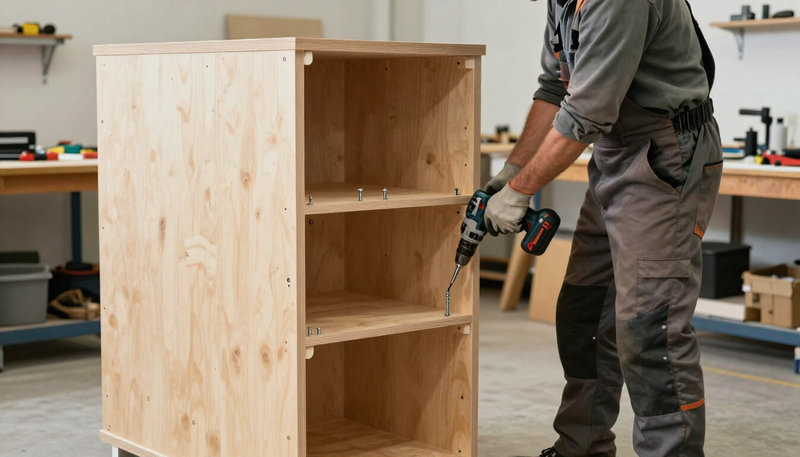
That makes engineered materials attractive for high-value hardware. A plywood crate with plywood or presswood blocks needs no IPPC mark, and many integrators already use them for racks and storage arrays because they are lighter and dimensionally stable. Plastic pallets cost more but can be reused for returns and internal moves, and they avoid the question entirely.
The catch is that a crate is only exempt if every solid wood part is. A plywood box sitting on solid pine skids, or held together with solid timber battens, still needs those components treated and marked. The same goes for the blocking inside the container. When in doubt, ask the packer to list every material used in the crate, and treat any solid timber on that list as wood packaging.
Weight also matters. Very heavy equipment, such as fully loaded racks, battery cabinets and cooling units, may need solid timber skids for strength and forklift handling. For those shipments, compliant treated wood is usually the practical answer, and our guide to data center equipment import covers the other checks that come with that kind of cargo.
Shipping servers without a local importer?
If your company sells or deploys servers, storage or network hardware in the United States, the European Union, Brazil, Argentina or Uruguay without a local entity, the pallet is one of many small details that decide whether the equipment clears on time. Tell Comex IOR Services what you are shipping, how it is packed and where it needs to go. Our team will review the packaging and documents before departure and act as your Importer of Record for server and data center hardware, so the only thing inspectors find under your crates is a clear ISPM 15 mark.
Frequently asked questions
What does the ISPM 15 mark on a pallet mean?
It shows the wood was debarked and treated against pests under the international standard ISPM 15. The mark combines the IPPC symbol, the two-letter code of the treating country, the facility number assigned by the national plant protection organisation and the treatment code, such as HT for heat treatment or MB for methyl bromide.
Does a plywood crate need an ISPM 15 stamp?
No, plywood, oriented strand board and other manufactured wood are outside the standard, as is solid wood less than 6 mm thick. But any solid timber skids, battens or blocking attached to the crate still need to be treated and marked.
What happens if a server pallet has no ISPM 15 mark in the US?
APHIS does not allow shipments with non-compliant wood packaging to enter. CBP issues an Emergency Action Notification, and the shipment must be safeguarded, the wood destroyed under supervision or the shipment re-exported. CBP can also assess penalties against the responsible party.
Do I have to declare wood packaging when importing into Argentina?
Yes. Under SENASA Resolution 873/2026, in force since 17 October 2026, the customs broker or carrier agent files a sworn declaration in the SIG-Embalajes system before the packaging arrives. It is valid for 15 calendar days after payment, and SENASA uses a risk matrix to select inspections.
Who pays when wood packaging fails inspection?
The importer, in practice. Argentina charges destruction costs to the importer, Uruguay's Decree 156/006 puts all costs of return or destruction on the trade operator, and in the United States CBP deals with the party responsible for the shipment. The sales contract can shift the cost back to the shipper.