
Can you import refurbished servers? Country-by-country rules
By Comex IOR Services · Published · Last updated · 13 min read
In this guide
- Can you import refurbished servers at all?
- What makes a server "used" or "refurbished" for customs?
- How do the rules to import refurbished servers compare by country?
- Why is Brazil the hardest market for refurbished servers?
- What changed in Argentina for used servers?
- Are refurbished servers treated differently in the United States?
- How does the EU tell a used server from electronic waste?
- What about Uruguay and its free trade zones?
- What should a refurbished server shipment carry?
- When does an Importer of Record make sense for refurbished hardware?
- Frequently asked questions
Yes, you can import refurbished servers into most markets, but the rules change sharply by country. The United States, the European Union, Argentina and Uruguay accept used IT hardware when it is declared correctly, while Brazil requires a non-automatic import license that is granted only when identical equipment is not produced locally.
Refurbished servers make a lot of sense on paper. A lab, a cloud provider or a systems integrator can deploy proven hardware for a fraction of the price of new units, and a multinational can move servers it already owns from one country to another instead of buying again. The trouble starts at customs. The same rack of second-hand servers that clears in a few days in Miami or Rotterdam can sit for weeks in São Paulo, or be treated as electronic waste if the paperwork does not prove that every unit works.
This guide explains how to import refurbished servers into Argentina, Brazil, the United States, the European Union and Uruguay when you have no local company: how customs sees used hardware, where each country draws the line, what changed recently, which documents protect the shipment and when it makes sense to bring in an Importer of Record.
Can you import refurbished servers at all?
In most of the destinations covered here, yes. Used servers are legal goods, classified under the same tariff lines as new ones, and they pay duties and taxes on their real transaction value. The exceptions are specific: Brazil restricts used capital goods, and every destination refuses equipment that looks like waste.
The first thing to understand is that "refurbished" is a commercial word, not a customs category. For customs, a server is either new or used. A unit that was tested, cleaned and resold with a warranty is still used equipment, and declaring it as new is one of the most common and most expensive mistakes we see. It can lead to penalties, to a review of the declared value and, in some countries, to the seizure of the shipment.
The second point is that the rules for used goods sit on top of the normal import rules, not instead of them. A refurbished GPU server still carries its export classification, a refurbished switch with a wireless module still needs its telecom approval, and a used storage array still needs a registered importer at destination. If the concept of an importer at destination is new to you, our guide on what an Importer of Record is explains the role and what remains your responsibility as the seller.
What makes a server "used" or "refurbished" for customs?
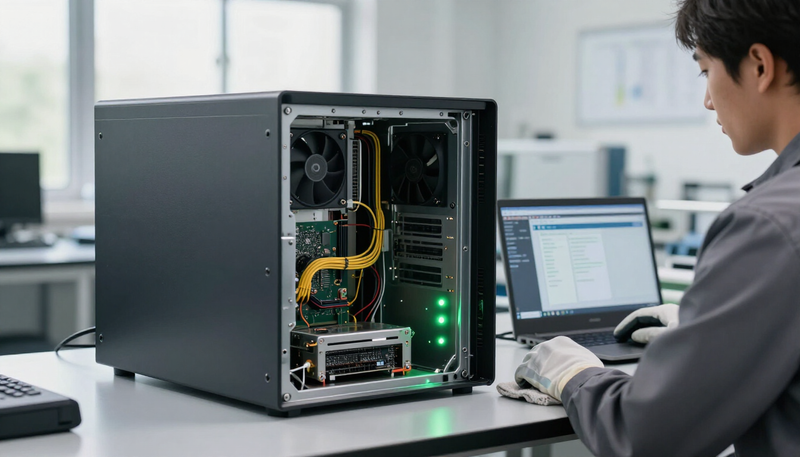
Any server that has already been placed in service, even briefly, is generally treated as used. Refurbishment does not change that status, but it does change the evidence you can offer: test reports, replaced parts, serial numbers and a clear price that customs can accept as the real value.
Classification is usually the easy part. A used rack server falls under the same heading of the Harmonized System as a new one, normally within heading 8471, and line cards, drives and power supplies keep their own codes. The difficult part is the value. Customs authorities know that used equipment trades at a discount, but they also know that low declared values are a classic way to underpay taxes. A refurbisher's invoice that shows the model, the configuration, the condition grade and the price of each unit is far easier to defend than a single line that reads "used servers, lot".
The description on the invoice matters just as much. Customs officers compare the commercial invoice, the packing list, the serial numbers on the boxes and the import declaration, and any gap between them invites an inspection. Writing "refurbished" on the invoice is fine; writing nothing about the condition is not.
How do the rules to import refurbished servers compare by country?
The core requirements are the same everywhere: a registered importer, a correct classification, a defensible value and proof that the equipment is not waste. What changes is how much friction the "used" status adds, from almost none in the United States to a prior license in Brazil.
| Destination | Are used servers allowed? | Main requirement for used equipment | Point to watch |
|---|---|---|---|
| United States | Yes | Declare as used, with real transaction value and country of origin | Section 301 duties follow the original country of origin, not the refurbisher |
| European Union | Yes | Proof that each unit works, under Annex VI of the WEEE Directive, and compliance with EU product rules | Used equipment imported from outside the EU must meet the same rules as new products |
| Brazil | Only in limited cases | Non-automatic import license under Portaria SECEX nº 249/2023, before shipment | Refused when identical goods are produced in Brazil |
| Argentina | Yes | Sworn statement that the goods are not waste, under Decreto 273/2025 | Used goods can carry a higher import duty than new ones |
| Uruguay | Yes | Declaration through a licensed customs broker, with the condition stated | Valuation of used goods and use of free trade zones |
The table is a starting point. Each shipment should still be checked item by item, because the same pallet can mix servers, network cards with radio functions, batteries and drives that each follow their own rules.
Why is Brazil the hardest market for refurbished servers?
Because Brazil does not treat used capital goods as ordinary imports. Under Portaria SECEX nº 249/2023, the import of used capital goods and their parts requires a non-automatic license, and the license is granted only when there is no proof that identical goods are produced in Brazil.
The license is analyzed by the Department of Foreign Trade Operations (Decex), not by customs, and it has to be granted before the goods are shipped. The analysis includes a review of national production, so the outcome depends on whether a Brazilian manufacturer makes equivalent equipment and on how precisely the request describes the servers. The ordinance has been amended many times, most recently by Portaria SECEX nº 523 of 15 July 2026, so the current text should be checked for every new project. The official consolidated text of Portaria SECEX nº 249/2023 on used goods imports is published on the Siscomex portal.
There are narrow routes that help. The ordinance exempts reconditioned parts and accessories used to repair or maintain IT and telecom equipment, provided the reconditioning was done by the manufacturer or by a party it accredits. Goods that enter under temporary admission, for a defined project and a defined period, also follow a different logic from a definitive import. Used consumer goods, on the other hand, are not authorized at all, which is why the classification of each item as a capital good matters.
In practice, refurbished servers rarely fit a tight Brazilian schedule. For most projects, the realistic options are buying new equipment for Brazil, using temporary admission when the servers will leave again, or starting the license process months before the hardware is needed. Our guide on how to import IT equipment into Brazil explains the Radar qualification, Anatel homologation and the tax stack that apply on top of the used goods rules.
What changed in Argentina for used servers?
Argentina moved in the opposite direction. Decreto 273/2025, published in the Boletín Oficial on 16 April 2025, eliminated the used goods import certificate, so refurbished servers no longer need prior approval. The importer files a sworn statement instead, and the goods must be declared as used.
The sworn statement is filed in the customs system and confirms that the goods are not waste under Law 24.051 and are not intended for energy recovery or final disposal. The decree also keeps a specific import duty for used goods: 100% above the regular extra-zone rate, with a ceiling of 35%. For a server line with a low duty that may be a small difference, but it should be in the landed cost model before anyone quotes the customer.
The other rules do not change because the hardware is used. The importer must be registered with ARCA, which requires a CUIT, and any item with a radio function needs its ENACOM registration exactly as a new one would. Our guide on how to import technology into Argentina covers ARCA registration, the 2026 ENACOM changes and the taxes collected at clearance.
Are refurbished servers treated differently in the United States?
Not much. The United States does not restrict imports of used servers, and customs classifies and values them the same way it does new equipment. What matters is an accurate value, the correct country of origin and the documents that any formal entry requires.
Country of origin is where refurbished hardware gets tricky. A server built in China and refurbished in another country usually keeps its Chinese origin, because cleaning, testing and swapping parts rarely amount to a substantial transformation. That means the additional duties under Section 301 can still apply, even if the seller and the invoice come from a third country.
There is also a useful rule in the other direction. Servers made in the United States that return after being exported may qualify for duty-free entry under subheading 9801.00.10 of the Harmonized Tariff Schedule, provided they were not advanced in value or improved in condition abroad. If they were repaired or upgraded abroad, other provisions may apply, with duty charged on the value of the work. Units with radio modules must still meet the FCC import conditions in 47 CFR 2.1204, whether new or used.
How does the EU tell a used server from electronic waste?
By the evidence that travels with it. Under Annex VI of the WEEE Directive, 2012/19/EU, whoever ships used electrical equipment must be able to prove that every unit works, with a test record for each item, a copy of the invoice, a declaration that nothing in the load is waste and packaging that protects the goods.
The test record has to be attached to each item or its packaging in a way that can be read without unpacking, and it must show the item name, the type number where it exists, the year of production if known, the company that did the testing, the result and the date. There are exceptions for business-to-business shipments, such as professional equipment sent back to the producer for repair under warranty, but most refurbished servers sold to a new customer will not fit them. If the evidence is missing, the shipment can be treated as waste under the EU Waste Shipment Regulation, Regulation (EU) 2024/1157, whose main provisions have applied since May 2026.
Product rules apply too. Used products imported from outside the EU and placed on the Union market for the first time must comply with the applicable EU harmonisation legislation, just like new products. For servers, that means the electromagnetic compatibility, electrical safety and RoHS requirements, and an economic operator established in the EU. Import duty is usually zero under the WTO Information Technology Agreement, but import VAT is charged in the member state of import. Our guide on how to import into the EU without an EU entity explains EORI numbers, customs representation and import VAT.
What about Uruguay and its free trade zones?
Uruguay does not ban used IT equipment. Its outright prohibitions on used goods target vehicles, under Law 17.887. Used servers can be imported through a licensed customs broker, who is mandatory for imports in Uruguay, with the condition of the goods stated in the declaration.
The practical questions are the value and the route. Used goods can draw extra scrutiny on the declared price, so a detailed refurbisher's invoice helps here as much as anywhere. Uruguay's free trade zones add an option that the other destinations do not have in the same form: equipment can be stored, tested and redistributed inside a zone without paying import taxes until it enters Uruguayan territory or is shipped to another country. For a company serving several South American markets with refurbished stock, that can be a sensible staging point, as long as the final destination accepts used equipment.
What should a refurbished server shipment carry?
A refurbished shipment needs everything a new one needs, plus proof of condition, function and origin. The documents below are the ones that, in our experience, decide whether used servers clear in days or sit in a warehouse:
- A commercial invoice that states the equipment is used or refurbished, with model, configuration, condition grade, unit price and country of origin for each line.
- A packing list with the serial number of every server, drive and major component, matching the labels on the boxes.
- A functionality test record for each unit, attached so it can be read without unpacking, as the EU requires and other customs authorities appreciate.
- A data sanitization certificate for every drive, or a note that the drives were removed, because customers and auditors will ask for it.
- The ECCN of each model, since export controls follow GPU servers and encryption hardware whether they are new or used.
- A dangerous goods declaration when the servers carry lithium batteries, such as RAID controller backup units.
- Any license or sworn statement the destination requires: the Brazilian import license, the Argentine sworn statement or the EU declaration that the load is not waste.
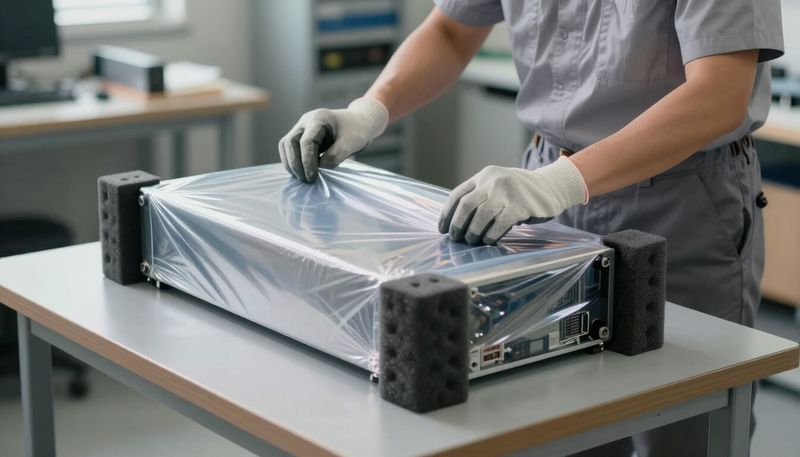
The order matters as much as the list. In Brazil the license comes before the freight, and in every destination the test records and serial numbers should be ready before the pallets are wrapped, not reconstructed after a customs officer asks for them.
When does an Importer of Record make sense for refurbished hardware?
When the servers have to be cleared and delivered in a country where neither you nor your customer has a registered importer, or when the used goods rules add enough risk that one party should own the whole process. An Importer of Record takes the legal role of importer and makes sure the invoice, the licenses and the declaration tell the same story.
The cases we see most often are a refurbisher selling to data centers in several countries, a multinational moving servers it already owns to a new subsidiary that is not yet registered, and a project that needs used hardware in Argentina or the EU quickly while new equipment is still on order.
Used hardware is a smart way to save money, but only if it can actually enter the country where it will run. If you are planning to import refurbished servers into Argentina, Brazil, the United States, the European Union or Uruguay, tell Comex IOR Services what you have, where it is and where it needs to go. As your Importer of Record for refurbished IT equipment, we will tell you plainly which countries accept it, which documents each unit needs and whether the used route still makes sense for your schedule.
Frequently asked questions
Can I import refurbished servers into Brazil?
Only in limited cases. Under Portaria SECEX nº 249/2023, used capital goods need a non-automatic import license from Decex, granted before shipment and only when identical goods are not produced in Brazil. Temporary admission can be an alternative when the servers will leave the country again.
Do I need a certificate to import used servers into Argentina?
No. Decreto 273/2025 eliminated the used goods import certificate in April 2025. The importer files a sworn statement that the goods are not waste, declares them as used and may pay a higher import duty than on new equipment, capped at 35%.
Are refurbished servers treated differently by US customs?
Not in principle. Used servers are classified and valued like new ones, but the declared value must reflect the real price and the country of origin is usually where the server was made, not where it was refurbished, which matters for Section 301 duties.
How do I prove used servers are not e-waste in the EU?
Follow Annex VI of the WEEE Directive: a functionality test record for each unit, readable without unpacking, a copy of the invoice and contract, a declaration that the load contains no waste and packaging that protects every item during transport.
Should refurbished servers be declared as new or used?
As used. Refurbished is a commercial description, not a customs category, and declaring used equipment as new can lead to penalties, a review of the declared value or seizure. State the condition, serial numbers and unit price on the invoice.
Can I use a Uruguayan free trade zone for refurbished servers?
Yes. Equipment can be stored, tested and redistributed inside a Uruguayan free trade zone without paying import taxes until it enters Uruguayan territory or is shipped to another country, as long as the final destination accepts used equipment.