
HS code for servers: how to classify servers, GPUs and network gear correctly
By Comex IOR Services · Published · Last updated · 14 min read

In this guide
- Why does the HS code for servers matter so much?
- Which HS codes apply to servers, GPUs and network equipment?
- Is a GPU card a part or a unit of a computer?
- How do the US, the EU and Mercosur extend the six-digit code?
- How can you get a binding classification before you ship?
- What are the most common HS classification mistakes with IT hardware?
- What changes with HS 2028?
- Where does an Importer of Record fit in classification?
- Frequently asked questions
The HS code for servers is usually found in heading 84.71 of the Harmonized System, with complete servers in subheading 8471.50, storage units in 8471.70 and add-in boards often in 8473.30 as parts. Switches and routers move to 8517.62. Each destination then extends those six digits into its own national code, and that code sets duties, taxes and licensing.
That is the short answer. The longer one matters because classification is the single decision that drives almost everything else in a hardware import: the duty rate, the import taxes calculated on top of it, whether a trade remedy such as Section 301 applies, which product approvals customs will check and how long the shipment will sit if an officer disagrees. A rack of GPU servers that is described as "computer parts" on one invoice and "data processing machines" on another is an invitation for questions.
This guide explains how classification works for servers, accelerators, storage and networking equipment, how the six-digit code becomes a national code in Argentina, Brazil, the United States, the European Union and Uruguay, how to get a binding answer before you ship, and the mistakes we see most often. If the idea of a party taking legal responsibility for the import is new to you, start with our guide on what an Importer of Record does.
Why does the HS code for servers matter so much?
The HS code is the legal description of your goods for customs. It decides the duty rate, the taxes built on that duty, the permits and approvals customs checks, and the statistics your shipment feeds. A wrong code can mean overpaying, underpaying with penalties later, or cargo held while customs reclassifies it.
The Harmonized System is maintained by the World Customs Organization. According to the WCO, it is used by more than 200 countries and economies as the basis for their customs tariffs, and over 98% of the merchandise in international trade is classified under it. Every country uses the same first six digits, which is why a server can carry the same core classification in Montevideo and in Rotterdam. The WCO's overview of the Harmonized System behind every HS code explains how the structure of chapters, headings and subheadings fits together.
For high-value hardware, the stakes are concrete. In the United States and the European Union, most data processing equipment covered by the WTO Information Technology Agreement enters free of ordinary duty, so the code mainly determines whether extra measures apply. In the Mercosur markets, which did not join that agreement, the code sets a duty rate that then feeds the base for import taxes, so a misclassification changes the landed cost of every unit in the order.
Classification also tells customs which other agencies care about the goods. A code in the telecom headings can trigger homologation questions, a code for lithium batteries brings transport and safety rules, and a code for encryption-capable equipment can matter for export controls on the way out. Getting it right is the first step in importing networking equipment or any other high-value hardware without delays.
Which HS codes apply to servers, GPUs and network equipment?
Most server hardware sits in Chapter 84, heading 84.71 for automatic data processing machines and their units, and 84.73 for their parts. Networking gear sits in Chapter 85, heading 85.17. Power equipment such as UPS systems and battery packs also falls in Chapter 85.
Classification follows the General Rules for the Interpretation of the Harmonized System, applied in order. Rule 1 says the heading texts and the section and chapter notes decide first; only when they do not settle the question do the later rules come in, such as classifying a composite good by the component that gives it its essential character. For IT hardware, the Chapter 84 notes that define an automatic data processing machine and its units do most of the work.
The table below shows where the most common items in a data center order usually land at the six-digit level. It is a planning guide, not a ruling: the final code depends on the product's actual functions and how it is presented at the border.
| Equipment | Usual HS heading or subheading | What decides the classification |
|---|---|---|
| Rack or blade server (complete system) | 8471.50, processing units | It is a complete processing unit, with or without storage, input or output units in the same housing |
| GPU or AI accelerator server | 8471.50 when shipped as a complete server | Classified as a system; the accelerators travel inside it |
| GPU, accelerator or network interface card shipped alone | 8473.30 (parts and accessories of 84.71) or 8471.80 (other units) | Whether it works as a separate unit or only as a part of a host machine |
| Storage array, disk shelf or JBOD | 8471.70, storage units | Whether it is a unit of a data processing system |
| Switches and routers | 8517.62, switching and routing apparatus | Its main function is to receive, convert and transmit data |
| UPS and power converters | 8504.40, static converters | Its function is to convert or condition electrical power |
| Lithium-ion battery modules | 8507.60, lithium-ion accumulators | Battery chemistry, whether shipped alone or inside the UPS |
| Server parts (motherboards, power supplies, rails) | 8473.30, or the specific heading for the part | Whether a more specific heading covers the item |
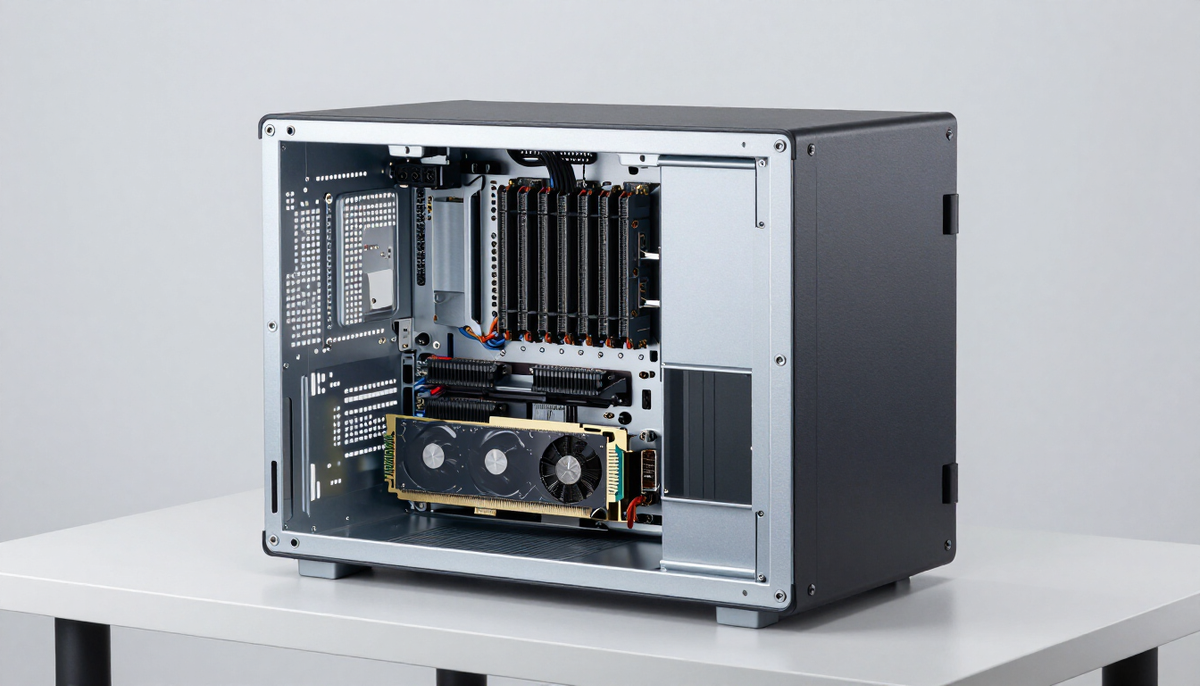
Complete systems are the easiest case. A server shipped assembled, tested and ready to install is classified as a machine, even if it contains eight accelerators worth more than the chassis. The difficulty starts when the same equipment arrives in pieces: chassis in one shipment, cards in another, drives and power supplies in a third. Each part then needs its own code, and customs looks at what each item is, not at what it will become after integration.
Is a GPU card a part or a unit of a computer?
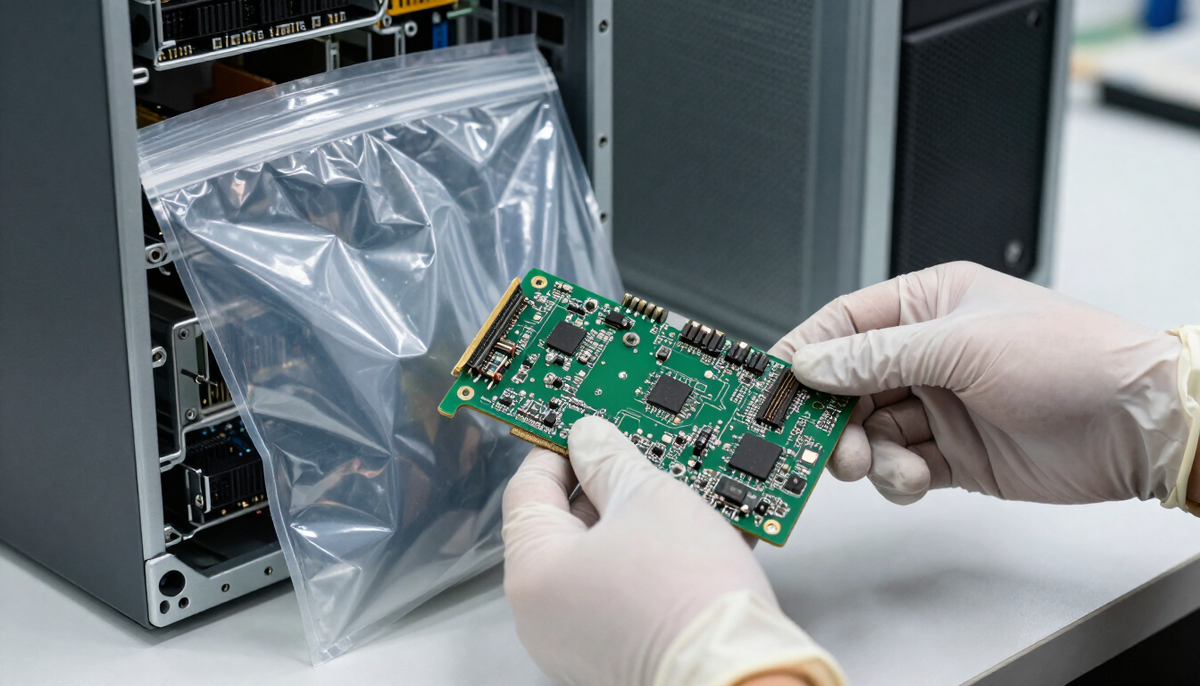
Shipped alone, a GPU or accelerator card is often classified as a part or accessory of an automatic data processing machine, in subheading 8473.30, because it cannot work without a host. Some cards that operate as independent units are argued under 8471.80. The answer depends on the product, and the code can change the duties owed.
The question is not academic. In Atlas Power LLC v. United States, decided by the US Court of International Trade on 27 January 2026 (Slip Op. 26-4), the court classified NVIDIA CMP 170HX boards, cryptocurrency-mining cards that must connect to a CPU-based machine to function, under HTSUS subheading 8473.30.1180 as parts of data processing machines. The government had argued for a residual heading for parts of electrical machines. The court also held that the boards were not covered by the Section 301 exclusions for graphics-related items, because they could not render images, so the additional duties on China-origin goods still applied.
Two lessons follow for anyone who imports accelerators. First, the function of the card, as shown in its technical documentation, drives the classification, not the marketing name. Second, the code is only half the story in the United States: the same subheading can sit under different trade measures depending on origin, and exclusions are read narrowly. If you plan to import AI servers or loose accelerator cards, the classification and the origin analysis should be done together, before the purchase order is final.
How do the US, the EU and Mercosur extend the six-digit code?
Every destination adds its own digits to the six-digit HS code. The United States uses a 10-digit HTSUS number, the European Union an 8-digit Combined Nomenclature code and a 10-digit TARIC code, and Argentina, Brazil and Uruguay share the 8-digit Mercosur Common Nomenclature (NCM). The national digits are where duty rates and local rules live.
The shared six digits make it possible to compare, but the national extensions are where two well-meaning brokers can disagree. A subheading that is a single line at the HS level may split into several national lines, for example by speed, capacity, whether the item is new or used, or whether it contains a specific function. The table summarises what changes in each of the five markets Comex IOR Services covers.
| Destination | National code | Digits | Who issues binding classification rulings | What the code drives |
|---|---|---|---|---|
| United States | Harmonized Tariff Schedule of the United States (HTSUS) | 10 | US Customs and Border Protection, under 19 CFR Part 177 | Duty rate, Section 301 and Section 232 measures, statistical reporting |
| European Union | Combined Nomenclature (CN) and TARIC | 8 and 10 | The customs authority of any member state, through Binding Tariff Information | Duty, import VAT base, anti-dumping measures, import restrictions |
| Brazil | NCM | 8 | Receita Federal, through a classification consultation under Normative Instruction RFB No. 2,057/2021 | Import duty, IPI, PIS and COFINS, Ex-tarifário eligibility, licensing |
| Argentina | NCM with a national suffix | 8 plus suffix | The customs authority under ARCA, through the procedure in General Resolution No. 1,618/2003 | Import duty, statistics fee, VAT and tax perceptions, technical requirements |
| Uruguay | NCM | 8 | The Dirección Nacional de Aduanas | Import duty and taxes, free zone and transit treatment |
The Mercosur column deserves a closer look. Because Argentina, Brazil and Uruguay share the NCM, the first eight digits of a server's code are usually the same in all three countries. What differs is what each country attaches to that code: the tax rates, the national exceptions to the common external tariff, the licensing and the technical requirements. In Argentina, the code also feeds the full landed cost calculation, and that is where many foreign sellers underestimate the real price of a delivered rack. Running an import cost analysis for Argentina on the exact NCM line before quoting avoids that surprise.
How can you get a binding classification before you ship?
Ask the destination's customs authority for a binding ruling. The European Union issues Binding Tariff Information, the United States issues binding rulings under 19 CFR Part 177, and Brazil and Argentina run formal classification consultations. A ruling turns a debatable code into a documented answer that customs has to respect.
The European system is the clearest. According to the European Commission, a BTI decision is generally valid for three years throughout the EU, regardless of where it is issued, and it is binding on all EU customs administrations and on the holder. It cannot be issued retroactively, so it protects future imports, not shipments that already cleared under a doubtful code. For a vendor that will ship the same server platform into several member states, one BTI often settles the question everywhere.
In the United States, CBP's binding rulings are published and searchable, which is useful twice: you can request one for your own product, and you can study rulings already issued for similar equipment before choosing a code. Rulings bind CBP for the specific merchandise described, so the product description in the request has to match what actually ships.
Brazil regulates classification consultations in Normative Instruction RFB No. 2,057/2021. Under its Article 33, solutions to these consultations are binding within the Receita Federal, and an importer who is not the original applicant can rely on a published solution when the goods match the description in it. In Argentina, General Resolution No. 1,618/2003 sets the procedure for classification consultations, and the customs authority keeps publishing classification criteria under it, including in 2026.
A good request is technical. Customs will want the product's functions, a datasheet, a bill of materials, photographs, how the item is packed and presented, and the code you believe applies with your reasoning. Vague descriptions produce vague answers or requests for more information, which costs time you may not have before a project deadline.
What are the most common HS classification mistakes with IT hardware?
The most common mistakes are using the supplier's export code without checking it, describing goods too generically, splitting systems into parts without classifying each part, and ignoring that new and used equipment can sit on different national lines. Each one is easy to prevent before the shipment leaves.
These are the patterns we see most often in server, storage and network imports:
- Copying the code on the supplier's commercial invoice. The exporter's code is based on the origin country's tariff and its own priorities, and the destination may read the same product differently.
- Writing "computer parts" or "IT equipment" on the invoice. Customs needs model numbers, functions and quantities to confirm a code, and generic descriptions are a classic reason for inspection.
- Classifying a split shipment as if it were the complete system. When chassis, cards and drives travel separately, each line needs its own correct code.
- Forgetting the batteries. A UPS with lithium-ion modules, or spare battery packs in the same order, adds a separate code and transport rules.
- Ignoring condition. Refurbished or used servers can sit on different national lines or need licenses, especially in Brazil and Argentina.
- Treating a ruling for one model as valid for the next generation. A new platform with a different function or configuration may need a new analysis.
Power and cooling equipment deserves a special mention, because it often arrives in the same project as the servers but under completely different headings, with its own electrical standards and safety checks. Our guide to data center equipment import covers those items in more detail.
What changes with HS 2028?
The next edition of the Harmonized System enters into force on 1 January 2028. The WCO describes 299 sets of amendments, resulting in 1,229 headings and 5,852 subheadings. National tariffs in all five markets will be updated to follow it, so codes in long-term contracts and product master data need a review.
According to the WCO, the 2028 changes focus on areas such as public health products, dietary supplements and plastic waste. The WCO's summary does not highlight changes to computers or networking equipment, but that does not mean your codes will stay the same. When the international nomenclature changes, national tariffs are renumbered and sometimes split, and the Mercosur NCM, the EU Combined Nomenclature and the HTSUS will each publish their own correlation tables.
For hardware importers, the practical step is simple: keep a list of the codes you use for each product family, check it against the national tariffs as they are published for 2028, and update invoices, ERP data and any binding rulings that rely on codes that change. A ruling issued under an old code does not automatically carry over if the code itself disappears.
Where does an Importer of Record fit in classification?
The Importer of Record signs the import declaration, so it is legally responsible for the code declared. A good IOR checks the classification before the goods ship, aligns the commercial invoice with it, requests a binding ruling when the answer is uncertain and keeps the evidence on file in case customs audits the entry later.
For a company without a local entity, that responsibility is the core of the service. The supplier knows the product, the customer knows where it will be installed, but the importer is the one customs will ask when a code looks wrong. When the Importer of Record also coordinates the broker, the logistics and the product approvals, classification stops being a last-minute question at the border and becomes part of the plan.
This is especially valuable in projects that cross several markets. A vendor shipping the same GPU platform to customers in São Paulo, Buenos Aires, Montevideo, Frankfurt and Dallas needs one consistent technical description and five national codes that each hold up under review. An Importer of Record for server imports can keep those codes aligned and make sure the invoice, the packing list and the declaration all tell the same story.
If you have servers, accelerators, storage or networking equipment heading to Argentina, Brazil, the United States, the European Union or Uruguay and you are not sure which code applies, send us the model list and the destination. The Comex IOR Services team will review the classification, tell you where a binding ruling would be worth requesting and explain how our Importer of Record services can take the shipment through customs on schedule.
Frequently asked questions
What is the HS code for a server?
A complete rack or blade server is usually classified in HS subheading 8471.50, processing units of automatic data processing machines. Each destination then adds its own digits: 10 in the US HTSUS, 8 in the EU Combined Nomenclature and 8 in the Mercosur NCM used by Argentina, Brazil and Uruguay.
Which HS code applies to network switches and routers?
Switches and routers are normally classified in subheading 8517.62, which covers machines for the reception, conversion and transmission or regeneration of voice, images or other data, including switching and routing apparatus. Radio functions can add homologation requirements in the destination.
Are GPU cards classified as computer parts?
Shipped on their own, GPU and accelerator cards are often classified as parts and accessories of data processing machines in subheading 8473.30. In January 2026 the US Court of International Trade classified NVIDIA CMP 170HX mining boards under HTSUS 8473.30.1180 in Atlas Power LLC v. United States.
Can I use the HS code on my supplier's invoice?
Only as a starting point. The exporter's code reflects the origin country's tariff, while the importer is responsible for the code declared at destination. Check the national tariff, the product's functions and published rulings before you ship.
How long is an EU Binding Tariff Information decision valid?
According to the European Commission, a BTI decision is generally valid for three years throughout the EU, regardless of the member state that issued it, and it binds all EU customs administrations and the holder. It cannot be issued retroactively.
Will HS codes for servers change in 2028?
The HS 2028 edition enters into force on 1 January 2028 with 299 sets of amendments. The WCO summary focuses on other sectors, but national tariffs will be renumbered, so review the codes in your product data, invoices and binding rulings once the 2028 tariffs are published.