
DDP for IT hardware: when Delivered Duty Paid works and when it backfires
By Comex IOR Services · Published · Last updated · 14 min read

In this guide
- What does DDP for IT hardware actually commit the seller to?
- Why do sellers and buyers choose DDP for servers and network gear?
- Can a foreign seller legally be the importer under DDP?
- Who pays import VAT under DDP, and can the seller get it back?
- When does DDP work well for IT hardware?
- When does DDP backfire, and what does it cost?
- DDP, DAP or DDP with an Importer of Record: which should you use?
- Frequently asked questions
DDP for IT hardware works when the seller already has an eligible Importer of Record in the destination, has priced duties, import VAT and homologation in advance, and knows how it will recover or absorb those taxes. It backfires when Delivered Duty Paid is quoted as a promise, without a legal importer, and servers end up held at customs.
That is the short version. The longer one matters because DDP is one of the most requested terms in high-value hardware deals. Buyers like it because the price is final and the equipment simply arrives. Sellers like it because it closes the sale. The problem is that DDP moves the entire import side of the shipment onto the seller, including roles the seller may not be allowed to play in the destination country.
This guide explains what DDP really commits the seller to, whether a foreign company can be the importer in Argentina, Brazil, the United States, the European Union and Uruguay, who ends up paying import VAT, and how to decide between DDP, DAP and a DDP structure backed by an Importer of Record. If the concept of an importer is new to you, start with our guide on what an Importer of Record is.
What does DDP for IT hardware actually commit the seller to?
Under DDP, the seller delivers the goods cleared for import, at the named place in the destination, with all import duties and taxes paid. The buyer only receives and unloads. That means the seller, not the buyer, carries out the import formalities and answers for them.
The rule comes from Incoterms 2020, the set of eleven trade terms published by the International Chamber of Commerce and in force since 1 January 2020. DDP is the only one of the eleven in which the seller pays the import duties. The ICC itself warns that foreign sellers may have difficulty carrying out import clearance in the destination country and that, where local law requires a local importer, DDP should not be used. Its guide to choosing between DAP and DDP under Incoterms 2020 puts the whole difference in one place: import clearance.
For a rack of GPU servers, a batch of enterprise switches or a storage array, that clearance is not a formality. It includes the tariff classification of each item, the declared customs value, country of origin, import duties, import VAT or its local equivalent, telecom or electrical homologation where the equipment requires it, and any import licences. Under DDP, every one of those becomes the seller's problem, even when the seller has never set foot in the destination country.
There is a second commitment that is easy to miss. Incoterms decide who pays and who performs each task, but they do not change local law. If the customs authority only accepts a locally registered company as importer, writing "DDP" in the contract does not make a foreign seller eligible. It only makes the seller contractually responsible for finding someone who is.
Why do sellers and buyers choose DDP for servers and network gear?
DDP is popular because it gives the buyer a single landed price and a single point of contact. For a data center operator or a corporate IT team, that means no customs registration, no tax payments at the border and no surprises on the invoice.
For the seller, DDP is often a commercial tool. Manufacturers and distributors of AI servers, networking equipment and storage use it to compete with local resellers, who already sell with taxes included. A buyer comparing a local quote with an international one wants to compare like with like, and DDP makes that possible.
DDP also makes sense in project deliveries, where a vendor installs equipment at the customer's site and wants control of the timeline from factory to rack. If the vendor controls the import, it controls when the hardware is released.
The catch is that those advantages assume the import side works. When it does, DDP is a good service. When it does not, the buyer still receives nothing, and the seller is the one in breach of contract.
Can a foreign seller legally be the importer under DDP?
It depends on the destination. In the United States, a foreign company can act as importer as a non-resident. In the European Union, Brazil, Argentina and Uruguay, a foreign seller generally needs a local party to take the importer role or to act for it, so DDP only works with that structure arranged before shipping.
In the United States, a non-resident company can be the importer of record with an importer number, a customs bond and, for corporations, a resident agent in the state of the port of entry who can accept service of process, as required by 19 CFR 141.18. We explain the full setup in our guide to the Importer of Record in the USA.
In the European Union, Article 170 of the Union Customs Code requires the declarant to be established in the customs territory of the Union, with limited exceptions such as transit, temporary admission and occasional declarations. A non-EU seller selling DDP therefore usually works through an indirect customs representative, who lodges the declaration in its own name on the seller's behalf and shares the liability, plus an EORI number and, in most cases, a VAT registration in the member state of import. Our article on how to import into the EU without an EU entity covers each piece.
In Brazil, only a company enabled in the Siscomex system (the "Radar" habilitation) can register an import declaration, and a foreign company cannot obtain that enablement without a Brazilian entity. Receita Federal regulates third-party imports in Normative Instruction RFB No. 1,861/2018, through the "conta e ordem" and "encomenda" models, which require the real buyer to be linked to the importer before the declaration is registered.
In Argentina, the importer must be registered in the importers and exporters registry of ARCA, the federal tax and customs agency, and the clearance is filed by a licensed customs broker. A foreign seller selling DDP needs a local importer and licensed customs brokerage in Argentina lined up before the cargo leaves. In Uruguay, a local customs broker ("despachante de aduana") is mandatory for the clearance, and goods entering a free trade zone follow a different regime from goods imported into the customs territory.
| Destination | Can a foreign seller be the importer? | What DDP requires in practice | Main DDP trap |
|---|---|---|---|
| United States | Yes, as a non-resident importer | Importer number, continuous or single-entry bond, resident agent for corporations, reasonable care in classification and value | Seller bears changing tariffs and keeps the liability for audits |
| European Union | Generally no, the declarant must be established in the EU | EORI, indirect customs representative, VAT registration in the member state of import, CE conformity | Import VAT paid but not recovered by the seller |
| Brazil | No, only Radar-enabled Brazilian companies | Brazilian importer under "conta e ordem" or "encomenda", Anatel homologation for telecom items | Tax credits end up with the wrong party, or nobody is enabled to file |
| Argentina | No, only importers registered with ARCA | Registered local importer, licensed customs broker, ENACOM approval for telecom equipment | Cargo arrives before the local importer is in place |
| Uruguay | Only through a local structure | Local customs broker, choice between free zone and customs territory | Wrong regime chosen for the final use of the equipment |

Who pays import VAT under DDP, and can the seller get it back?
Under DDP, the seller pays import VAT or its local equivalent together with the duties. Whether that tax is a cost or a recoverable credit depends on whether the importing party is registered for VAT in the destination and can deduct it.
This is where many DDP deals lose their margin without anyone noticing at first. In the European Union, import VAT on a shipment of servers is charged at the standard rate of the member state of import, where standard rates range from 17 percent in Luxembourg to 27 percent in Hungary. A non-EU seller that imports under DDP without a VAT registration in that member state pays the VAT at the border and may have no simple way to deduct it. Some member states offer deferment schemes, such as the Netherlands' Article 23 licence, which a non-EU seller typically uses through a fiscal representative. Without that planning, the import VAT becomes a hidden discount on the sale.
The buyer's side matters too. A business buyer who imports under DAP usually deducts import VAT in its own return, so for that buyer the tax is a cash-flow item, not a cost. When the seller imports under DDP, the onward sale to the buyer becomes a local supply, which in many member states means the seller registers for VAT, files returns and invoices like a local company.
Brazil shows the same problem in a different form. Import taxes there include the import duty (II), IPI, PIS and COFINS on imports and the state ICMS, and companies use the credits from several of them. If the import is structured so that the wrong party appears as importer or buyer, those credits can be lost, which changes the real cost of the equipment. That is one reason many Brazilian buyers prefer to be linked to the import as the real acquirer instead of receiving goods that someone else imported.
When does DDP work well for IT hardware?
DDP works when four conditions are met before the hardware ships: an eligible importer is in place, the landed cost has been calculated line by line, the equipment meets local product rules, and the contract says what happens if duties or tax rates change in transit.
The first condition is the one everything else depends on. In practice, it means either a seller with its own registered entity in the destination, or a specialist Importer of Record for DDP shipments that takes the legal role on the declaration and pays duties and taxes on the seller's behalf. The seller keeps the customer relationship and the DDP price; the IOR keeps the import compliant.
The second condition is a real landed cost calculation, not an estimate. That means the tariff classification of each item, the customs value including freight and insurance where the destination uses a CIF basis, the duty rate, the VAT or equivalent, brokerage fees, port or airport charges, and the cost of any homologation. For a single shipment of AI servers, a one-point error in the duty rate can cost more than the whole freight bill.
The third condition is product compliance. Radios, Wi-Fi modules and some network devices need homologation before they can be imported or sold, for example Anatel in Brazil or ENACOM in Argentina. Under DDP, a missing certificate is the seller's delay and the seller's storage bill.
The fourth condition is contractual. Tariffs can change between the order and the arrival. A clear clause that says who absorbs a new duty, and who receives any refund, protects both sides.
When does DDP backfire, and what does it cost?
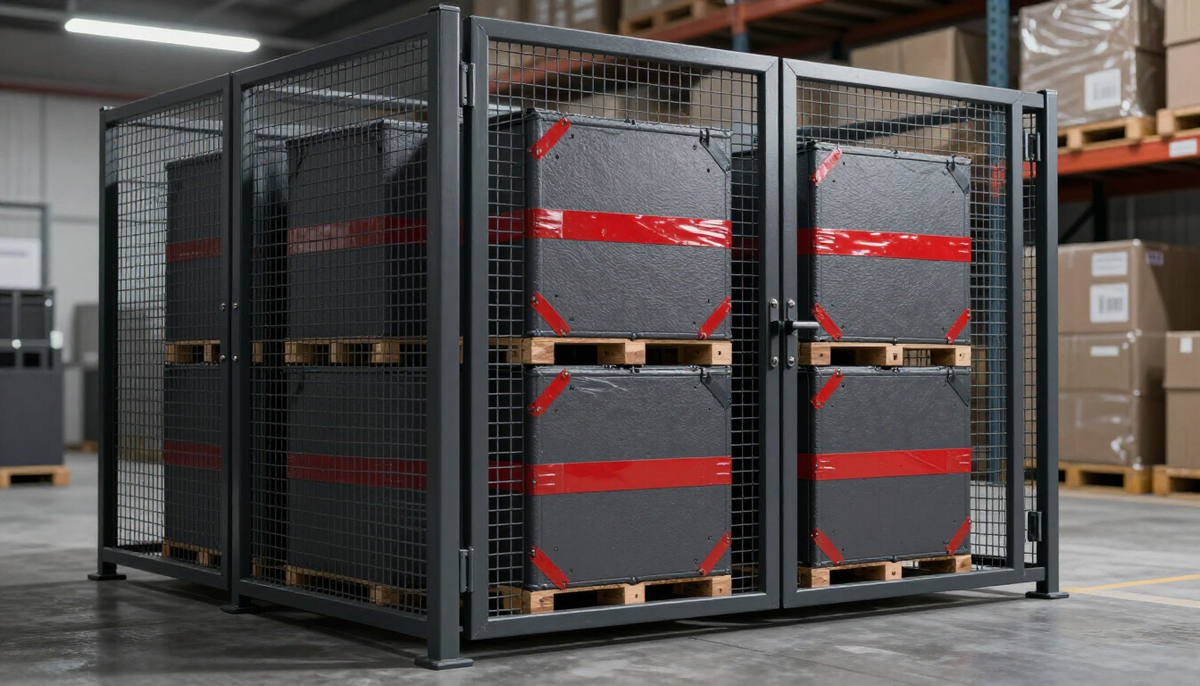
DDP backfires when the seller agrees to deliver duty paid without a legal way to import. The shipment arrives, nobody eligible can file the declaration, and the goods sit in bonded storage while the parties look for a solution.
The most common version is the forwarder quote that says "DDP, customs included". The forwarder can file the declaration as a broker, but it files in the name of an importer, and if the only candidate is the foreign seller, the declaration cannot be lodged in many destinations. The usual emergency fix is to change the importer to the buyer, which turns a DDP sale into an improvised DAP sale, with the buyer suddenly exposed to registrations and taxes it never agreed to handle.
A second version is the undervalued DDP shipment. To keep the DDP price attractive, the declared value is reduced or the goods are described as "parts" or "samples". Customs authorities compare declared values with commercial reality, and high-value servers attract attention. A reassessment, a fine or a seizure costs far more than the duty that was avoided, and under DDP the liability sits with the seller or with whoever accepted the importer role.
A third version is tariff exposure. Under DDP the seller pays whatever duty applies when the goods are entered, not when they were priced. The opposite case also exists. After the US Supreme Court ruled on 20 February 2026, in Learning Resources, Inc. v. Trump, that the International Emergency Economic Powers Act does not authorize tariffs, refunds of those duties are paid to the importer of record. In DDP sales into the United States, that importer was often the seller or its IOR, and buyers who paid DDP prices are now asking who keeps the money. Contracts that address refunds as well as increases avoid that argument.
The last version is the hardware that should never have been DDP at all. Used and refurbished servers face restrictions in several markets, and Brazil in particular controls imports of used goods. If the seller promises DDP on equipment that cannot be imported as described, no Incoterm can fix it. Our guide on how to import refurbished servers shows where those limits are.
DDP, DAP or DDP with an Importer of Record: which should you use?
Use DAP when the buyer is registered as an importer and wants to control the import and its tax credits. Use DDP only when the seller has an eligible importer in place, either its own entity or an IOR service. When the buyer has no import capacity and the seller has no local entity, a DDP structure backed by an Importer of Record is usually the only clean option.
A simple way to decide is to ask three questions in order. First, who in this deal is eligible to be the importer in the destination country today, not in three months? Second, who can recover the import VAT or equivalent taxes, and who would lose them? Third, who has the documents to prove product compliance at the border? If the answers all point to the buyer, DAP is the natural term. If they point to nobody, DDP will not fix it on its own, and the import role has to be filled before the shipment leaves.
For many hardware vendors entering Argentina, Brazil, the United States, the European Union or Uruguay for the first time, that last case is the most common. The buyer wants a delivered price, the seller wants to close the sale, and neither has a registered importer. An IOR structure makes the DDP promise real: the IOR files and pays, the seller invoices a final price, and the buyer receives cleared hardware at its door.
If you are about to quote DDP for servers, network equipment or storage, or a buyer is asking you to, tell us what the equipment is, where it ships from and where it needs to go. The Comex IOR Services team will check whether DDP is viable in that destination, what the landed cost looks like and whether our DDP import services are the right way to deliver it on time.
Frequently asked questions
What does DDP mean for an IT hardware shipment?
Under Incoterms 2020 DDP, the seller delivers the servers or network equipment cleared for import at the named destination, with import duties and taxes paid. The seller carries out import clearance and answers for classification, value, taxes and product compliance.
Can a foreign company be the importer under DDP?
In the United States, yes, as a non-resident importer with a customs bond and a resident agent. In the European Union, Brazil, Argentina and Uruguay, a foreign seller generally needs a local importer, customs representative or Importer of Record service to make DDP work.
Who pays import VAT under DDP?
The seller pays it at the border together with the duties. If the seller is not registered for VAT in the destination, it may be unable to deduct that tax, which turns import VAT into a hidden cost of the sale.
Is DAP better than DDP for servers?
DAP is usually better when the buyer is a registered importer that wants to control the clearance and keep the tax credits. DDP fits when the buyer has no import capacity and the seller has an eligible importer, its own or an IOR, in place before shipping.
What happens if DDP cargo arrives without an eligible importer?
The declaration cannot be lodged, so the hardware waits in bonded storage while storage fees and delays build up. The usual emergency fix shifts the import to the buyer, which breaks the DDP promise.
Who receives tariff refunds on a DDP shipment to the United States?
Customs refunds are paid to the importer of record. In DDP sales that importer is often the seller or its IOR, so the contract should say whether refunds, as well as new duties, are shared with the buyer.