
IOR vs EOR vs freight forwarder: who does what in a hardware shipment
By Comex IOR Services · Published · Last updated · 14 min read

In this guide
- IOR vs EOR: what is the difference?
- Who is the Exporter of Record in practice?
- Who is the Importer of Record, and why is it the role that gets stuck?
- What does a freight forwarder do, and what doesn't it do?
- IOR, EOR, forwarder and customs broker side by side
- How do Incoterms decide who plays each role?
- Can one company be both IOR and EOR?
- What goes wrong when the roles are blurred?
- How should you set up the roles before the hardware ships?
- Frequently asked questions
The difference in IOR vs EOR comes down to direction. The Importer of Record (IOR) is legally responsible for bringing goods into a country: declaring them, paying duties and taxes and meeting local rules. The Exporter of Record (EOR) answers for the goods leaving the origin country. A freight forwarder moves the cargo but holds neither legal role.
That short answer is where most hardware projects start, and it is also where many of them go wrong. A company buys a rack of GPU servers in one country, needs them running in another, and assumes that the logistics provider "handles customs". Then the shipment lands, the customs authority asks who the importer is, and nobody on the paperwork is registered to import. The cargo waits, storage fees grow and the project date slips.
This guide explains who does what in an international hardware shipment: what the Importer of Record does, what the Exporter of Record does, where the freight forwarder and the customs broker fit, how Incoterms decide who carries each responsibility, and how to set up the roles before your equipment leaves the factory. If you are new to the concept, our guide on what an Importer of Record is covers the basics first.
IOR vs EOR: what is the difference?
The IOR answers to the customs authority of the destination country; the EOR answers to the authorities of the origin country. One is responsible for the entry of the goods, the other for their exit. Both are legal roles, which means the company named in each one carries the liability if something is wrong.
The Importer of Record is the name on the import declaration. It classifies the goods, declares their value and origin, pays import duties and import taxes such as VAT or its local equivalent, and proves that the products meet local requirements, for example telecom homologation or electrical safety. If customs audits the entry two years later and finds an error, the IOR is the one that receives the assessment.
The Exporter of Record is the party that has the authority to send the goods out of the origin country and that answers for export compliance. For high-value hardware, that usually means checking whether an export license is needed, screening the buyer and the end user against restricted party lists and filing the export declaration. For AI servers and advanced GPUs, this side of the shipment has become as demanding as the import side, as we explain in our article on GPU server export controls.
One clarification avoids a common confusion: outside trade, "EOR" also stands for Employer of Record, a payroll service for hiring staff abroad. It has nothing to do with customs. In this article, EOR always means Exporter of Record.
Who is the Exporter of Record in practice?
In most shipments, the Exporter of Record is the seller or the manufacturer in the origin country, because it is the party that controls the goods and decides to ship them. The exact legal term changes from country to country, and some jurisdictions no longer use the words "Exporter of Record" at all.
In the United States, the Foreign Trade Regulations (15 CFR Part 30) speak of the U.S. Principal Party in Interest, or USPPI: the person in the United States that receives the primary benefit of the export transaction, usually the seller. Electronic Export Information has to be filed in the Automated Export System when the value of a single Schedule B or HTS classification exceeds 2,500 US dollars, or when the goods require an export license, regardless of value. The Export Administration Regulations add their own definition of "exporter" for licensing purposes, which focuses on who has the authority to determine and control the sending of the items.
The rules on imported goods that are later re-exported were also clarified recently. A final rule from the U.S. Census Bureau published in August 2025 says, among other scenarios, that a customs broker acting as Importer of Record may be the USPPI when the goods are exported within 30 calendar days of import. This matters for refurbishment flows and for equipment that passes through the United States on its way to another market.
In the European Union, the definition is stricter about location. Under Article 1(19) of Commission Delegated Regulation (EU) 2015/2446, the exporter named in an export declaration must, as a rule, be established in the customs territory of the Union. A non-EU seller that sells goods located inside the EU cannot simply put its own name in that field; an EU-established party with the right contractual position takes the role, and the non-EU seller is identified separately. Re-exports and goods carried in personal baggage are among the exceptions.
The practical point is simple. The EOR must exist and be eligible in the origin country, and its obligations are real: if a GPU server is exported without the license it needed, the fact that the buyer arranged the freight does not protect the exporter.
Who is the Importer of Record, and why is it the role that gets stuck?
The Importer of Record must be a party that the destination customs authority accepts as an importer, which in most of the markets we work with means a locally registered company. That is the obstacle for foreign sellers and for buyers without a local entity: the role cannot be left empty, and not everyone is allowed to fill it.
In the United States, a foreign company can act as importer as a non-resident, but it needs a customs bond, and federal law (19 U.S.C. 1484) requires the importer to use reasonable care in classification and valuation. In the European Union, a non-EU company generally needs an EORI number and, in most member states, an indirect customs representative who shares the liability for the declaration. Our guide on how to import into the EU without an EU entity covers that structure in detail.
In Brazil, the importer must be enabled in the Siscomex foreign trade system (the "Radar" habilitation), and Receita Federal regulates third-party import models in Normative Instruction RFB No. 1,861/2018: import on behalf of a third party ("por conta e ordem") and import by order ("por encomenda"). In both, the company that files the import declaration is the importer, and the real buyer must be linked to it in the system before the declaration is registered. In Argentina, the importer must be registered in the importers and exporters registry with ARCA, the federal tax and customs agency. In Uruguay, a local customs broker ("despachante de aduana") is mandatory for the clearance itself.
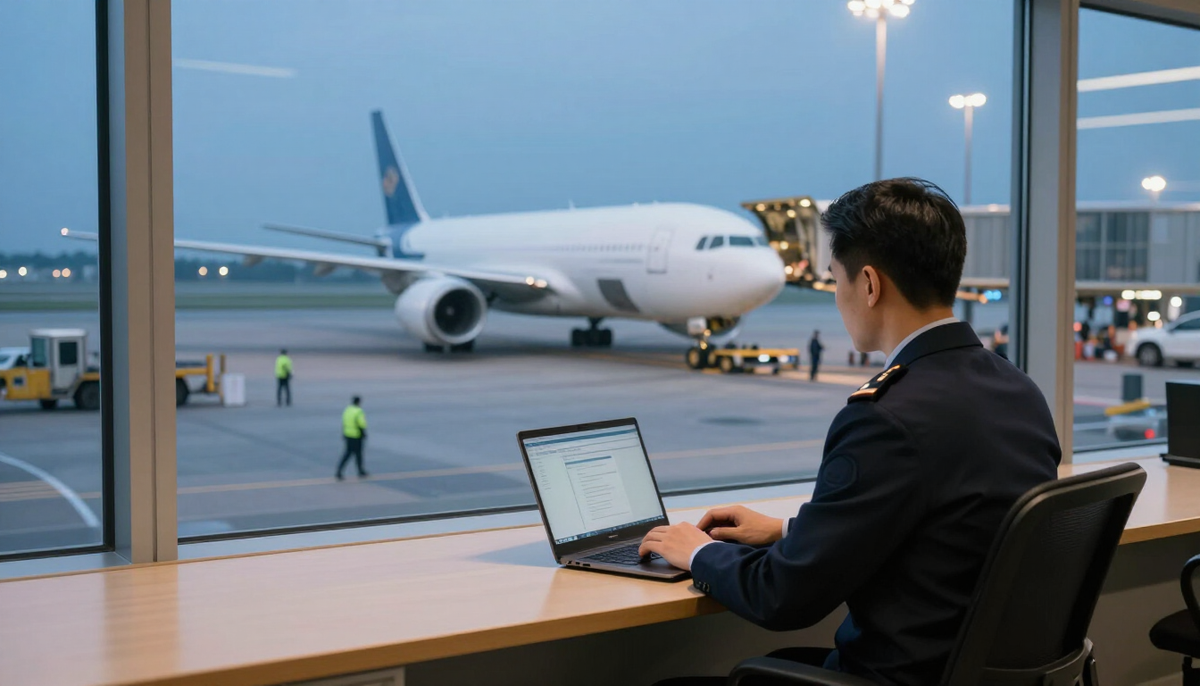
This is why the IOR is the role that most often gets stuck. The exporter is usually an established company in its home market, so that side tends to be covered. The importer side requires a registered, compliant entity in a country where the seller or buyer may have no presence at all. An Importer of Record service fills that gap: a registered company takes the legal role on the import declaration, pays duties and taxes on your behalf and keeps the compliance file, while you keep ownership of the commercial relationship.
What does a freight forwarder do, and what doesn't it do?
A freight forwarder organizes the physical movement of goods: it books air or ocean space, consolidates cargo, issues or arranges transport documents and coordinates pickup and delivery. It does not, by default, become the Importer of Record or the Exporter of Record, and it does not take on your duty or compliance liability.
The confusion comes from the fact that many forwarders also offer customs brokerage. A customs broker files declarations as an agent, and in some countries it is a regulated profession: in the United States, brokers are licensed by CBP under 19 CFR Part 111, while ocean transportation intermediaries are licensed by the Federal Maritime Commission. Acting as a broker means filing in the name and on behalf of the importer. It does not make the broker the importer.
So when a forwarder quotes "door to door, customs included", it is worth asking one direct question: whose name goes in the importer field of the declaration? If the answer is "the consignee" and the consignee has no import registration in that country, the quote covers transport and filing, but not the legal role the shipment needs.
IOR, EOR, forwarder and customs broker side by side
Each of the four roles answers a different question, and a single shipment of servers or networking equipment usually needs all of them. The table below shows what each party is responsible for and where its liability ends.
| Role | Main question it answers | Typical responsibilities | Liability for duties and compliance |
|---|---|---|---|
| Exporter of Record (EOR / USPPI / EU exporter) | Can these goods legally leave the origin country? | Export classification, license determination, restricted party screening, export declaration | Yes, for export compliance in the origin country |
| Importer of Record (IOR) | Who is legally responsible for the goods entering the destination? | Import declaration, classification and value, duties and taxes, homologation and product rules, record keeping | Yes, for import compliance, duties and taxes in the destination |
| Customs broker | Who files the declaration with customs? | Prepares and transmits declarations as an agent, advises on classification | Limited to its professional duties; the IOR or EOR remains liable |
| Freight forwarder | How do the goods physically get there? | Booking, consolidation, transport documents, insurance, delivery coordination | Liability for the carriage, not for customs compliance |
The table also shows why the roles cannot be swapped freely. A broker can file for an IOR, but cannot replace one. A forwarder can deliver to an IOR, but cannot become one simply by being in the chain.
How do Incoterms decide who plays each role?
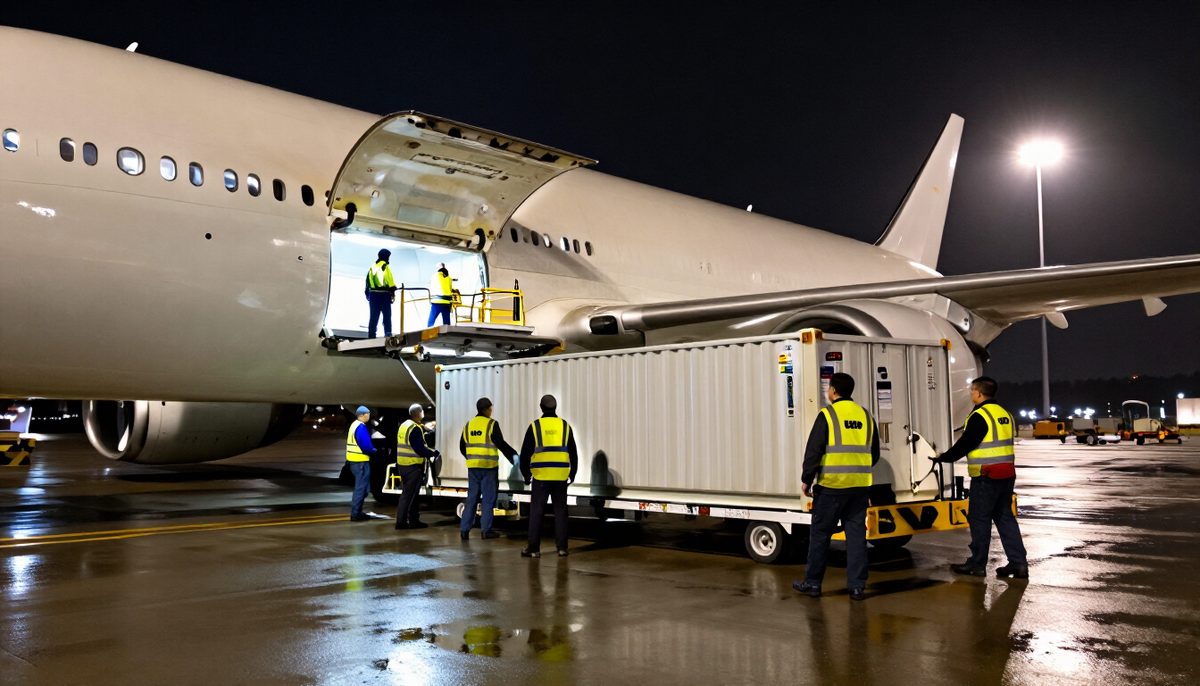
Incoterms decide which party, seller or buyer, is responsible for export clearance and import clearance, and therefore who needs to arrange an Exporter of Record and an Importer of Record. They do not create those roles; they allocate them in the sales contract.
The current version is Incoterms 2020, published by the ICC, which contains eleven rules and has been in force since 1 January 2020. Under most of them, the seller handles export clearance and the buyer handles import clearance. Two rules sit at the extremes. Under EXW (Ex Works), the seller has no obligation to clear the goods for export, which pushes export formalities onto a foreign buyer who may not be eligible to act as exporter in the origin country. Under DDP (Delivered Duty Paid), the seller must clear the goods for import and pay all import duties and taxes, which means the seller needs an Importer of Record in a country where it may have no entity.
For high-value hardware, FCA (Free Carrier) is often the cleaner choice on the export side, because the seller clears the goods for export and keeps control of export compliance. On the import side, DAP (Delivered at Place) leaves import clearance with the buyer, which works when the buyer is registered as an importer, or uses an IOR service. DDP can work well too, but only when the seller has a real Importer of Record arranged in advance, not when the term is used as a promise that "someone" will handle customs.
Can one company be both IOR and EOR?
Yes, but only in different countries and for different legs of the trip. A company can be the exporter in the country it ships from and the importer in the country it ships to, provided it is eligible in each jurisdiction. What it cannot do is act as importer in a country where it has no registration that customs accepts.
This is common inside multinational groups: the US subsidiary exports as USPPI and the Brazilian subsidiary imports with its own Radar habilitation. Two affiliated companies, two roles, one shipment. It is also how many triangular deals work, where a distributor in one country buys from a manufacturer in another and sells to a data center operator in a third. The roles follow the legal entities and the jurisdictions, not the commercial chain.
For a company without local entities, the alternative is a specialist IOR in the destination and a clearly defined exporter at origin. That keeps each responsibility with a party that is eligible to carry it.
What goes wrong when the roles are blurred?
Most problems come from one assumption: that someone else in the chain has taken a legal role that nobody actually accepted. The result is cargo stuck at destination, unexpected tax bills or, on the export side, a compliance breach that can follow the company for years.
The first pattern is the DDP quote without an importer. A seller agrees to DDP to win the deal, the forwarder quotes transport plus brokerage, and only at arrival does it become clear that the seller cannot be the importer in that country. The goods sit in a bonded warehouse while the parties look for a solution, and the cost of storage and delays often exceeds the cost of having arranged an IOR from the start.
The second pattern is the buyer named as consignee and importer without being eligible. A data center operator in Brazil without Radar habilitation for the expected volume, or an Argentine company that has not completed its importer registration, cannot clear the goods even though it is the end customer. The fix is either to complete the registration, which takes time, or to use an importer that is already enabled, as described in our guide to importing IT equipment into Brazil.
The third pattern sits on the export side. Under EXW, a foreign buyer's forwarder picks up GPU servers from a warehouse and nobody checks whether a license is required or who the end user is. The seller may believe that EXW freed it from export obligations, but export control rules focus on who controls the sending of the items and who knows where they are going. A clear EOR, a documented end-user statement and a license check before pickup avoid this.
How should you set up the roles before the hardware ships?
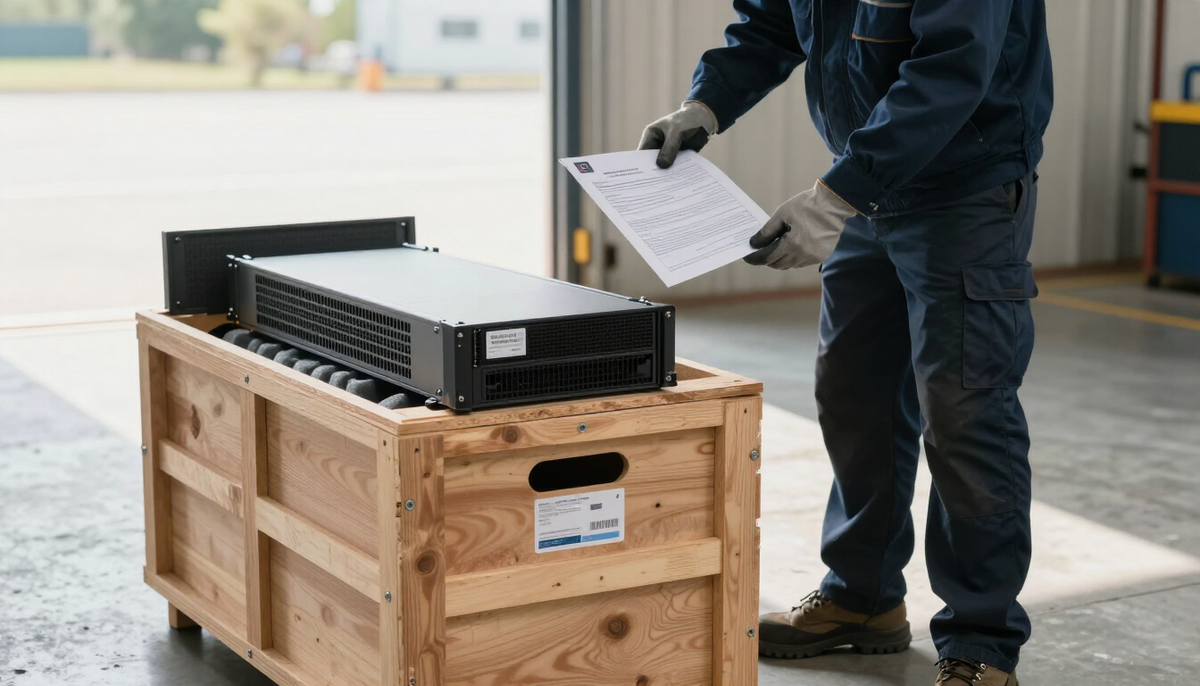
Define the four roles in writing before production ends: who is the exporter at origin, who is the importer at destination, who files each declaration and who moves the cargo. Then make sure the Incoterm in the sales contract matches that allocation.
In practice, this starts with the product. Collect technical specifications, the HS classification proposal, the country of origin and, for radio or telecom equipment, the homologation status in the destination. Then confirm the export side: export classification, license need, end-user screening and who will file. On the import side, confirm that the named importer is registered and able to clear goods of that type and value, and calculate duties and taxes in advance so that the landed cost does not surprise anyone. Finally, align the commercial invoice, packing list and transport documents so that the descriptions, values and parties match on every page. Customs authorities compare these documents, and inconsistencies between them are one of the most common reasons for holds.
When the destination is Argentina, Brazil, the United States, the European Union or Uruguay, this preparation is exactly the work an IOR partner should do with you before the equipment ships, not after it lands.
If you already have a shipment in mind, tell us what it is, where it comes from and where it needs to go. The Comex IOR Services team will tell you who should act as exporter and importer, which Incoterm fits and whether an Importer of Record for your hardware import makes sense in your case.
Frequently asked questions
What is the difference between IOR and EOR?
The Importer of Record is legally responsible for goods entering the destination country, including the import declaration, duties, taxes and product rules. The Exporter of Record answers for the goods leaving the origin country, including export classification, license checks and the export declaration.
Is a freight forwarder the same as an Importer of Record?
No. A freight forwarder organizes transport and may file declarations as a customs broker, but it acts as an agent. The Importer of Record is the party named on the import declaration and remains liable for duties, taxes and compliance.
Who is the Exporter of Record in the United States?
The Foreign Trade Regulations use the term U.S. Principal Party in Interest (USPPI), usually the US seller. Electronic Export Information must be filed when a single classification exceeds 2,500 US dollars or when the goods need an export license.
Can a non-EU company be the exporter in the European Union?
As a rule, no. Article 1(19) of Delegated Regulation (EU) 2015/2446 requires the exporter named in an export declaration to be established in the EU customs territory, with limited exceptions such as re-exports.
Who is the Importer of Record under DDP?
Under Incoterms 2020 DDP, the seller must clear the goods for import and pay import duties and taxes. If the seller has no eligible entity in the destination, it needs an Importer of Record service arranged before shipment.
Can one company act as both IOR and EOR?
Yes, on different legs of the shipment, as long as it is eligible in each country: exporter in the origin country and importer in the destination. It cannot act as importer where customs does not accept its registration.