
How to import into the EU without an EU entity: EORI, VAT and CE marking
By Comex IOR Services · Published · Last updated · 14 min read

In this guide
- Can a non-EU company import into the EU without an EU entity?
- Do you need an EORI number, and where do you get it?
- Who signs the customs declaration if you are not established in the EU?
- What does the new Union Customs Code change for non-EU importers?
- How does import VAT work when you have no EU entity?
- Which product rules apply to servers, switches and telecom hardware?
- Who does what in a typical EU hardware import?
- Which member state should be the point of entry?
- When does an Importer of Record make sense in the EU?
- Frequently asked questions
Yes, you can import into the EU without an EU entity. A non-EU company needs an EORI number, an EU-established indirect customs representative to lodge the declaration, a plan for import VAT in the member state of entry, and an economic operator in the EU for CE-marked products such as servers, switches and radios.
That short answer hides most of the work. The European Union is one customs territory with one tariff, but it is also 27 tax administrations, 27 sets of national procedures and a product safety system that expects someone inside the Union to answer for every CE-marked box. A US hardware vendor, a Brazilian integrator or an Asian manufacturer that wins a data center project in Frankfurt or Madrid usually discovers this when the freight is already booked.
This guide explains, in plain terms, what a non-EU company needs to bring servers, networking equipment, storage and telecom hardware into the European Union: the EORI number, customs representation, import VAT, CE marking and the related product rules, and what the new Union Customs Code adopted in September 2026 changes for companies without an EU establishment.
Can a non-EU company import into the EU without an EU entity?
Yes, but not entirely on its own. A company established outside the Union can be the owner of the goods and the party that pays for the import, but under the current Union Customs Code the customs declarant generally has to be established in the EU, so a non-EU business almost always works through an EU-based indirect customs representative.
The legal base today is the Union Customs Code, Regulation (EU) No 952/2013. Its Article 170(2) sets the rule that the declarant must be established in the customs territory of the Union, with limited exceptions. In practice, customs administrations in member states such as France read this together with the rules on representation and conclude that a non-established importer cannot simply use a direct representative, who would sign in the importer's name. It has to appoint an indirect representative, who lodges the declaration in its own name on the importer's behalf.
That choice has consequences. Under indirect representation, the representative and the company it represents are jointly and severally liable for the customs debt and the import VAT. For a broker, this means accepting a real financial risk on someone else's shipment, which is why representatives ask non-EU clients for more documents, more guarantees and more information about the goods than they would ask a local importer. It also explains why many vendors prefer to hand the whole import role to a specialized Importer of Record instead of negotiating representation case by case. If the concept is new to you, our guide on what an Importer of Record is explains how the role works.
A small number of member states allow non-established companies to declare in their own name under specific conditions, and some vendors also set up a VAT registration without a full subsidiary. Those routes exist, but they depend on the country and still leave the EORI, VAT and product compliance questions open.
Do you need an EORI number, and where do you get it?
Yes. Any company that lodges customs declarations in the EU, or for which declarations are lodged, needs an Economic Operators Registration and Identification number. A non-EU company registers with the customs authority of the member state where it plans its first customs operation, and that single number then works across the whole Union.
The EORI number is the identity of the business in every EU customs system. According to the European Commission's guidance on the EORI number, it can only be assigned by one customs authority, and an operator with no establishment in the Union registers in the country where it will first lodge a declaration or apply for a decision. The number starts with the two-letter code of the issuing country, followed by an identifier of up to 15 alphanumeric characters.
Two practical points save time. First, choose the issuing country deliberately. If the first shipment lands in Amsterdam but later projects will clear in Frankfurt, the Dutch EORI still works in Germany, so there is no need to register twice. Second, apply before the goods move. Processing times vary from a few days to a few weeks depending on the member state and on how complete the application is, and a shipment cannot be declared under the right party until the number exists.
Who signs the customs declaration if you are not established in the EU?
The indirect customs representative signs it, in its own name and on your behalf. That representative becomes the declarant, shares liability for duties and import VAT, and is the party customs contacts if the classification, value or origin of the hardware is questioned.
Choosing that representative is a commercial and a compliance decision at the same time. A freight forwarder may offer indirect representation as part of a transport contract, but some forwarders limit it to low-risk goods or require a deposit equal to the expected VAT. High-value hardware shipments change the picture: a single rack of AI servers can carry several hundred thousand euros of import VAT, and a representative that carries joint liability for that amount wants to know who you are, who the buyer is and whether the documents are consistent.
Customs will look at three things in particular. The tariff classification decides the duty rate and any restrictions: most servers, switches and storage arrays are covered by the WTO Information Technology Agreement and enter the EU duty-free, but accessories, power equipment and racks can fall under other headings. The customs value is normally the transaction value plus freight and insurance to the EU border, so incoterms and freight invoices matter. And origin can matter for trade defense measures or preferential treatment, especially for components and power equipment.

What does the new Union Customs Code change for non-EU importers?
It changes a lot, but gradually. The new Union Customs Code, Regulation (EU) 2026/2108, was published in the Official Journal on 19 September 2026. Most of its provisions apply from 21 September 2027, and the EU Customs Data Hub becomes mandatory for all operators only on 1 March 2034.
For the first time, the Code defines the importer, in its Article 5(13), as the person who decides to bring goods from a third country into the Union, and it places the customs debt and compliance responsibilities on that person. The reform also creates a European Union Customs Authority, based in Lille, to coordinate risk analysis across member states and to run the Customs Data Hub that will gradually replace more than 100 national customs IT systems.
For companies without an EU establishment, the direction is clear. Analyses published after adoption note that when a non-EU importer appoints an indirect customs representative, that representative will step into the importer's role and take on the related compliance obligations, including checks on product rules that customs enforces. Expect EU representatives to become more selective and to ask non-EU clients for complete technical files before accepting a shipment.
Until those provisions apply, day-to-day clearance continues under the current framework. The sensible move for a hardware vendor is to organize its EU imports now in a way that will still work in 2027: one EORI, one reliable representative or Importer of Record, consistent product files and clear VAT treatment.
How does import VAT work when you have no EU entity?
Import VAT is charged in the member state where the goods are released for free circulation, at that country's rate, on the customs value plus duty and certain costs. In January 2026, standard rates ranged from 17 percent in Luxembourg to 27 percent in Hungary, with Germany at 19 percent, France at 20 percent and the Netherlands at 21 percent.
The difficulty for non-EU companies is not the rate but the recovery. Import VAT is normally deductible for a business that is registered for VAT in that country and uses the goods for taxable sales. A foreign vendor that is not registered may pay the VAT at the border and then struggle to recover it, which turns a neutral tax into a real cost of 20 percent or more of the shipment value. On high-value hardware, that cash flow is often the single biggest issue in the import plan.
Several member states reduce the burden through deferment or postponed accounting, where import VAT is declared in the VAT return instead of being paid at the border. The Netherlands is known for its Article 23 license, and Belgium and France offer similar mechanisms. Many of these schemes require a local VAT registration and, for non-EU companies, a fiscal representative, so the decision about where to clear the goods is often a VAT decision as much as a logistics one.
The other question is who sells to whom. If you sell the servers delivered and cleared to an EU customer, you are importing and then making a domestic supply in the EU, which usually requires a VAT registration. If the customer imports the goods itself, the VAT position is simpler for you but the customer must be ready to act as importer. That is where incoterms such as DDP and DAP stop being shipping terms and become tax structures.
Which product rules apply to servers, switches and telecom hardware?
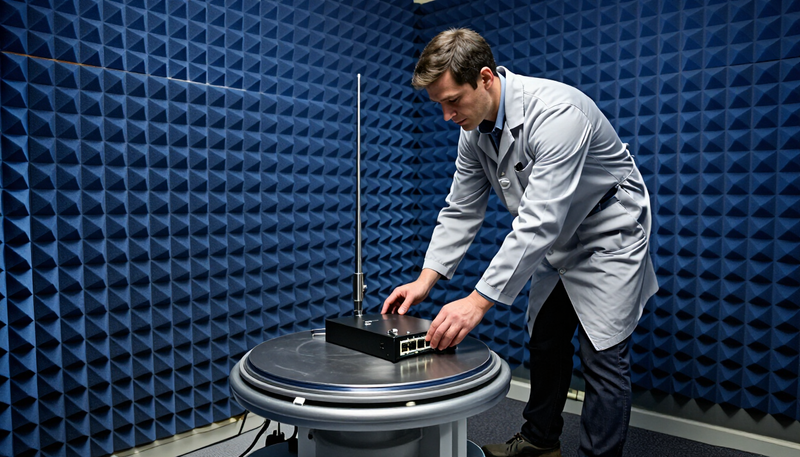
Most IT and telecom hardware placed on the EU market must carry CE marking under the Low Voltage Directive (2014/35/EU), the Electromagnetic Compatibility Directive (2014/30/EU) and, for anything with a radio, the Radio Equipment Directive (2014/53/EU), together with the RoHS rules on hazardous substances. And for these products, the EU requires an economic operator established in the Union.
That last requirement surprises many non-EU sellers. Article 4 of the Market Surveillance Regulation, Regulation (EU) 2019/1020, says that products covered by those directives may be placed on the market only if there is an economic operator established in the Union: a manufacturer, an importer, an authorized representative or a fulfillment service provider. That operator must keep the EU declaration of conformity and technical documentation available for the authorities, cooperate with them and take corrective action if a product presents a risk. Its name and postal address must appear on the product, its packaging, the parcel or an accompanying document.
Radio equipment carries extra weight. Wi-Fi access points, switches with wireless modules, 5G radios and other connected devices have had to meet the cybersecurity requirements adopted under the Radio Equipment Directive since August 2025. The Cyber Resilience Act, Regulation (EU) 2024/2847, adds another layer: since 11 September 2026, manufacturers must report actively exploited vulnerabilities and severe incidents in their products, with an early warning within 24 hours, and the rest of the regulation applies from 11 December 2027.
Two further obligations follow the hardware after delivery. Under the WEEE Directive (2012/19/EU), producers of electrical and electronic equipment must register and finance end-of-life collection in each member state where they place equipment on the market, and a producer without an establishment in that country can appoint an authorized representative there. Batteries inside UPS systems and servers bring their own registration duties under the EU batteries rules. None of this stops a shipment at the border on day one, but market surveillance authorities and buyers increasingly ask for proof before goods are installed.
Who does what in a typical EU hardware import?
The non-EU seller provides the goods and the technical documents, the indirect representative or Importer of Record handles the declaration and import formalities, and an EU-established economic operator answers for product compliance. Sometimes one party covers two roles; the point is that each task has a named owner before the freight leaves.
The table below shows how responsibilities usually fall when a non-EU company ships servers or network equipment to a customer in the European Union.
| Task | Usually responsible | When it happens |
|---|---|---|
| EORI registration | Non-EU importer, in the member state of first customs operation | Before the first shipment |
| Tariff classification and customs value | Importer with its representative, using manufacturer data | Before quoting and booking |
| Customs declaration for release into free circulation | Indirect customs representative or Importer of Record | On arrival |
| Duties and import VAT payment or deferment | Declarant and importer, jointly liable | At release, or in the VAT return if deferred |
| EU declaration of conformity and technical file | Manufacturer, held by the EU economic operator | Before placing on the market |
| Name and address of the EU economic operator on product or documents | Manufacturer and importer | Before delivery |
| WEEE and battery registrations | Producer or its authorized representative in each country | Before sales in that country |
| Export control checks on US-origin chips | Exporter at origin | Before shipping |
The last row matters for AI hardware. If the shipment contains advanced GPUs, the export side has its own licenses and end-user checks, which we cover in our guide to GPU server export controls. The EU import file should tell the same story as the export file: same end user, same site, same serial numbers.
Which member state should be the point of entry?
Choose the entry country based on where the hardware will be used, where VAT can be deferred or recovered, and which customs office and representative can handle high-value technology efficiently. Clearing in one member state and delivering to another is possible, but it creates intra-EU VAT steps that need to be planned.
Many non-EU vendors default to the Netherlands or Belgium because of their large air and sea gateways and their VAT deferment schemes, and then move the goods to the final site under the intra-Community supply rules. Others clear directly in the country of installation, such as Germany, Ireland or Spain, to keep the VAT chain short and to deal with one tax administration. There is no single right answer: a one-off delivery of AI servers to a data center near Dublin calls for a different structure than a recurring flow of switches to integrators across five countries.
Timing is the other variable. A well-prepared air shipment of servers with a valid EORI, a confirmed representative and complete documents can usually be released within a day or two of arrival. Missing documents, unclear classification of accessories or doubts about the EU economic operator can add days or weeks, especially if goods are selected for physical inspection. Storage at an airport warehouse is not cheap, and data center deadlines rarely move.
For companies that also ship to other markets, the same logic applies with different rules. Our guide on how to import AI servers compares the main destinations, including the European Union, for GPU and AI infrastructure.
When does an Importer of Record make sense in the EU?
An Importer of Record makes sense when you need hardware delivered and cleared in the EU before you have an entity there, when your customer does not want to act as importer, or when the shipment is too valuable to depend on a forwarder's standard terms. The IOR takes the import role and coordinates customs, VAT and the product documents.
The typical cases are familiar. A US server vendor wins a project with a colocation provider in Spain and must deliver duty and tax paid. A Latin American integrator sends network equipment to a customer in Portugal and has no EU registration. A manufacturer tests demand in Germany before committing to a subsidiary. In each case, the work is the same: one EORI, one party that signs and carries the declaration, a VAT position that does not lock up cash, and a technical file that an EU authority can read.
If you are planning to import into the EU without an EU entity, tell Comex IOR Services what you are shipping, where it needs to go and when it has to be running. As an Importer of Record in the European Union, we will tell you plainly which structure fits your shipment, what documents we need from you and what it would take to get your hardware cleared and delivered on time.
Frequently asked questions
Can a non-EU company get an EORI number?
Yes. A company with no establishment in the EU registers with the customs authority of the member state where it plans its first customs operation. The number, made of the country code and up to 15 characters, is then valid across the whole Union.
Does a non-EU company need an indirect customs representative?
In most cases, yes. Under the Union Customs Code the declarant generally has to be established in the EU, so a non-EU importer appoints an EU-based indirect representative, who lodges the declaration in its own name and shares liability for duties and import VAT.
Can a non-EU company recover import VAT paid in the EU?
Usually only if it is registered for VAT in the member state of import and uses the goods for taxable sales. Several countries allow import VAT to be deferred to the VAT return, but many of these schemes require a local VAT registration and, for non-EU companies, a fiscal representative.
Is there import duty on servers and network equipment in the EU?
Most servers, switches and storage systems are covered by the WTO Information Technology Agreement and enter the EU duty-free. Import VAT still applies, and accessories, power equipment or racks can fall under tariff headings with duty, so classify every item.
Who must be established in the EU for CE-marked hardware?
Under Article 4 of Regulation (EU) 2019/1020, products covered by directives such as the Low Voltage, EMC and Radio Equipment directives need an economic operator established in the EU, whose name and postal address appear on the product, packaging or accompanying documents.
When does the new Union Customs Code apply?
Regulation (EU) 2026/2108 was published on 19 September 2026. Most provisions apply from 21 September 2027, and the EU Customs Data Hub becomes mandatory for all operators on 1 March 2034. Until then, day-to-day clearance continues under the current framework.