
Data center equipment import: how to bring in UPS, cooling and racks on schedule
By Comex IOR Services · Published · Last updated · 15 min read
In this guide
- What counts as data center equipment for import purposes?
- Who can import the equipment if you have no local company?
- Why do UPS batteries slow down so many shipments?
- What changes when cooling equipment contains refrigerant?
- Racks, generators and switchgear: the heavy part of the build
- Data center equipment import rules by destination
- Can tax regimes like Redata or RIGI lower the cost?
- How do you build an import schedule that matches the construction schedule?
- Frequently asked questions
A data center equipment import works when a registered importer handles the clearance at destination, every UPS, battery cabinet, chiller, rack and generator is classified on its own invoice line, and the safety, refrigerant and battery documents are ready before the cargo leaves the factory. Missing any of these usually delays commissioning more than freight ever does.
Servers get the attention in a data center project, but they are rarely what stops the opening date. The long-lead items are the ones that keep the servers alive: uninterruptible power supplies and their battery strings, switchgear, busway, generators, chillers, dry coolers, coolant distribution units for liquid cooling, and the racks and containment that hold everything together. They are heavy, often built to order, regulated as electrical equipment and in many cases shipped as dangerous goods, and they all tend to arrive in the same narrow window before commissioning.
This guide explains how data center equipment import works in Argentina, Brazil, the United States, the European Union and Uruguay when the company building or equipping the site has no registered entity in the destination country. It covers who can act as importer, why batteries and refrigerants cause most holds, which tax regimes can change the budget and how to plan imports around the construction schedule.
What counts as data center equipment for import purposes?
For customs, there is no single category called data center equipment. A UPS, a chiller, a rack and a generator each fall under a different heading of the Harmonized System, with different duty rates and different regulatory checks, so each one needs its own description, classification and supporting documents.
A project quote may describe a "modular power and cooling package", but customs will see converters, accumulators, refrigerating equipment, steel structures, cables and engines. A UPS module is usually classified as a static converter, its battery cabinet as accumulators, a chiller or a computer room air handler as refrigerating or air conditioning equipment, a rack or enclosure according to its material and function, and a diesel generator set as a generating set with its own engine rules.
The way the equipment is shipped matters as much as what it is. Prefabricated power modules and containerized data halls can arrive as a single assembled unit, while a large UPS system can arrive as cabinets, battery strings and accessories in separate crates. The safest basis is a commercial invoice and packing list with one line per part number, a clear technical description, the country of origin of each item and the net and gross weights.
Who can import the equipment if you have no local company?
Customs in every one of these destinations needs a registered importer that files the declaration, pays the duties and taxes and answers for the goods afterwards. If neither the buyer nor the supplier has an entity in the country, an Importer of Record can take that role and clear the equipment in its own name.
This is common in data center projects. A colocation operator often contracts the build before its local subsidiary is registered, and a manufacturer or integrator may sell on delivered terms with no customs registration at destination. The paperwork can be perfect and the shipment will still sit in a bonded warehouse until someone legally able to import steps in. If the concept is new to you, our guide on what an Importer of Record is explains what the role covers and what stays with the seller and the buyer.
The importer also carries the compliance responsibility. It is the party that has to hold the declaration of conformity in the EU, the refrigerant registration where it applies, the safety evidence in South America and the classification decisions that determine the duty paid. An experienced Importer of Record for data center equipment reviews that file before the goods ship, not after they land.
Why do UPS batteries slow down so many shipments?
Batteries are the most frequent cause of holds in a data center equipment import because lithium-ion batteries are dangerous goods in transport and regulated products at destination. Each battery type has its own UN number, packing rules and documents, and an undeclared or misdeclared battery stops the whole shipment.
Modern UPS systems increasingly use lithium-ion battery cabinets instead of valve-regulated lead-acid strings, because they are smaller, lighter and last longer. For transport, that changes the paperwork. Lithium-ion batteries shipped on their own travel as UN3480, batteries packed with the equipment they power travel as UN3481, and batteries installed inside equipment also use UN3481 with different packing instructions. By air, the IATA Dangerous Goods Regulations apply, and since 1 January 2026 lithium-ion batteries packed with equipment must be offered at a state of charge not exceeding 30% of rated capacity, a limit that until 2025 was only a recommendation. By sea, the International Maritime Dangerous Goods Code applies and the carrier needs a dangerous goods declaration before booking is confirmed.
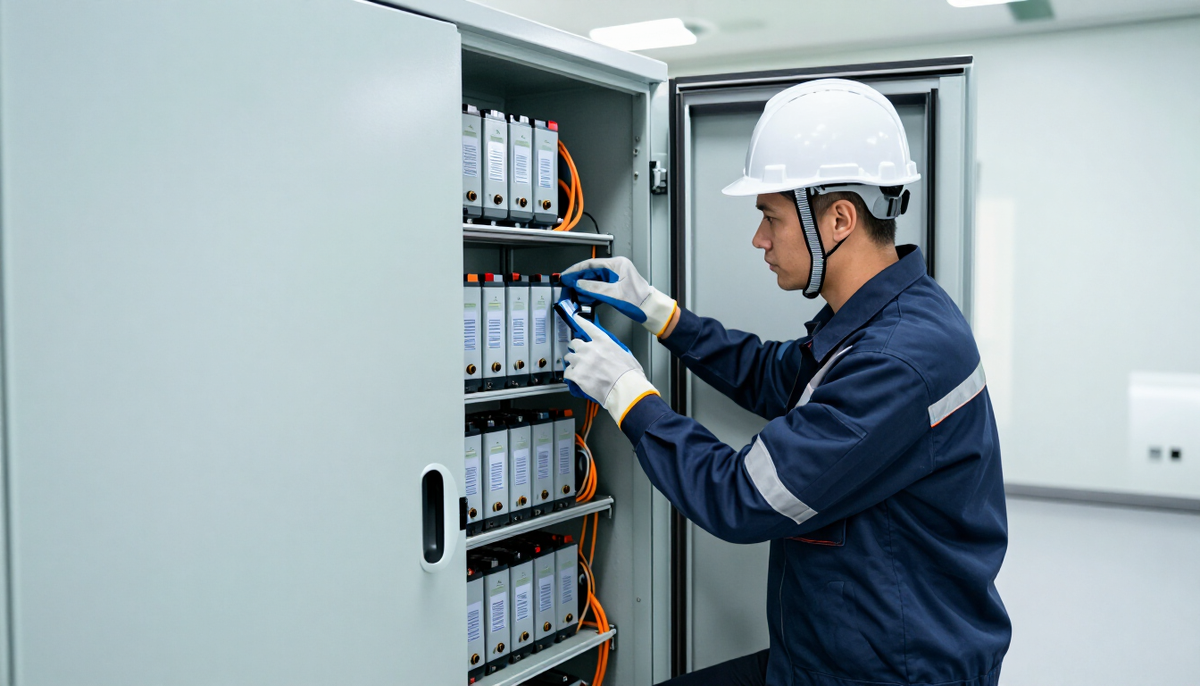
Every lithium battery design also needs a test summary showing it passed the UN Manual of Tests and Criteria, section 38.3, and the forwarder will ask for it together with the safety data sheet. Lead-acid batteries are simpler but not exempt: they still need correct classification and, in many cases, specific packing and labelling.
At destination, batteries trigger a second set of rules. In the European Union, the Batteries Regulation (EU) 2023/1542 treats UPS batteries as industrial batteries and places obligations on whoever first makes them available in each member state, including registration in the national producer register and extended producer responsibility for collection and treatment. When the importer of the UPS is a non-EU company, someone established in the Union has to carry those obligations. In practice, the cleanest solution is to plan battery shipments separately from the UPS frames when the project allows it, confirm the transport classification with the manufacturer early and make sure the importer at destination is ready to act as the producer for battery purposes.
What changes when cooling equipment contains refrigerant?
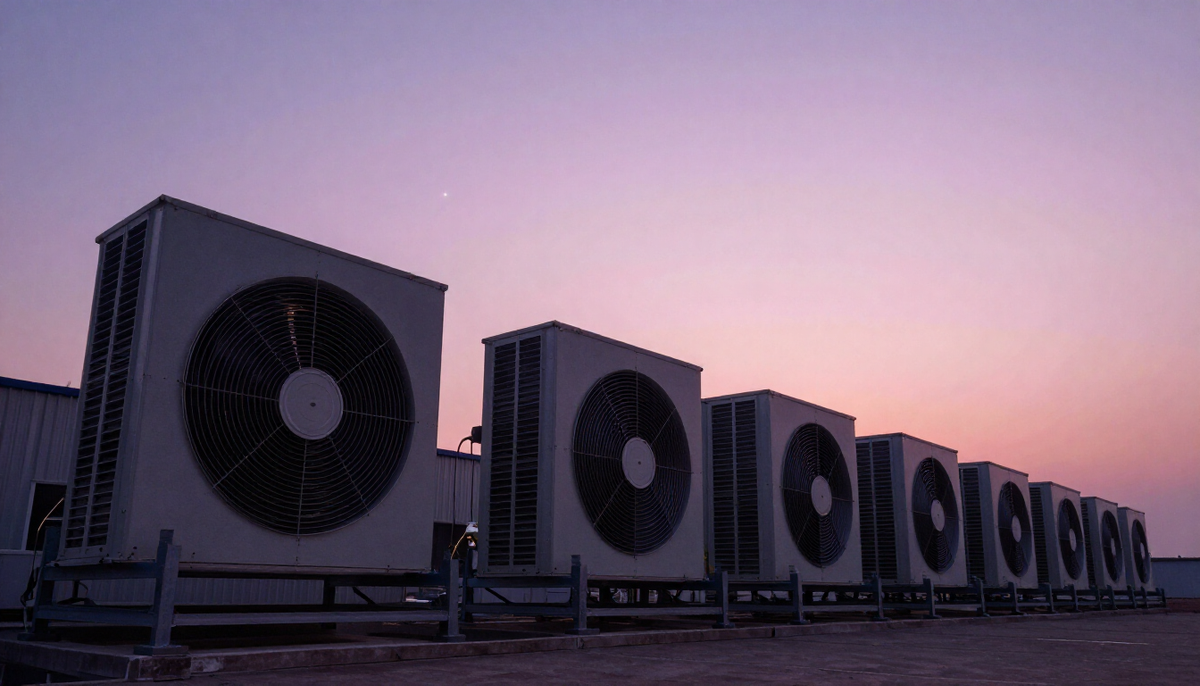
Cooling equipment that contains fluorinated gases is regulated in the EU under the F-gas Regulation (EU) 2024/573, and the importer must be registered before the equipment is released. In the other destinations, refrigerant content mainly affects transport, labelling and local environmental rules rather than the import itself.
Chillers, computer room air conditioners and some rear-door heat exchangers are often shipped pre-charged with refrigerant. When that refrigerant is a hydrofluorocarbon, the EU rules are strict. The importer of pre-charged equipment needs a valid registration in the F-gas Portal, the HFCs in the equipment must be covered by quota authorisations, the customs declaration must state the quantity of gas in tonnes and in CO2 equivalent along with the importer's F-gas Portal registration number, and the equipment must be labelled under the regulation's labelling rules. Article 11 and Annex IV also prohibit placing certain equipment on the market depending on the refrigerant's global warming potential, so the specification of the chiller has to be checked against the regulation before purchase, not at the border.
Many projects avoid part of this by choosing equipment designed for natural or low global warming potential refrigerants, or by shipping units with a nitrogen holding charge and filling them on site with certified local technicians. That is an engineering decision, but its import implications should be part of it.
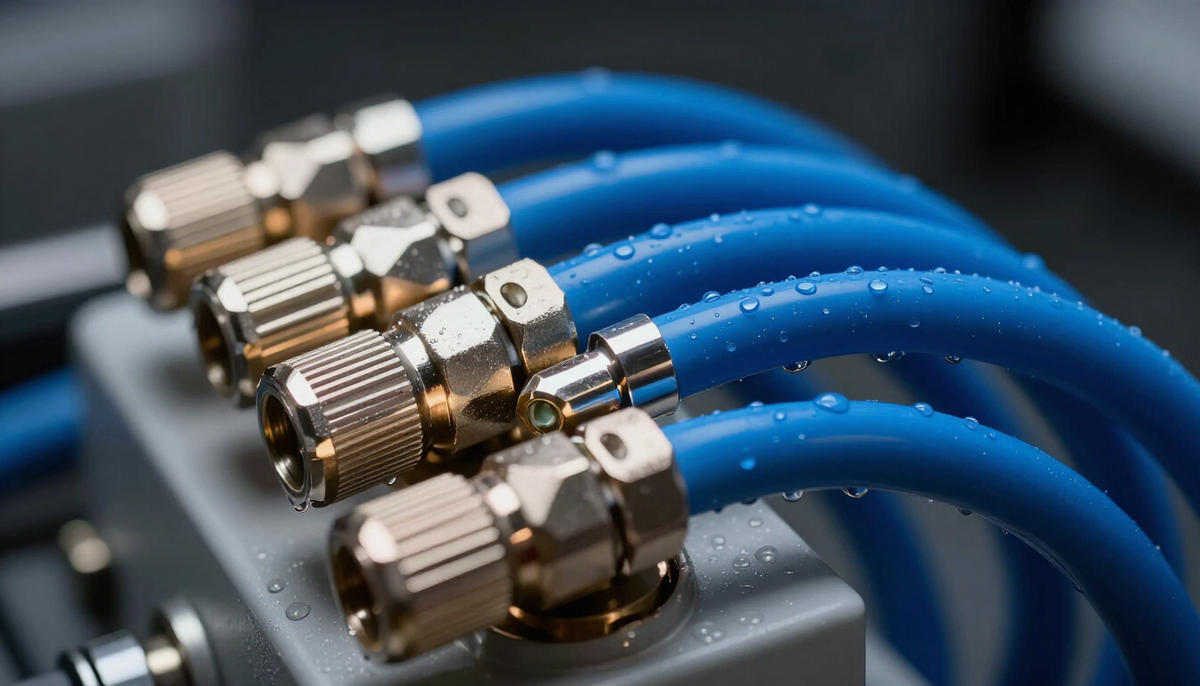
Liquid cooling adds its own items. Coolant distribution units, manifolds and quick-disconnect hoses are usually ordinary machinery and plumbing parts for customs, but the coolant itself, when shipped separately, may need a safety data sheet and, depending on its composition, dangerous goods treatment. Treating the coolant as a separate line on the invoice avoids questions later.
Racks, generators and switchgear: the heavy part of the build
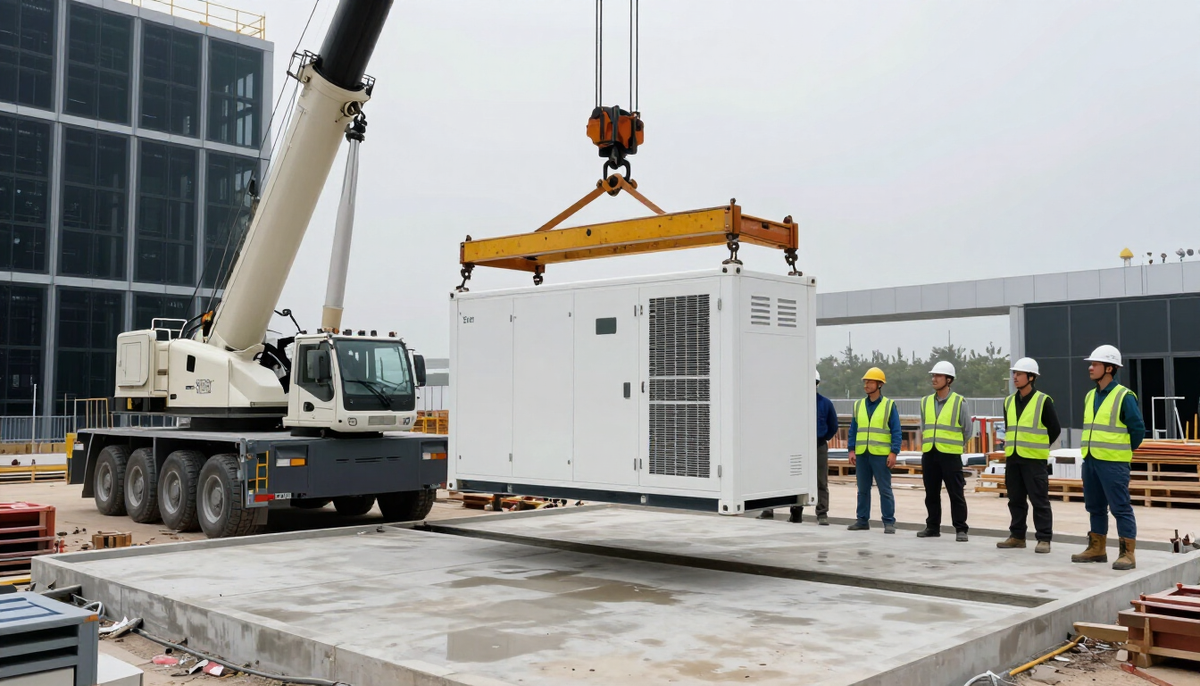
Metal-intensive equipment brings two different issues. In the United States, steel, aluminium and copper content can trigger Section 232 duties, and in every destination, generators and switchgear need electrical and machinery compliance evidence before they can be energized.
In the United States, the Section 232 duties on steel, aluminium and copper derivatives were restructured by Proclamation 11021 in April 2026 and adjusted again in June 2026, with rates that depend on how much of the product is metal and on where that metal was produced. Racks, enclosures, cable trays, busway and some electrical equipment can fall within the scope, so the classification of these items deserves the same attention as the classification of the servers. Origin matters too: Section 301 duties still apply to many goods of Chinese origin, and power and cooling equipment is frequently assembled in one country from components made in another.
For electrical equipment used in a US workplace, OSHA's electrical standard in 29 CFR 1910.303 requires equipment to be approved, which in practice means listed or certified by a Nationally Recognized Testing Laboratory. That is not a customs condition, but an unlisted UPS or switchboard can pass the border and then fail inspection by the local authority, which is worse for the schedule than a customs hold. Generators also involve the Environmental Protection Agency, because imported engines must be covered by the right emission certification and declared accordingly.
In the European Union, UPS systems, switchgear, power distribution units and most cooling equipment need CE marking under the Low Voltage Directive 2014/35/EU and the Electromagnetic Compatibility Directive 2014/30/EU, plus the RoHS Directive 2011/65/EU on hazardous substances. Generator sets and many cooling units are machinery, currently under the Machinery Directive 2006/42/EC, which will be replaced by the Machinery Regulation (EU) 2023/1230 from 20 January 2027. Equipment ordered now for delivery in 2027 should be checked against the new regulation, because the conformity documentation changes. Our guide on how to import into the EU without an EU entity covers EORI, customs representation and import VAT in more detail.
Data center equipment import rules by destination
The five destinations share the Harmonized System but differ on who can import, which compliance evidence customs or market authorities expect and which tax regimes are available. The table below summarizes the points that most often affect power, cooling and rack equipment.
| Destination | Who can import without a local company | Main compliance points for power and cooling | Tax regimes worth checking |
|---|---|---|---|
| United States | A foreign company with a customs bond and a resident agent, or an Importer of Record | NRTL listing for electrical equipment, EPA engine certification for generators, Section 232 and Section 301 checks | Duty drawback, foreign-trade zones |
| European Union | An EU-established importer or an indirect customs representative; an Importer of Record for the full role | CE marking (LVD, EMC, RoHS, machinery rules), F-gas Portal registration, battery producer obligations | Customs warehousing, end-use relief in specific cases |
| Brazil | A company enabled in Radar/Siscomex; an Importer of Record | Classification by NCM, product-specific conformity checks, restrictions on used goods | Redata, Ex-tarifário for capital goods |
| Argentina | An importer registered with ARCA; an Importer of Record | Technical regulations for electrical products after Resolution 169/2018 was repealed, ENACOM only where there is radio equipment | RIGI for large projects |
| Uruguay | A local importer working with a mandatory customs broker; an Importer of Record | Electrical safety evidence for the specific product, transport rules for batteries | Free trade zones |
In Brazil, the importer has to be enabled in Radar with the Receita Federal and file through Siscomex, and used power or cooling equipment faces the same restrictions as other used goods. New equipment that has no domestic equivalent can sometimes benefit from an Ex-tarifário reduction of the import duty on capital goods. Our article on how to import IT equipment into Brazil explains the Radar modalities and Anatel in detail.
In Argentina, Resolution 169/2018 of the Secretaría de Comercio, which for years required electrical safety certification at import for a wide range of products, was repealed in February 2025 and replaced by narrower technical regulations such as Resolution 16/2025 of the Secretaría de Industria y Comercio. Many industrial power and cooling products now fall outside those regulations, but the importer still has to confirm the status of each product, and any unit with a radio module, such as a monitoring card with wireless connectivity, still needs ENACOM approval.
In Uruguay, the main advantage is structural. Free trade zones allow equipment to be stored, assembled or used inside the zone without paying import taxes, which suits regional data center and logistics projects. Goods that leave a free zone for the Uruguayan customs territory are imported at that point, through a customs broker, with the corresponding duties and taxes.
Can tax regimes like Redata or RIGI lower the cost?
Yes, but only for projects that qualify and plan ahead. Brazil's new Redata regime suspends federal taxes on eligible equipment for data centers, and Argentina's RIGI offers customs benefits for large investments. Both require enrollment before the goods are imported.
Brazil created Redata through Law No. 15,504/2026, the Redata data center tax regime, published on 15 September 2026. It amends Law No. 11,196/2005 and allows companies that implement, modernize or expand data center services in Brazil to be enabled by the Receita Federal. Enabled companies can buy or import eligible information and communication technology products for their fixed assets with suspension of PIS/Pasep-Import, Cofins-Import, IPI and, for products with no equivalent domestic production, import duty. The suspension becomes a zero rate once the commitments are met. Those commitments are demanding: at least 10% of the installed capacity offered to the domestic market, all electricity supplied from renewable or low-emission sources, a water usage effectiveness of 0.05 litres per kilowatt-hour or less, and an investment of 2% of the value of the benefited products in research and development. The law also states that the PIS, Cofins and IPI benefits only produce effects until 31 December 2026, because of the tax reform transition, while the regime itself has a five-year term. As of October 2026, using the benefits still depended on the implementing regulation and on the executive act listing eligible products, so it is not yet clear which power and cooling items will be included.
In Argentina, the Incentive Regime for Large Investments (RIGI), created by Law No. 27,742, targets projects above USD 200 million and grants customs benefits on new capital goods, parts and components tied to the approved investment plan. Decree 105/2026 extended the deadline to join the regime to 8 July 2027 and widened the eligible sectors to include artificial intelligence. A project of that size should evaluate RIGI before placing equipment orders.
The common lesson is timing. Tax regimes are applied at the moment of import, and very few allow a refund for goods cleared before the company was enrolled. If a project expects to use one of them, the importer of record has to be the enabled entity or act under a structure the regime accepts, such as an import on behalf of the beneficiary.
How do you build an import schedule that matches the construction schedule?
Work backwards from the date each system has to be energized, add the destination's clearance time and the time needed to prepare the compliance file, and lock the importer, classification and documents before the factory finishes production. Freight is rarely the longest part of the timeline.
Generators, large UPS systems and chillers can have factory lead times of many months, and when they finally ship there is little room left for a customs problem. The documents that most often delay clearance, such as the battery test summary, the declaration of conformity, the refrigerant data or a classification ruling, are all things the manufacturer can provide during production, so asking for them at order placement removes most of the risk.
It also helps to group shipments by system rather than by supplier. Power equipment commissioned together should arrive together, with batteries planned as a separate dangerous goods movement if needed, while racks and containment, bulky but simple, can often move earlier and wait on site. If the same project also includes compute, our guide on how to import AI servers covers the export control side that applies to GPU systems.
Finally, agree in writing who does what. The Incoterm in the purchase order defines who pays freight and who carries risk, but it does not make anyone the importer. The contract should name the importer of record, the party responsible for each compliance document and the party that pays duties and taxes, so that nobody discovers a gap when the cargo is already at the port.
If you are planning a data center build and the equipment needs to enter a country where you have no company, tell us what you are shipping, where it is going and when it has to be running. The Comex IOR Services team will review the equipment list, flag what can slow it down and tell you plainly whether an Importer of Record structure for your data center equipment import is the right way to keep the project on schedule.
Frequently asked questions
Who can import data center equipment if I have no local company?
An Importer of Record. It is a company registered in the destination country that files the customs declaration, pays duties and taxes and holds the compliance file, so UPS systems, cooling units and racks can be cleared without you setting up a local entity first.
Can lithium-ion UPS batteries ship by air?
Yes, as dangerous goods under the IATA Dangerous Goods Regulations: UN3480 when shipped alone and UN3481 when packed with or installed in equipment. Since 1 January 2026, lithium-ion batteries packed with equipment must travel at a state of charge of 30% or less, and every design needs a UN 38.3 test summary.
Do chillers need special approval to enter the EU?
If they are pre-charged with HFC refrigerants, yes. Under the F-gas Regulation (EU) 2024/573, the importer must be registered in the F-gas Portal, the gas must be covered by quota authorisations and the customs declaration must show the quantity and the importer's registration number.
What is Redata and does it apply to imported equipment?
Redata is Brazil's special tax regime for data centers, created by Law No. 15,504/2026. Enabled companies can import eligible equipment with suspension of PIS/Cofins-Import, IPI and, when there is no domestic equivalent, import duty, subject to commitments on renewable energy, water use, domestic capacity and research investment.
Do US Section 232 tariffs apply to server racks and enclosures?
They can. Section 232 duties on steel, aluminium and copper derivatives were restructured in 2026 and may apply to metal-intensive items such as racks, enclosures and busway, depending on their classification and metal content. Each item needs to be checked before shipment.
How early should the import be planned in a data center project?
At order placement. Battery test summaries, declarations of conformity, refrigerant data and classifications can all be prepared during production, so the importer and the documents should be ready before the factory ships the equipment.