
Hardware RMA returns across borders: how to ship faulty servers back without paying duty twice
By Comex IOR Services · Published · Last updated · 14 min read

In this guide
- Why are hardware RMA returns a customs problem at all?
- Should you repair the faulty unit or swap it?
- How do hardware RMA returns work in the United States?
- What does the EU allow for warranty repairs and replacements?
- How do Brazil, Argentina and Uruguay handle RMA shipments?
- Hardware RMA returns by market: the rules side by side
- What goes into an RMA customs file?
- Who should act as importer and exporter for an RMA?
- Frequently asked questions
Hardware RMA returns can cross a border without paying duty twice, but only if the customs route is chosen before the faulty unit leaves. Every market covered here has relief for warranty repairs and like-for-like replacements, from US drawback to EU outward processing. Ship the unit as an ordinary export and that relief is usually lost.
That is the part most hardware vendors learn the hard way. An RMA looks like a logistics task: issue a return number, book a courier, send a replacement. For customs it is two or three separate movements, each with its own declaration. The faulty server leaves the country, a repaired unit or a new one comes back, and every one of those crossings can be taxed as if it were a fresh sale. On a GPU server or a core switch, paying import duty and VAT again on the full value of a unit you are replacing for free wipes out the margin of the original deal.
This guide explains how hardware RMA returns work in the five markets Comex IOR Services covers: the United States, the European Union, Brazil, Argentina and Uruguay. It covers the regimes that exist for repairs and replacements, the deadlines that matter, the documents customs expects and who should hold the import and export roles when the original buyer does not want to deal with it.
Why are hardware RMA returns a customs problem at all?
Because customs does not see a warranty claim, it sees goods moving. A defective server leaving the country is an export, and the unit that comes back is an import. Unless you declare the right special procedure, the returning hardware is treated as new merchandise and pays full duties and taxes.
The problem is sharper for high-value hardware. Servers, storage arrays and network gear often enter under a zero or low base duty, but the import VAT, sales taxes and, in some markets, origin-based additional duties are charged on the full customs value. A replacement unit with the same serial range and the same price as the original will be valued like any new sale unless the declaration links it to the faulty unit and to the warranty.
There is also an evidence problem. Every relief described below depends on proving three things: that the returning unit is the same one that left, or an identical replacement for it; that the repair or swap was free of charge or limited to a specific cost; and that the defect was not already priced in when the hardware was first imported. If your RMA system cannot connect serial numbers, fault reports and shipping documents, customs has no reason to grant the relief, however legitimate the warranty is.
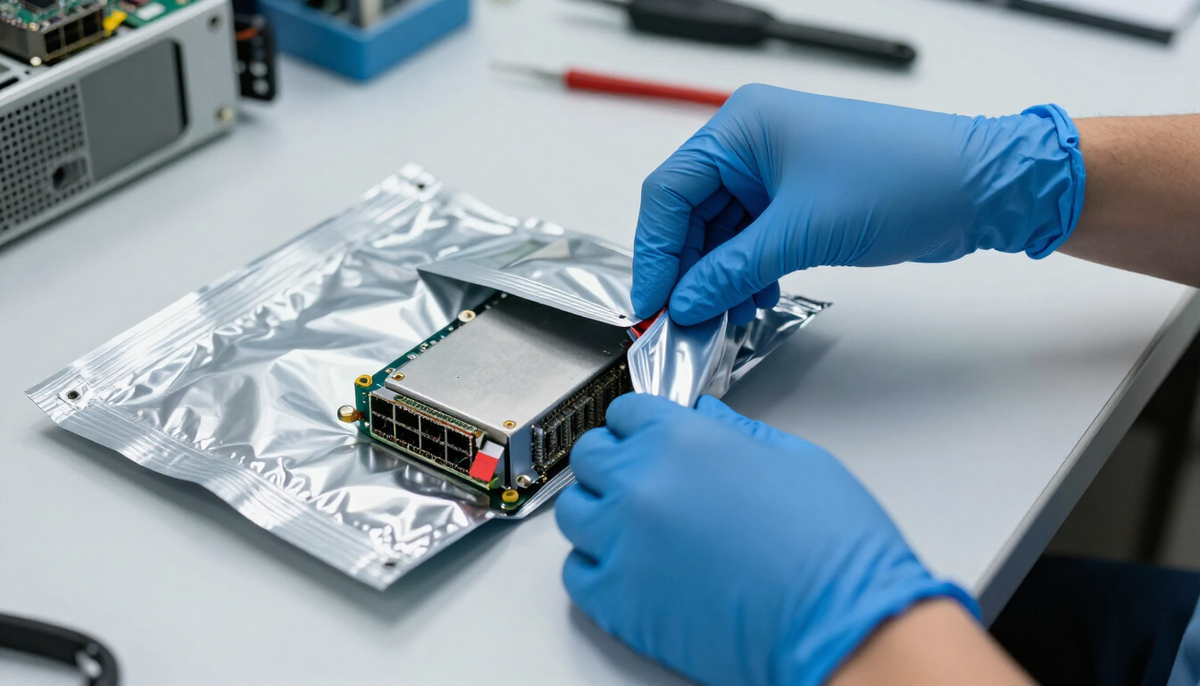
Should you repair the faulty unit or swap it?
Decide this before the unit ships, because the customs route depends on it. A repair sends the same unit out and back, and duty is usually limited to the value of the repair. A swap sends the faulty unit out and brings an identical one in, which needs a replacement regime and stricter proof that the two units match.
For data center hardware, vendors increasingly use advance replacement: the new unit ships first so the customer's rack is not left with an empty slot, and the faulty unit follows. That is the best service model and the hardest customs case. In most markets it is possible, but only if the replacement is declared under a regime that expects the defective unit to leave within a fixed period, often backed by a guarantee for the duties at stake.
Two other choices change the outcome. If the unit cannot be repaired and has no value, destruction under customs supervision can be cheaper than an export. If the fault is in a single field-replaceable part, such as a power supply, a drive or a fan tray, shipping the part instead of the chassis cuts the value exposed to duty and the paperwork. Our guide to importing refurbished servers explains why repaired units that are resold, rather than returned to the same customer, are treated as used goods and face a different set of rules.
How do hardware RMA returns work in the United States?
The United States has three tools that matter for RMAs: drawback to recover duties on defective goods sent back abroad, Chapter 98 relief for articles exported for repair, and duty-free entry for goods returned unchanged. Which one applies depends on the direction of the shipment and on where the hardware was made.
When a foreign vendor's server fails after it was imported and duty-paid, the unit can be returned under rejected merchandise drawback. Under 19 CFR 190.41, merchandise found to be defective at the time of import, or that does not conform to specifications, can earn back 99 percent of the duties paid when it is exported or destroyed under CBP supervision. The statute, 19 U.S.C. 1313(c), sets a five-year window from import. Not every additional duty paid in recent years is drawback-eligible, so check each duty line on the original entry before counting on the refund.
When the unit goes abroad to be fixed and comes back, subheadings 9802.00.40 (repairs or alterations made under a warranty) and 9802.00.50 (other repairs) of the Harmonized Tariff Schedule of the United States limit duty to the value of the repair. Under U.S. note 3 to that subchapter, the duty on that value is charged at the rate that would apply to the article itself, and if no charge is made, the value of the repair is still declared. For servers in heading 8471 the general rate is free, but the origin-based duties explained in our guide to the country of origin for servers still need to be checked against the repair value.
The third tool covers the reverse flow. When a US vendor's hardware fails abroad and comes home without being repaired or improved, subheading 9801.00.10 allows duty-free entry. In CSMS 49163963 of August 24, 2021, CBP confirmed that US-origin products have no time limit for this claim, foreign-origin products must return within three years of export, and shipments above 2,500 dollars need declarations from the foreign shipper and the importer, plus proof of export. Substituting another unit from stock is not allowed, so the serial number that left must be the one that returns.
What does the EU allow for warranty repairs and replacements?
The Union Customs Code gives total relief from import duty for goods repaired free of charge under a warranty, a standard exchange system for identical replacements, and returned goods relief for hardware coming back unchanged within three years. All of them require an authorisation or an application, so they must be planned before the faulty unit leaves.
The main route is outward processing, set out in Articles 259 to 262 of the Union Customs Code. The hardware is exported temporarily for repair and re-imported with duty calculated on the value added abroad. Article 260 goes further: when the repair is free of charge, because of a contractual guarantee or a manufacturing or material defect, there is total relief from import duty. The relief is refused if the defect was already taken into account when the goods were first released for free circulation, for example through a price discount.
For swaps, Article 261 allows the standard exchange system, in which a replacement product takes the place of the repaired one. The replacement must share the eight-digit Combined Nomenclature code, the commercial quality and the technical characteristics of the defective unit. Article 262 makes advance replacement possible: customs can allow the replacement to be imported first, against a guarantee for the duty, provided the defective unit is exported within two months of the acceptance of the release declaration.
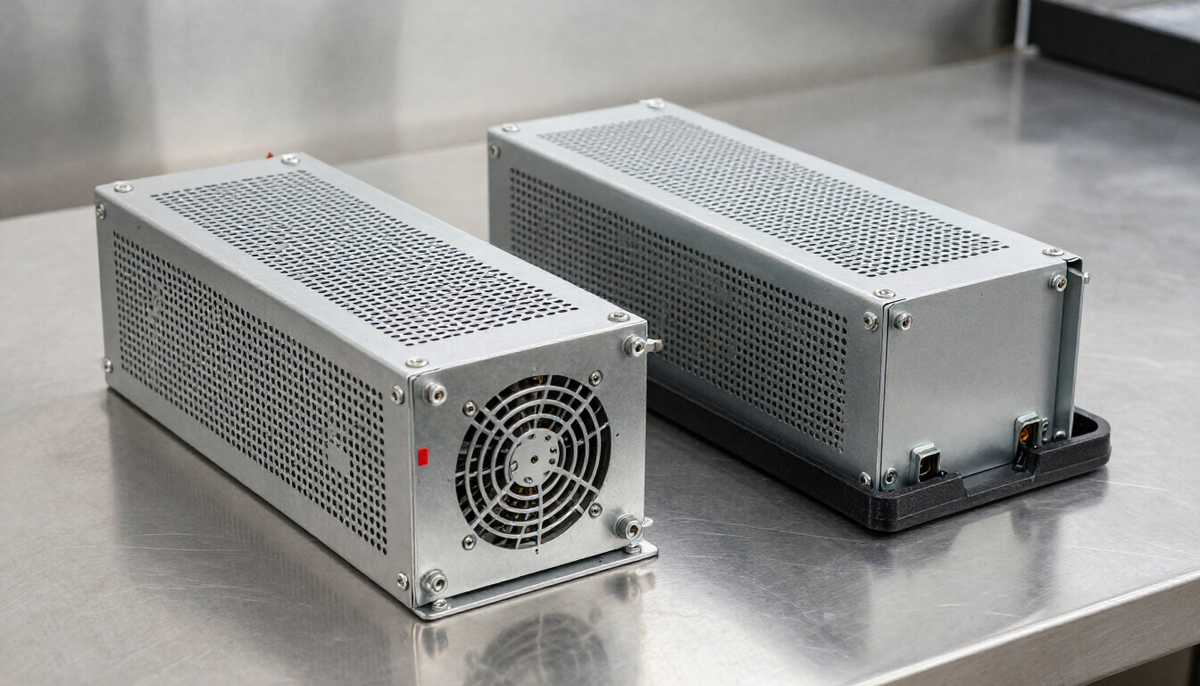
When hardware leaves the EU and comes back without repair, for instance a unit returned by mistake or a failed sale, Article 203 grants returned goods relief if the goods come back within three years. There is a catch for non-EU vendors: outward processing is an authorisation, and the holder normally has to be established in the EU. If you sell into Europe without an entity there, the party that imported the hardware, or an Importer of Record acting for you, has to hold that authorisation. National administrations also apply the value-added logic to import VAT: Finnish Customs, for example, calculates both duty and import VAT on the value added abroad.
How do Brazil, Argentina and Uruguay handle RMA shipments?
All three have a temporary export regime for repairs and a way to bring the unit back with little or no tax, but they differ on replacements. Brazil has a dedicated replacement procedure with strict deadlines, Argentina added a warranty repair and replacement regime in 2026, and Uruguay exempts free warranty repairs by law.
In Brazil, hardware sent abroad to be fixed goes out under exportação temporária para aperfeiçoamento passivo, regulated by Instrução Normativa RFB 1.600/2015. The initial term is up to one year, extendable on request, and on re-import the taxes fall only on materials added abroad, not on the full value of the unit. Swaps follow Instrução Normativa RFB 2.050/2021: the defective goods must be exported with a DU-E registered within 12 months of their original clearance, or within 30 days of the end of a longer contractual warranty, and the replacement must be declared within six months of that DU-E. The replacement has to be identical in NCM code, function, manufacturer and specifications, with a value difference of no more than 5 percent, and the defect must have existed before import, proven by a technical report or, for replacements up to 10,000 dollars, a manufacturer declaration. If any condition is missed, the import taxes on the replacement become due.
Argentina changed its rules in 2026. ARCA's General Resolution 5906/2026, published in the Boletín Oficial on September 30, 2026, amended General Resolution 5640/2025 and created a specific procedure for goods exported for repair under a foreign warranty that covers repair or replacement. The authorisation is requested through SITA before the export is filed, with a technical report, the warranty terms and a sworn statement identifying each unit by brand, model and serial number. The unit can stay abroad for up to two years, and if repair proves impossible, the export is closed with an identical or similar replacement under the SUSTITUTEMP code. ARCA applies the new procedure on an implementation schedule published on its page for temporary export for warranty repair in Argentina. The filings go through a licensed despachante, and Comex IOR Services works with customs brokers who handle re-exports from Argentina so the authorisation is in place before the unit is packed.
Uruguay's Customs Code, approved by Law 19.276, covers the repair case directly. Under Article 115, when hardware previously imported for permanent use is exported temporarily for repair, its re-import is exempt from duties, except fees, if the National Customs Directorate is satisfied that the repair was done free of charge under a warranty. As in the EU, the exemption does not apply if the defect was already considered when the goods were first imported.
Hardware RMA returns by market: the rules side by side
The table summarises the main regime in each market, how the repaired or replacement unit comes back and the deadline that most often trips up RMA shipments. Use it as a map for the conversation with your broker or Importer of Record, not as a substitute for checking the case.
| Market | Regime for the faulty unit | How the unit comes back | Deadline to watch |
|---|---|---|---|
| United States | Rejected merchandise drawback (19 U.S.C. 1313(c)) or export for repair | 9802.00.40/50: duty on the repair value; 9801.00.10: duty-free if returned unchanged | Five years for drawback; three years for foreign-origin goods under 9801.00.10 |
| European Union | Outward processing (UCC Articles 259 to 262) | Total relief for free warranty repairs (Art. 260); standard exchange for identical replacements (Art. 261) | Defective unit out within two months when the replacement is imported first (Art. 262) |
| Brazil | Exportação temporária para aperfeiçoamento passivo (IN RFB 1.600/2015) | Taxes only on materials added abroad; replacements tax-free under IN RFB 2.050/2021 if all conditions are met | DU-E within 12 months of clearance; replacement within six months of the DU-E |
| Argentina | Exportación temporaria for warranty repair (RG 5640/2025, amended by RG 5906/2026) | Repaired unit or replacement under SUSTITUTEMP, with prior authorisation through SITA | Up to two years abroad; authorisation before the export is filed |
| Uruguay | Temporary export for passive processing (Customs Code, Law 19.276) | Duty exemption, except fees, for free warranty repairs (Art. 115) | Proof of free repair accepted by the National Customs Directorate |
What goes into an RMA customs file?
A file that links the unit that left with the unit that came back, and proves why no new duty is due. Customs officers will not reconstruct your warranty process for you, so the evidence has to travel with the declarations or be ready the day it is requested.
In practice, every RMA shipment of servers or network gear should carry:
- The original import entry, with the serial numbers of the units as declared at the time.
- The RMA authorisation and the fault report, ideally a technical report signed by the vendor or an engineer, showing that the defect was not known at import.
- The warranty terms, showing whether the repair or replacement is free of charge and what it covers.
- The export declaration for the faulty unit, filed under the repair or replacement regime, not as an ordinary sale.
- The repair invoice or a zero-value statement, plus a serial-to-serial match when a replacement is shipped.
Two details cause most rejections. The first is valuation: a replacement shipped "free of charge" still needs a declared customs value, and in Brazil it must fall within 5 percent of the original. The second is classification: if the replacement is a newer model with a different code, the EU standard exchange system and Brazil's replacement rules no longer fit, and the unit becomes a normal import. If you also move demo units or spares under temporary rules, our guide to the temporary import of IT equipment explains how those regimes differ from repair procedures.
Who should act as importer and exporter for an RMA?
The same party that holds the original import, whenever possible, because every relief refers back to the first entry. When the customer abroad does not want that role, or when a foreign vendor sold on delivered terms, an Importer of Record can file both legs under the right regime.
This is where many vendors get stuck. The customer that bought the server is often happy to receive a replacement but unwilling to file a temporary export, request an outward processing authorisation or sign a sworn statement in Spanish or Portuguese. If the original import was filed by a third party that no longer handles the account, the link between the first entry and the RMA is lost. An Importer of Record that stays on the account keeps the chain intact: it filed the first entry, it can export the faulty unit under the repair procedure and it can declare the replacement with the references customs expects.
Export controls also come back into play on the return leg. A replacement GPU server leaving the United States is a new export, and a repaired unit shipped back to its customer may need the same license or license exception review as the original sale. Plan both directions together.
Hardware RMA returns are routine for your support team and a recurring cost for your margin when they are declared like new sales. If you are setting up warranty returns for servers, storage or network gear in the United States, the European Union, Brazil, Argentina or Uruguay, talk to Comex IOR Services. We act as Importer of Record for hardware RMA returns, and we can map the repair and replacement routes for your markets before the next faulty unit needs to ship.
Frequently asked questions
Do I pay import duty again when a repaired server comes back?
Not on the full value if the unit left under a repair regime. In the US, subheadings 9802.00.40 and 9802.00.50 limit duty to the value of the repair; in the EU, Brazil and Uruguay a free warranty repair can return with total or near-total relief. Shipped as an ordinary export, the unit is usually taxed as new.
Can a replacement unit enter before the faulty one is shipped back?
In the EU, yes: Article 262 of the Union Customs Code allows prior import of the replacement against a guarantee, provided the defective unit is exported within two months. Other markets require the export or an authorisation first, so advance replacement needs planning.
Can I recover the duties paid on a defective server returned to the vendor?
In the United States, rejected merchandise drawback under 19 U.S.C. 1313(c) refunds 99 percent of the duties paid on merchandise that was defective at import, when it is exported or destroyed under CBP supervision within five years. Check which duty lines on the original entry are drawback-eligible.
What changed for RMA shipments from Argentina in 2026?
ARCA General Resolution 5906/2026, published on September 30, 2026, created a temporary export procedure for repair under a foreign warranty that also allows replacement. It needs prior authorisation through SITA, allows up to two years abroad and closes with the SUSTITUTEMP code when the unit is swapped.
How long do I have to replace a defective import in Brazil?
Under IN RFB 2.050/2021, the defective goods must be exported with a DU-E registered within 12 months of their original clearance, or within 30 days of the end of a longer warranty, and the identical replacement must be declared within six months of that DU-E.
Who files the customs paperwork for an RMA if the customer will not?
The party that holds the original import should file both legs, because every relief refers to the first entry. When the customer or the original importer will not do it, an Importer of Record can export the faulty unit and declare the replacement under the correct regime.