
Country of origin for servers: how assembly location decides the US tariff you pay
By Comex IOR Services · Published · Last updated · 13 min read

In this guide
- Why does the country of origin for servers matter so much in 2026?
- How does CBP decide where a server comes from?
- Is the country of origin where the server was assembled?
- Does the motherboard decide the origin of a server?
- Can a server have one origin for tariffs and another for USMCA or marking?
- What does origin change in the landed cost of a server shipment?
- How do you prove the country of origin at entry?
- Who is responsible when the origin is wrong?
- Frequently asked questions
The country of origin for servers is not simply where the box was put together. US Customs and Border Protection (CBP) assigns origin to the last country where the server was substantially transformed, usually where the motherboard or compute modules were made. That answer decides whether a shipment pays 0, 10, 12.5 or 25 percent or more in extra duties.
That is the short version, and it surprises a lot of hardware vendors. Many supply chains moved final assembly out of China after 2018 on the assumption that the label on the chassis is what customs looks at. It is not. CBP looks at the whole production process, asks where the essential character of the machine was created, and treats that country as the origin for trade remedy duties. A rack integrated in Mexico can still be Taiwanese in the eyes of CBP, and a server assembled in Southeast Asia from Chinese boards can still be Chinese.
The stakes went up again in 2026. The emergency tariffs of 2025 are gone, but they were replaced by new duties that also depend on origin, sitting on top of the Section 301 duties on China that never went away. This guide explains how the country of origin for servers is decided, what CBP has said in recent rulings, how origin changes the landed cost, and what evidence you need on file before the hardware reaches a US port.
Why does the country of origin for servers matter so much in 2026?
Because almost every additional US duty on IT hardware is now tied to origin. The base duty on servers is zero, so the extra layers are where the money is, and each of those layers asks the same first question: where does this server come from?
Servers normally classify in heading 8471 of the Harmonized Tariff Schedule of the United States, and the general (MFN) duty rate for automatic data processing units is free. If you are still settling the classification itself, our guide to the HS code for servers walks through the subheadings. Once the code is settled, origin takes over.
On February 20, 2026, the Supreme Court held that the International Emergency Economic Powers Act (IEEPA) does not authorize tariffs, and collection of the IEEPA duties stopped on February 24, 2026. A temporary 10 percent global surcharge under Section 122 of the Trade Act of 1974 filled the gap until it expired on July 23, 2026. From July 24, 2026, the United States Trade Representative (USTR) applied new Section 301 duties, known as the forced labor tariffs, to products of 60 economies: 12.5 percent for China, Vietnam, Thailand and most others, 10 percent for countries such as Mexico, Malaysia and India, and 10 percent net of the MFN rate for the European Union, Taiwan, Japan, Korea and Switzerland. Those duties come with long product exemption lists by ten-digit subheading, many of them covering computers, semiconductors and telecom equipment, so the exact code matters as much as the country.
The table below shows how the main layers behave for server shipments.
| Duty layer | Rate for servers | Does origin decide it? |
|---|---|---|
| MFN duty, heading 8471 | Free | No, it is the same for every country with normal trade relations |
| Section 301 duties on China (List 3) | 25% on China-origin servers, unless a specific exclusion applies | Yes, only China-origin goods |
| Section 301 forced labor duties (since July 24, 2026) | 10% or 12.5% depending on the country, with product exemptions | Yes, the rate follows the country of origin |
| Section 232 semiconductor tariff (since January 15, 2026) | 25% on a narrow band of advanced AI chips and the servers that contain them, with end-use exclusions | No, it depends on chip performance and end use |
The last row is the exception. The Section 232 semiconductor tariff looks at the accelerator inside the box and at what the buyer will do with it, not at where the server was built. Goods subject to Section 232 duties are also carved out of the forced labor tariffs, so for a narrow group of AI servers the origin question loses some weight. For everything else, from general-purpose rack servers to storage nodes, origin is the variable that moves the cost.
How does CBP decide where a server comes from?
CBP uses the substantial transformation test. A product originates in the last country where processing turned it into a new and different article of commerce, with a new name, character or use. Simple assembly, packing, testing or labeling does not change origin on its own.
The test comes from case law rather than from a single regulation, which is why it can feel unpredictable. CBP and the courts look at the totality of the operations: how complex the work is, how many parts are involved, how much skill and time it takes, what the value added is, and whether the imported components keep their identity in the finished product. They also ask which component gives the finished article its essential character.
There is a trap here for companies that know the North American rules. CBP has its own regulations for marking goods from Mexico and Canada, in 19 CFR Part 102, based on tariff shifts. In Headquarters Ruling H300226 of September 13, 2018, CBP confirmed that those marking rules do not decide origin for Section 301 duties. In that case, an electric motor assembled in Mexico from Chinese parts was a product of Mexico for marking but a product of China for Section 301. The same logic applies to servers: passing the marking rules is not proof that you escape a trade remedy.
Is the country of origin where the server was assembled?
Not necessarily. If the assembly country only combines finished modules that already carry the processing power, CBP will usually look back to where those modules were made. Final assembly changes origin only when it is complex enough to create a new article.
The clearest recent example is a rack-scale AI server. In New York Ruling N359764 of March 31, 2026, CBP looked at a GB300 NVL72 rack assembled in Mexico. The 18 compute trays, each with two CPUs and four GPUs, were of Taiwanese origin, and other components came from China, Taiwan and Vietnam. In Mexico, workers installed the trays in the rack, filled the cooling manifold, added the power module and network switch, routed the cables and tested the system. CBP found that the trays give the finished server its essential character because they provide the processing functions, and that the Mexican work did not substantially transform them. You can read the full reasoning in CBP ruling N359764 on the country of origin of an AI server rack. The conclusion: for trade remedy purposes, the server is a product of Taiwan.
That reasoning travels well beyond AI racks. If you buy finished nodes, blades or compute sleds in one country and integrate them in another, the integration site is unlikely to become the origin. If you build the boards, populate them and turn them into a working system in the same place, the picture changes.
Does the motherboard decide the origin of a server?
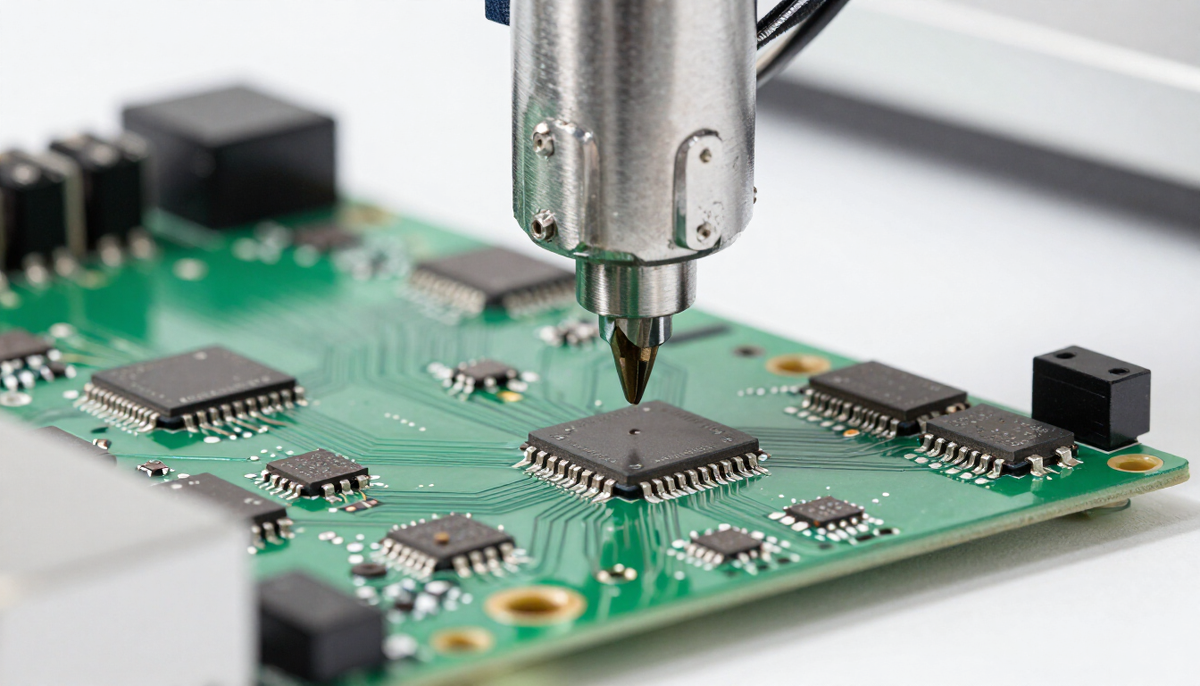
Often, yes. In computers, the main printed circuit board assembly is where the processing capability comes together, so the country where the board is populated and programmed tends to carry the most weight. It is a strong indicator, not an automatic rule.
The Court of International Trade showed how this works, and how evidence decides the outcome, in Cyber Power Systems (USA) Inc. v. United States, decided on February 27, 2023. The products were uninterruptible power supplies assembled in the Philippines, mostly from Chinese components. For one model, the main board was made in the Philippines through surface-mount and insertion operations, and the firmware was loaded there; the court found a substantial transformation and Philippine origin. For four other UPS models and a surge protector, the boards were made in China and the company could not prove the details of the Philippine process, so origin stayed in China.
Three lessons from that case apply directly to servers. First, where the board is populated matters. Second, firmware loading and configuration can support a substantial transformation when they are part of a real manufacturing process. Third, the importer carries the burden of proof, and a claim without process documents, timing and location records will not hold. The court also refused to decide origin by looking only at the single most important part, so a strong board story still needs to be backed by a description of the whole production flow.
Can a server have one origin for tariffs and another for USMCA or marking?
Yes, and it happens more than people expect. US law asks several origin questions for different purposes, and each one has its own test. The same server can be Taiwanese for trade remedies, originating under USMCA and Mexican for marking.
Ruling N359764 shows this in a single document. The rack was a product of Taiwan for trade remedy purposes, yet CBP also found it eligible for preferential treatment under the United States-Mexico-Canada Agreement (USMCA), relying on General Note 11 of the tariff schedule, which treats certain digital processing units of subheading 8471.50 as originating when imported from another USMCA country. That second answer matters in 2026, because USMCA-qualifying goods are exempt from the forced labor tariffs.
| Origin question | Rule CBP applies | What it decides |
|---|---|---|
| Trade remedy origin | Substantial transformation (name, character or use) | Section 301 duties on China and the forced labor tariffs |
| Preferential origin | USMCA rules of origin and General Note 11 | Duty-free treatment and the USMCA exemption from the forced labor tariffs |
| Marking origin | 19 CFR Part 134, with Part 102 tariff-shift rules for goods from Mexico and Canada | The "Made in" label on the server and its packaging |
Keep the three questions separate in your files. A supplier that tells you the product is "Made in Mexico" is usually answering the marking question. Your duty exposure depends on the first two.
What does origin change in the landed cost of a server shipment?
It can change the duty bill from zero to more than a third of the declared value. Since the MFN rate on servers is free, every percentage point you pay above zero comes from an origin-based measure, and on a rack worth several hundred thousand dollars the difference is large.
These simplified scenarios show how the same server can land at very different costs, before any product exemption or exclusion is applied:
- Boards and final assembly in China: 25 percent under the Section 301 China duties, plus the 12.5 percent forced labor duty unless the subheading is on the exemption list.
- Taiwanese compute trays integrated in Mexico, with no valid USMCA claim: treated as Taiwanese, so the forced labor duty for Taiwan applies, at 10 percent net of MFN unless the code is exempt.
- The same rack with a valid USMCA claim: exempt from the forced labor tariffs, with origin documentation that must stand up to a CBP request for information.
- Chinese boards assembled in Vietnam with only light work done there: likely still Chinese, so the China duties apply, and declaring Vietnam would be a misstatement of origin.
Those duties are calculated on the customs value, so origin and valuation work together. If your invoice leaves out software, assists or tooling, both numbers can be off at once; our guide to customs valuation for IT hardware covers what goes into that value.
How do you prove the country of origin at entry?
With a file that describes the manufacturing process, not just a certificate. CBP can ask for supporting information after entry, and the burden is on the importer to show where each critical step happened and why it changes, or does not change, the origin.
A file that holds up usually contains a bill of materials with the origin of each major component, a process flow showing where boards were populated, where firmware was loaded and where the system was built and tested, supplier origin statements for the main assemblies, and production records that tie a serial number to those locations. For new products, or for supply chains with real doubt, the strongest protection is a binding ruling. Under 19 CFR Part 177, an importer or other interested party can ask CBP for a ruling on the country of origin before the goods arrive, and a copy of that ruling should travel with the entry documents.
Getting origin wrong has consequences that go beyond paying the difference. A false or negligent origin claim can lead to a demand for the unpaid duties, to penalties under 19 U.S.C. 1592 and to closer scrutiny of later shipments from the same supplier.
Who is responsible when the origin is wrong?
The Importer of Record. US law requires the party that files the entry to use reasonable care in declaring classification, value and origin, and that party answers to CBP for duties, penalties and corrections, even when the information came from the manufacturer.
That is why foreign vendors that ship servers on DDP terms, or that act as importer through a third party, should treat origin as part of the commercial plan rather than a broker detail. If you do not have a US entity, an Importer of Record can take that legal role, file the entry and hold the bond, but only on the basis of an origin file that reflects how the hardware was really made. Our overview of the Importer of Record service in the USA explains how the role is set up for foreign companies.
In practice, the work starts before the first shipment. The Importer of Record reviews the bill of materials and the production flow, flags where the stated origin and the likely CBP view do not match, checks the ten-digit code against the current exemption lists, and decides with the vendor whether a binding ruling is worth requesting. Done that way, the first entry is the template for every shipment that follows, instead of the start of a dispute.
Origin rules for servers reward the companies that map their supply chain before CBP asks. If you are shipping servers, storage or AI racks to US customers and want a clear view of which duties apply and who will carry the import, talk to Comex IOR Services. We act as Importer of Record for hardware entering the United States, and we can review your bill of materials and production flow before your next shipment is on the water.
Frequently asked questions
How does US customs decide the country of origin of a server?
CBP applies the substantial transformation test: the server originates in the last country where processing turned its parts into a new article with a new name, character or use. Simple assembly, testing or packing does not change origin, so CBP usually looks at where the main boards or compute modules were made.
Does assembling servers in Mexico avoid the Section 301 duties on China?
Only if the work in Mexico substantially transforms the Chinese parts. In Ruling H300226 of 2018, CBP confirmed that the Part 102 marking rules for goods from Mexico and Canada do not decide origin for Section 301 duties, so a server can be marked Made in Mexico and still be Chinese for trade remedies.
Is the motherboard what decides the origin of a server?
It is often the strongest factor, because the populated main board or compute tray carries the processing function. In Ruling N359764 of March 31, 2026, CBP held that an AI server rack assembled in Mexico with Taiwanese compute trays was a product of Taiwan for trade remedy purposes.
Can a server be Taiwanese for tariffs and still qualify for USMCA?
Yes. The same 2026 ruling found the rack to be of Taiwanese origin for trade remedies but eligible for USMCA preferential treatment under General Note 11. USMCA-qualifying goods are also exempt from the Section 301 forced labor tariffs that took effect on July 24, 2026.
Does the Section 232 semiconductor tariff depend on country of origin?
No. The 25 percent Section 232 duty that started on January 15, 2026 depends on the performance of the chips inside the server and on its end use in the United States, not on where the server was made.
How can I get certainty on the origin of my servers before shipping?
Request a binding ruling from CBP under 19 CFR Part 177, describing the bill of materials and every production step. Keep a copy of the ruling with the entry documents, together with supplier origin statements and production records.