
FCC Form 740: what replaced it and how RF hardware clears US customs now
By Comex IOR Services · Published · Last updated · 14 min read

In this guide
- What was FCC Form 740, and is it still required?
- So who has to make the FCC determination now?
- Which FCC import conditions apply to servers, switches and radios?
- Do servers and switches without Wi-Fi need FCC authorization?
- What do you need ready before the shipment lands?
- How do the 2026 Covered List rules affect RF imports?
- What goes wrong most often for foreign hardware sellers?
- Where is the official rule for RF device imports?
- Frequently asked questions
FCC Form 740 is no longer filed for most radio-frequency hardware entering the United States. The FCC discontinued it in 2017, but the duty behind it remains: before entry, the importer or consignee must decide which import condition in 47 CFR 2.1204 applies to each device and be able to prove that choice on request.
That change confuses a lot of foreign hardware sellers. Some still look for a form to attach to the entry, and others conclude that the FCC no longer cares about imports at all. Neither is right. The paperwork moved from the customs declaration to the importer's own compliance file, and in 2026 the FCC added new import restrictions tied to its Covered List. For anyone shipping servers, switches, Wi-Fi access points, 5G radios or other equipment that emits radio-frequency energy, the real work now is deciding who makes the FCC determination and what evidence sits behind it.
This guide explains what FCC Form 740 used to do, what replaced it, how the import conditions apply to typical enterprise hardware, where a foreign manufacturer without a US company runs into trouble, and how the 2026 Covered List rules change the picture. It is written for manufacturers, distributors and integrators who need to deliver into the United States without a local entity.
What was FCC Form 740, and is it still required?
FCC Form 740 was the import declaration for radio-frequency devices. It told US Customs which FCC import condition the shipment met, the FCC ID if there was one, the quantity and a product description. The FCC discontinued it in its First Report and Order FCC 17-93, effective November 2, 2017, so most imports no longer need it.
For decades, every shipment of electronics that could cause harmful interference carried this declaration, either on paper or as data transmitted with the customs entry. The FCC concluded that the filing did little to stop non-compliant products, because the information was easy to get elsewhere and CBP already shared entry data with it. In ET Docket No. 15-170, adopted on July 13, 2017, the Commission removed the filing requirement and deleted the section of its rules that described the declaration.
What did not disappear is the legal test the form used to document. Under 47 CFR 2.1203, no radio-frequency device may be imported into the customs territory of the United States unless the importer, the ultimate consignee or their designated customs broker determines that the device meets one of the conditions for entry in 47 CFR 2.1204. The form was just the place where that determination was written down. Today it is written down in your own records instead, and the FCC can ask for it.
In practice, you will still see "FCC 740" in old broker checklists, carrier guides and supplier questionnaires. When someone asks you for it, they usually want the same four pieces of information the form carried. It is worth keeping them ready for every shipment, even though nobody files the form itself.
So who has to make the FCC determination now?
The importer, the ultimate consignee or their customs broker. Whoever makes the determination must provide documentation, on request made within one year of the date of entry, showing how the device was found to comply. The ultimate consignee must also be able to document which import condition was used and why.
This is where foreign sellers often underestimate the work. The rule does not say the manufacturer makes the determination, and it does not let the foreign exporter sign it off from abroad. It sits with the parties involved in the US entry. If you sell on Delivered Duty Paid terms, the importer is you or whoever you appoint, and the FCC question comes with the role. Our guide on the Importer of Record in the USA explains how that role is assigned and what CBP expects from a foreign company that takes it on.
The documentation duty has teeth. Under 47 CFR 2.1207, Commission representatives may examine or test any imported radio-frequency device, and if it has already entered the country, the ultimate consignee or later owners must make it available on request within one year of entry. Failure to meet an entry condition can lead to refused entry, a demand for redelivery to the port and the other administrative, civil and criminal remedies the law provides. A shipment of access points that cannot be matched to a valid authorization is exactly the case where those remedies are used.
The practical consequence is simple. Before a shipment is booked, someone in the US entry chain must hold the authorization evidence for every RF device in it, map each one to an import condition, and keep that file. If the only person who understands the product is an engineer in another time zone, the determination is not really being made.
Which FCC import conditions apply to servers, switches and radios?
Most commercial hardware enters under the first two conditions: the device holds a valid FCC equipment authorization, or it does not need one and complies with FCC rules. The others cover specific situations such as testing, trade shows, repair, re-export and pre-sale distribution, each with its own limits and records.
47 CFR 2.1204 lists eleven conditions. Several of them, such as medical implant transmitters, government-only use or travellers carrying portable earth stations, rarely matter for an enterprise hardware seller. The ones that do are summarised below, with the limits stated in the current rule.
| Import condition in 47 CFR 2.1204(a) | When hardware sellers use it | Key limit or requirement |
|---|---|---|
| (1) Valid FCC equipment authorization | Production shipments of certified radios or devices under SDoC | Authorization must be valid and not limited by the FCC |
| (2) No authorization required | Devices exempt from authorization that still meet FCC technical rules | Exemption must be documented model by model |
| (3) Testing and evaluation | Prototypes, lab samples, proof-of-concept units | 4,000 units or fewer, not sold or marketed; more needs written FCC approval |
| (4) Trade show demonstration | Equipment for an industry trade show booth | 400 devices or fewer, not sold or marketed |
| (5) Solely for export | Goods passing through a foreign trade zone or bonded warehouse | Cannot be marketed or sold in the US |
| (8) Repair | Faulty units sent in for repair | Not sold or marketed after repair entry |
| (11) Pre-sale activity | Certified-pending devices moved to distribution centres | 12,000 units or fewer per FCC ID, temporary label, 60 months of records |
Two details in the rule help with spare parts and service flows. Under 47 CFR 2.1202, devices that were properly imported, exported for repair and then re-imported for use are outside the subpart. Subassemblies, parts and components are also outside it, unless they form an essentially completed device. That exclusion does not apply to computer circuit boards that are really peripheral devices, so an add-in card is not automatically a part in the FCC sense.
The testing condition deserves a warning. It is tempting to bring in an early batch of units "for evaluation" and then deliver them to a customer. Under condition (3) the devices cannot be offered for sale or marketed, and the count works per distinct model and per development generation. If the evaluation units end up in production, the import condition you declared was wrong.
Do servers and switches without Wi-Fi need FCC authorization?
Usually yes. Servers, switches and storage arrays are digital devices, which the FCC treats as unintentional radiators under Part 15. Commercial Class A digital devices need either a Supplier's Declaration of Conformity or Certification, and products with radios, such as Wi-Fi or cellular modules, need Certification with an FCC ID.
The table of authorizations in 47 CFR 15.101 lists Class A digital devices, peripherals and external switching power supplies as needing "SDoC or Certification". Most data centre hardware sold to businesses is Class A, and most manufacturers use the Supplier's Declaration of Conformity route. That means there is no FCC ID on the label and nothing to look up in the FCC database. The evidence is the manufacturer's test report and the compliance information statement that must accompany the product.
Here the foreign seller meets a rule that often surprises it. Under 47 CFR 2.1077, the responsible party for a Supplier's Declaration of Conformity must be located within the United States, and its name, address and telephone number or internet contact must appear in the compliance information supplied with the product at the time of marketing or importation. A manufacturer in Taiwan, Germany or Brazil with no US presence cannot be that party on its own. When the product is imported, the importer typically becomes the responsible party, which is one more reason the choice of importer matters.
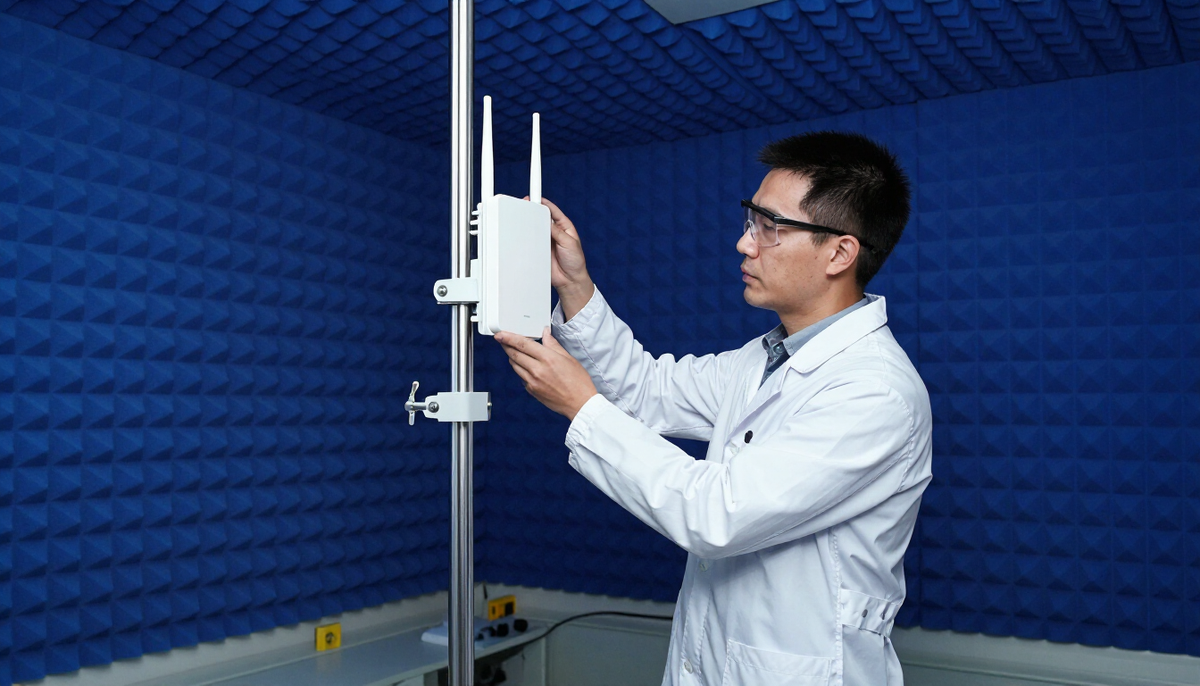
Radio products follow a different path. A switch with an integrated Wi-Fi controller radio, an access point, a 5G small cell or a server with a cellular out-of-band management module contains an intentional radiator. Those need Certification through an FCC-recognised Telecommunication Certification Body after testing in an accredited laboratory, and the FCC ID must appear on the device or in its electronic label. If a certified module is built into your product, check whether the module grant covers your integration, because a modular approval has its own conditions. For a wider view of how radio approvals work across markets, see our guide to telecom equipment homologation.
What do you need ready before the shipment lands?
A short, product-by-product file that shows the import condition, the authorization evidence and who is responsible in the United States. With that in hand, the broker can answer any FCC question at entry, and you can respond within the one-year window if the FCC asks later.
The FCC does not prescribe a template, but the items below cover what the rules require and what brokers and the FCC typically ask for. Keep one set per model, not per shipment, and update it when the product changes.
- The import condition from 47 CFR 2.1204(a) that applies to each model in the shipment, and a one-line reason for choosing it.
- The FCC ID and grant for certified radios, or the test report and compliance information statement for devices under a Supplier's Declaration of Conformity.
- The name and contact details of the US-based responsible party shown in that compliance information.
- Model numbers, quantities and a commercial description that match the commercial invoice and the packing list.
- For pre-sale shipments under condition (11), the temporary label text, the certification application reference and the recipient records you must keep for 60 months.
- A Covered List check showing that neither the device nor, for new authorizations, its logic-bearing components come from an entity on the list.
Matching these details to the invoice matters more than it sounds. A broker who sees a model number on the invoice that does not appear in any compliance document will stop and ask, and every question at the border costs time on a project with a fixed installation date.

How do the 2026 Covered List rules affect RF imports?
They add a second test on top of the import conditions. Equipment from companies on the FCC Covered List can no longer be authorized, and since July 16, 2026 the FCC also bars continued importation and marketing of previously authorized covered equipment added to the list in 2024 or earlier, with limited exceptions.
The Covered List names communications equipment and services that US national security agencies have found to pose an unacceptable risk. Since 2022, the FCC has refused new equipment authorizations for covered equipment. In a Public Notice released on June 26, 2026 in PS Docket No. 26-72 (DA 26-635), it went further: equipment added to the list in 2024 or earlier can no longer be imported or marketed, even if it was authorized before the 2022 rules. The notice took effect on July 16, 2026. Imports that meet the conditions in 47 CFR 2.1204(a)(3) to (11), such as testing, trade shows, export or repair, are not affected, and equipment added to the list after 2024 is outside this particular prohibition.
A second change reaches further into the supply chain. Rules adopted in FCC 26-50, which took effect on October 13, 2026, prohibit authorizing a device that contains a logic-bearing hardware component, such as a processor, module or storage component, produced by a Covered List entity, where the finished device would be prohibited if that entity had made it. The rule applies to new applications, so existing grants are generally untouched, but it means the component list of a new server or radio product now matters for FCC purposes.
For an importer, the effect is that "it has an FCC ID" is no longer the end of the check. Before you ship, confirm that the brand and the authorization holder are not on the Covered List, and for products authorized after October 13, 2026, ask the manufacturer how it documented its component review. If you also deal with US export rules on the same hardware, our article on GPU server export controls covers the separate licensing questions.
What goes wrong most often for foreign hardware sellers?
The usual problems are a missing US responsible party for devices under a Supplier's Declaration of Conformity, evaluation units declared under the testing condition and then sold, radio modules that are not covered by the product's grant, and invoices whose model numbers do not match the compliance file.
Each of these is easy to fix before shipping and expensive to fix after. The responsible party gap is the most common for server and storage makers that sell mainly outside the United States. Their products are compliant, the test reports exist, but the compliance information statement names a foreign company, which the rule does not allow. The fix is to name a US party, often the importer, and update the statement before the goods move.
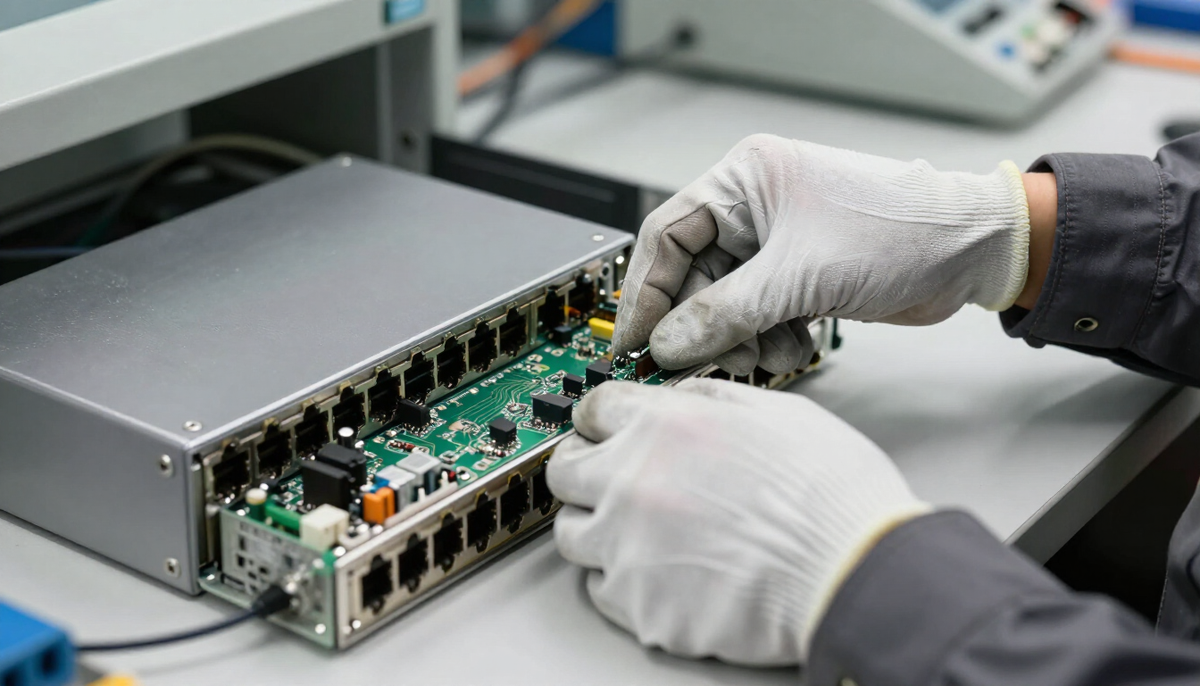
Radio integration is the second trap. Network vendors increasingly add Bluetooth for local setup, Wi-Fi for management or cellular modems for remote access. Each of those radios needs to be covered by a valid grant, and if the product uses a certified module outside the module's approved conditions, a new authorization may be needed. The third trap is commercial: a shipment declared under one import condition but used under another. Trade show units that stay with a customer after the event, or repair units that are replaced with new stock, are typical examples.
Where is the official rule for RF device imports?
The binding text is Subpart K of Part 2 of the FCC rules, in Title 47 of the Code of Federal Regulations. It contains the general entry requirement, the import conditions, the exclusions and the FCC's right to examine imported devices, and it reflects the 2025 and 2026 amendments.
You can read the current version of the FCC rules on importing radio-frequency devices in the Electronic Code of Federal Regulations. It is short, and reading it alongside your broker's checklist makes it clear which steps come from the FCC and which are just habits carried over from the days of Form 740. If you want the basics of the role that makes these decisions, our guide on what an Importer of Record is is a good place to start.
If you are about to ship servers, switches, access points or radios into the United States and you do not have a US company to act as importer and responsible party, Comex IOR Services can take on that role and prepare the FCC file with you before the goods move. Tell us what you are shipping and when it needs to arrive, and we will review your options as your Importer of Record for FCC-regulated hardware in the US.
Frequently asked questions
Do I still need to file FCC Form 740 when importing electronics into the US?
In most cases, no. The FCC discontinued Form 740 in its First Report and Order FCC 17-93, effective November 2, 2017. The importer, ultimate consignee or customs broker must still determine which import condition in 47 CFR 2.1204 applies and keep the evidence.
How long must I keep documentation on the FCC import condition?
Under 47 CFR 2.1203, whoever made the determination must provide documentation on request made within one year of the date of entry. For pre-sale imports under condition (11), recipient records must be kept for 60 months.
Can a foreign manufacturer be the responsible party for a Supplier's Declaration of Conformity?
No. Under 47 CFR 2.1077, the responsible party for a Supplier's Declaration of Conformity must be located within the United States. When the product is imported, the importer typically becomes the responsible party.
How many units can I import for testing without FCC authorization?
Up to 4,000 units per distinct model or development generation under 47 CFR 2.1204(a)(3), as long as they are used for testing, development or market evaluation and are not sold or marketed. A larger quantity needs prior written approval from the FCC Office of Engineering and Technology.
Can I still import equipment from companies on the FCC Covered List?
Generally not. Since July 16, 2026, the FCC bars continued importation and marketing of previously authorized covered equipment added to the list in 2024 or earlier. Imports for testing, trade shows, export or repair under 47 CFR 2.1204(a)(3) to (11) are not affected.