
INMETRO certification for IT equipment: which cords, power supplies and UPS units need it in Brazil
By Comex IOR Services · Published · Last updated · 12 min read

In this guide
- Does INMETRO certification for IT equipment apply to servers and switches?
- Which parts of a server shipment fall under INMETRO rules?
- What does the INMETRO plug rule mean for server power cords?
- Are UPS units and power supplies covered?
- How does INMETRO import consent work in Siscomex?
- What changed in the Siscomex product catalog in 2026?
- Who holds the certificate when the manufacturer is abroad?
- How much time should you plan for INMETRO before shipping?
- Planning a hardware shipment to Brazil?
- Frequently asked questions
INMETRO certification for IT equipment is narrower than most importers expect. Servers, switches and storage arrays are generally outside Brazil's compulsory programs, but the power cords, plugs, cables and some power accessories shipped with them are not. Those items need certified models, and several need INMETRO import consent before the shipment can clear.
That gap between the main hardware and its accessories is where most delays start. A buyer in São Paulo orders twenty servers, the supplier ships them with the cords it uses everywhere else, and the declaration stops because one line on the invoice falls under a regulated NCM code. Nobody checked it, because everybody assumed the regulation was about the servers. This guide explains which items in a typical IT shipment are regulated by INMETRO, the National Institute of Metrology, Quality and Technology, how the consent works in Siscomex, and how to plan around it when the manufacturer has no company in Brazil.
Does INMETRO certification for IT equipment apply to servers and switches?
In most cases, no. Brazil does not run a compulsory INMETRO safety program for information technology equipment as such, and the regulation for household and similar electrical appliances expressly leaves computers out. The rules bite on the electrical accessories that travel with the hardware.
The legal basis is Law No. 9,933/1999, which gives INMETRO the power to set compulsory conformity assessment for products that affect safety, health or the environment. Each regulated product has its own Portaria, and only the products listed there are covered. For electrical appliances, the reference is Portaria INMETRO No. 148 of 28 March 2022, which approves the conformity assessment requirements for household and similar appliances. Table 2 of its Annex III lists what is out of scope, and item 34 reads, in substance, personal computers and similar equipment covered by IEC 60950. Rack servers, network switches and storage controllers are generally treated as part of that family.
That does not mean the shipment is free of INMETRO. Telecom functions are a separate matter handled by Anatel, which we cover in our guide to telecom equipment homologation. And the cords, plugs and cables that come in the same boxes have their own Portarias, with compulsory certification and, in several cases, non-automatic import licensing. The useful question for the importer is which lines of the invoice fall under a regulated NCM code.
Which parts of a server shipment fall under INMETRO rules?
The short answer is anything that connects the hardware to Brazilian mains power: plugs, sockets, cords and electrical cables. Each falls under a specific Portaria, and each Portaria decides whether the product also needs registration and import consent.
The table below summarizes how the main items in a typical data center or IT shipment are treated, based on the regulations INMETRO currently publishes.
| Item in the shipment | Main INMETRO rule | Compulsory certification | Import consent (LPCO/LI) |
|---|---|---|---|
| Rack servers, switches, storage arrays | Outside Portaria 148/2022 (IT equipment excluded) | No, as a rule | Only if the NCM line carries an INMETRO treatment |
| Plugs and sockets up to 250 V and 20 A | Portaria INMETRO No. 90/2022 (NBR 14136 standard) | Yes | Yes, non-automatic licensing |
| Detachable power cords sold as separate items | Portaria 90/2022 and Portaria 131/2022 | Yes | Yes |
| Electrical wires, cables and flexible cords | Portaria INMETRO No. 131/2022 | Yes, with product registration | Yes |
| UPS units and external power supplies | Depends on the NCM code and current catalog attributes | Check case by case | Check in the Siscomex simulator |
| Radio modules, Wi-Fi, LTE, 5G | Anatel homologation, not INMETRO | Anatel instead | Anatel treatment |
Two points are worth stressing. First, the treatment is set by the NCM code and the product attributes declared in the Siscomex product catalog, not by how the supplier describes the item. Second, the same accessory can be exempt in one shipment and regulated in another, depending on whether it is sold together with a certified appliance or as a separate item. That is why classification and invoice structure matter as much as the certificate itself.
What does the INMETRO plug rule mean for server power cords?
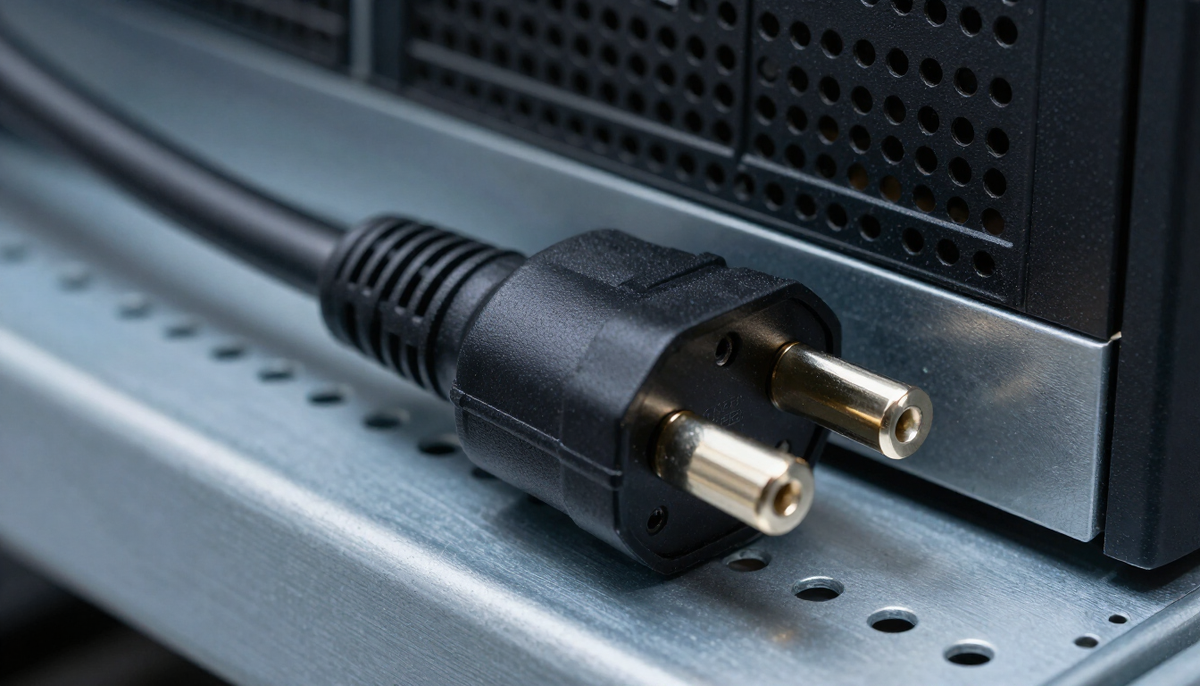
It means the cords that will plug into a Brazilian wall socket must follow the national plug standard and come from a certified model. Cords that connect equipment to a rack PDU through IEC 60320 connectors are treated differently, so the answer depends on how the hardware is powered on site.
Portaria INMETRO No. 90/2022 consolidates the requirements for plugs and sockets for household and similar use up to 250 V and 20 A, based on ABNT NBR 14136 and NBR NM 60884-1. It covers connector cords and extension cords, makes certification compulsory for products manufactured, imported or sold in Brazil, and subjects their import to non-automatic licensing. Imported products are expected to use the Brazilian plug pattern just like local ones.
The same Portaria contains two exclusions that matter for IT hardware. The appliance-side connector built to IEC 60320, the familiar C13 or C19 inlet, is left out. So are plugs and cords that are incorporated into, or sold together with, a certified electrical or electronic appliance. There is also a rule in the other direction: appliances that are not themselves subject to pre-market requirements may be sold in Brazil only with certified connector cords and with plugs that follow NBR 14136.
For a server, that last rule is the one to read twice. Because the server is outside the appliance program, the cord it ships with cannot rely on the "certified appliance" exclusion. If the cord ends in a wall plug, the safe route is to ship a certified Brazilian cord, sourced in Brazil or from a supplier whose model is already certified, rather than the cord the factory packs by default. Jumper cords with IEC 60320 connectors on both ends, used only between a server and a rack PDU, are a different case, and it is worth confirming their classification before the shipment rather than at the counter.
Are UPS units and power supplies covered?
They can be, and the only reliable answer comes from the NCM code and the attributes the importer declares for that code. UPS systems and external power supplies are not named in the exclusion list of Portaria 148/2022, so they cannot be assumed exempt the way computers are.
Most UPS units and stand-alone power supplies are classified in heading 8504, which covers transformers and static converters. Whether a particular line carries INMETRO treatment depends on the full eight-digit code and on how the product is described in the Siscomex product catalog. The tool for this is the Simulador de Tratamento Administrativo, which returns the agencies that must consent for a given NCM and set of attributes. We recommend running it for every power-related item on the invoice, and keeping the result in the shipment file.
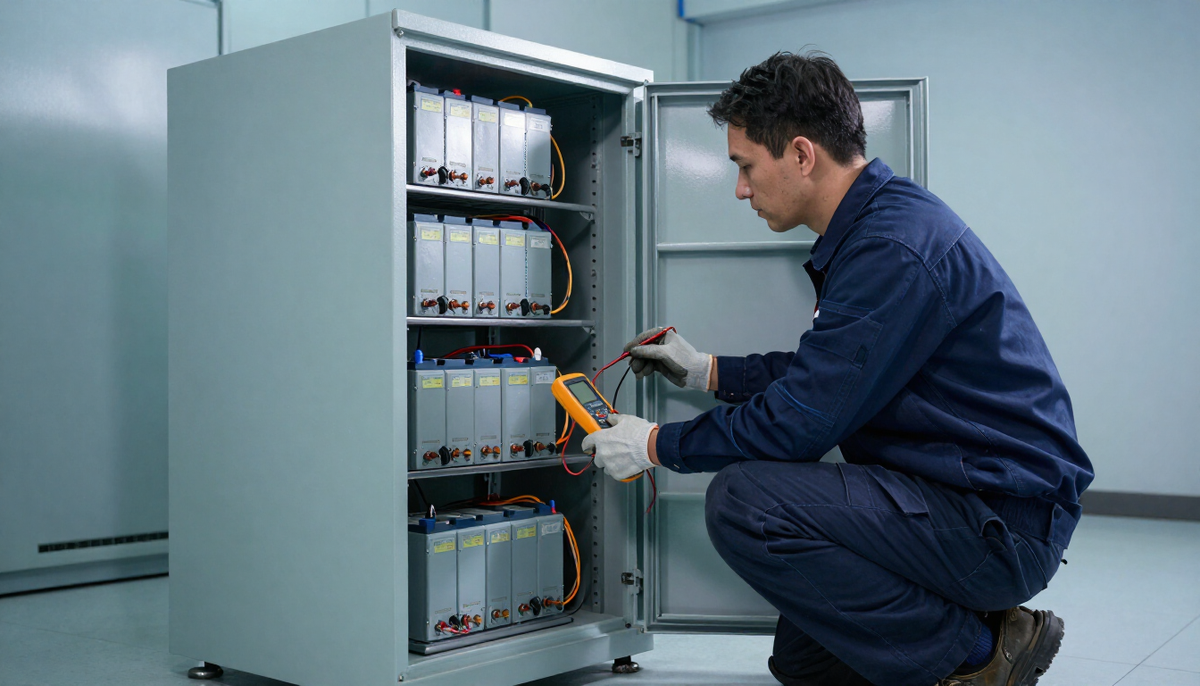
Internal power supplies installed inside a server usually travel as part of the server and follow its classification. Spare power supply units shipped loose, on the other hand, are invoiced as separate items, and they deserve their own check. The same applies to battery cabinets for UPS systems, which also raise dangerous goods questions in transport.
How does INMETRO import consent work in Siscomex?
The importer first registers an import license, then asks INMETRO to approve it through the agency's online system, and only after that approval is the license released in Siscomex. The analysis takes about 15 calendar days on average if nothing needs to be corrected.
INMETRO describes the steps on its page about INMETRO import consent, updated in August 2026. The agency consents to licenses, permits, certificates and other documents (LPCO) for products subject to non-automatic licensing under Law No. 9,933/1999. In the flow it publishes, the importer or its legal representative checks the NCM, confirms the treatment in the simulator, registers the import license and then files the request in the Orquestra system under the process for license analysis, paying a fee of R$ 53.53 by GRU.
The license must describe each product with brand, model or part number and technical description, because that is what INMETRO compares against its records. For products that require registration, the request lists the registration numbers (registro de objeto) of the models being imported; for products that are certified without registration, it lists the certificate numbers. Once INMETRO approves the request, the license is cleared in Siscomex within one business day. The license is valid for 90 days in the Siscomex import module, and the importer has to submit it to INMETRO within that period.
For companies already on the new import declaration (DUIMP), the consent is handled as an LPCO in the Portal Único and has to be granted before the declaration can be registered. Our article on the Brazil LPCO import license explains how LPCO works under the new process.

What changed in the Siscomex product catalog in 2026?
Since 31 August 2026, the product catalog attributes for NCM codes subject to INMETRO consent are mandatory, and products registered without them are deactivated. Whether a line requires LPCO now depends on the combination of these attributes.
Siscomex Communication No. 080/2026, published on 31 July 2026, introduced attributes that link each catalog product to its INMETRO licensing reference. They became available for optional use on 1 August 2026 and mandatory on 31 August 2026. For NCM 8544.42.00, the code that covers insulated electrical conductors fitted with connectors, a transition ran until 31 August 2026, after which the older attribute that allowed only products subject to registration was retired. The new reference attribute also covers products under compulsory certification without registration.
For an IT importer this has a practical effect. Power cords and other cables with connectors are usually classified in 8544.42.00, so the catalog entry for each cord now has to carry the right INMETRO reference. If the catalog is incomplete, the problem appears when the declaration is prepared, not when the goods arrive. Reviewing the catalog before the first shipment of a new model saves days at clearance.
Who holds the certificate when the manufacturer is abroad?
Certification is issued for a model by an accredited certification body, while the import consent is requested by the importer named on the license. A foreign manufacturer without a Brazilian entity therefore needs a local party that can file the license and answer for the product.
For cables and cords, Portaria INMETRO No. 131/2022 applies the same criteria to imported products as to products made in Brazil. It requires compulsory certification under a model that combines initial type testing with a quality system audit and later market sampling, registration with INMETRO after certification, and import consent. INMETRO defines registration as the act by which it authorizes a product to be made available on the Brazilian market, based on a valid conformity certificate.
In practice, a foreign seller has three options. The Brazilian customer can import in its own name and manage the licensing. The seller can change the bill of materials so that regulated cords are sourced locally from certified suppliers. Or an Importer of Record in Brazil can act as importer, register the license and coordinate the consent while the seller keeps control of the commercial relationship. Our guide on how to import IT equipment into Brazil explains the import routes in more detail, and our explainer on what an Importer of Record does covers the role itself.
How much time should you plan for INMETRO before shipping?
For items that are already certified and registered, plan at least three weeks before the goods are needed in Brazil, counting the license, the INMETRO analysis and the release. For a model that still needs certification, the timeline is set by testing and audits, and it is measured in months.
The 15-day average applies only to a request that does not need correction, so the license description is worth getting right the first time. Brand, model and part number on the license should match the invoice, the catalog and the registration exactly. A different suffix on a part number is enough to trigger a request for clarification.
Planning also affects cost. If a cord or cable model is not certified, the cheapest solution is usually to remove it from the export bill of materials and buy a certified equivalent in Brazil. Certifying a low-value accessory for a single project rarely pays off. For recurring programs, such as a vendor that sells to Brazilian data centers every quarter, certifying a standard cord set and keeping its registration current can make every later shipment faster.
A simple routine helps. Before quoting a Brazilian project, list every power-related line on the invoice, run each NCM through the simulator, confirm which items need certification, registration or consent, and decide for each one whether to certify, source locally or remove it. Then align the catalog, the license and the invoice so they describe the same models in the same words.
Planning a hardware shipment to Brazil?
Most INMETRO delays we see start with a cord in the same box, a loose power supply on line 14 of the invoice or a catalog entry that was never updated. If you are shipping servers, network gear or data center power equipment to Brazil without a local company, Comex IOR Services can review the bill of materials, check each NCM, coordinate INMETRO and Anatel requirements and act as importer so the hardware clears on schedule. Tell us what you are shipping and we will map the requirements before anything leaves the factory.
Frequently asked questions
Do servers need INMETRO certification to be imported into Brazil?
As a rule, no. Portaria INMETRO No. 148/2022, which covers household and similar electrical appliances, excludes personal computers and similar IT equipment from its scope. The power cords, plugs and cables shipped with the servers can still be regulated.
Do server power cords have to use the Brazilian plug standard?
Cords that plug into a wall socket in Brazil must follow ABNT NBR 14136 and come from a certified model under Portaria INMETRO No. 90/2022. Jumper cords with IEC 60320 connectors on both ends, used only with a rack PDU, are treated differently and should be classified before shipping.
How long does INMETRO import consent take?
INMETRO reports an average analysis time of 15 calendar days when the request needs no correction. After approval, the import license is released in Siscomex within one business day, and the license is valid for 90 days.
Do UPS units need INMETRO approval?
It depends on the NCM code and the attributes declared in the Siscomex product catalog. UPS units are not listed among the products excluded from the appliance regulation, so each model should be checked in the Siscomex administrative treatment simulator before shipping.
Can a foreign manufacturer request INMETRO import consent?
No. The consent is requested on an import license filed by the importer in Brazil or its legal representative. A foreign seller without a Brazilian entity usually relies on its customer, a trading company or an Importer of Record.
What changed for INMETRO products in Siscomex in 2026?
Siscomex Communication No. 080/2026 made new INMETRO licensing attributes mandatory in the product catalog from 31 August 2026. Catalog products without them are deactivated, which affects codes such as 8544.42.00 for cables fitted with connectors.