F-gas rules for data center cooling: what importers of chillers and liquid cooling units must register in the EU
By Comex IOR Services · Published · Last updated · 12 min read

In this guide
- Which equipment do F-gas rules for data center cooling cover?
- What must the importer register before the chillers arrive?
- How does the HFC quota system affect the cost of imported chillers?
- Which chillers will be banned from the EU market from 2027?
- What has to appear on the label and the customs declaration?
- What reporting continues after the cooling units are installed?
- Do the same refrigerant rules apply outside the EU?
- How can a non-EU manufacturer or operator handle F-gas compliance?
- Getting the cooling plant into Europe on time
- Frequently asked questions
If you import chillers or cooling units pre-charged with HFCs into the EU, F-gas rules for data center cooling require four things before release: registration in the F-gas Portal, enough HFC quota authorisations to cover the refrigerant, correct labels and a customs declaration showing the gas quantity. Units banned under Annex IV cannot be placed on the market at all.
That summary hides a lot of practical detail, and most of the problems we see appear when a chiller is already on the water. A US or Asian manufacturer sells a cooling package to a colocation operator in Frankfurt or Madrid, the purchase order says DAP, and nobody on either side has asked who will be the importer under Regulation (EU) 2024/573, the F-gas Regulation that has applied since 11 March 2024. Customs then holds the shipment, because the declaration has no F-gas Portal registration number and no quota coverage behind the refrigerant charge.
This guide explains which data center cooling equipment falls under the F-gas rules, what the importer must register and document, which units are being pushed off the EU market from 2027, and how a non-EU supplier can handle all of it without opening a company in Europe.
Which equipment do F-gas rules for data center cooling cover?
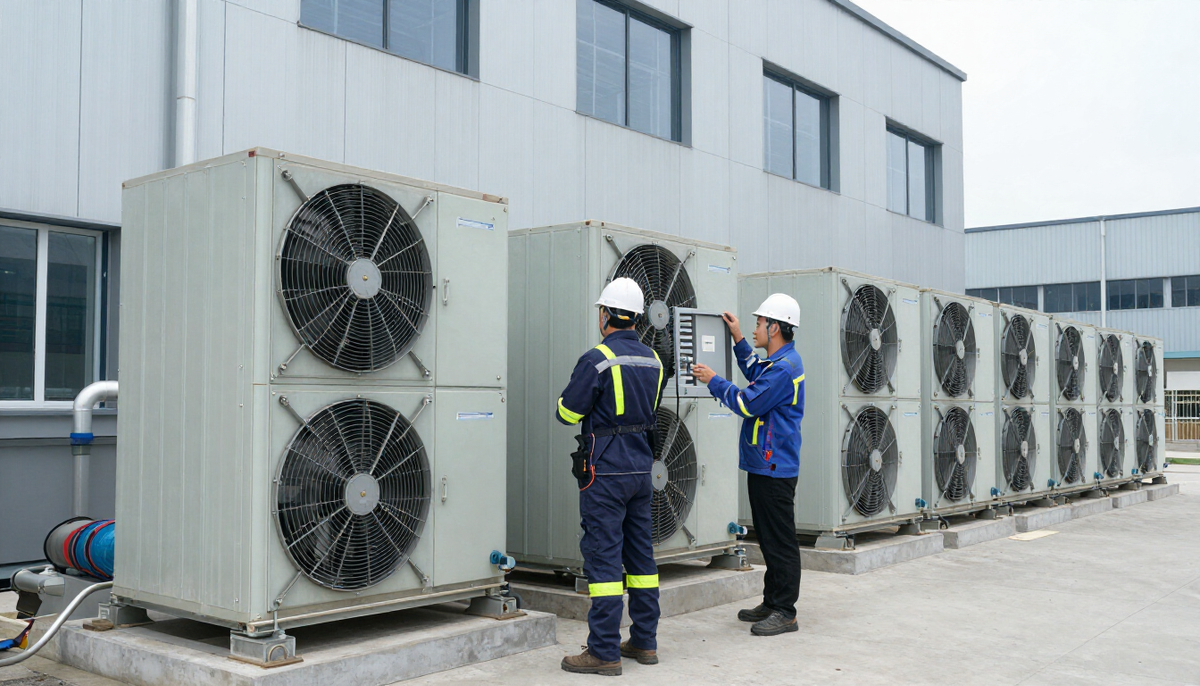
Any equipment that contains fluorinated greenhouse gases or needs them to work is in scope. In a data center that usually means chillers, computer room air conditioning (CRAC) units, computer room air handlers with direct expansion coils, in-row coolers, rear-door heat exchangers with a refrigerant circuit and some two-phase cooling systems.
The rules are driven by the refrigerant, not by the product name. A coolant distribution unit (CDU) that only moves water or a water-glycol mix through cold plates has no refrigerant, so the F-gas obligations do not attach to the CDU itself. The chiller or dry cooler that rejects the heat from that water loop is a different story: if it leaves the factory charged with R134a, R410A, R32 or R513A, it is pre-charged equipment containing HFCs, and every obligation in this article applies to it.
Two cases deserve a closer look. Chillers using HFOs such as R1234ze have a very low global warming potential and do not need HFC quota, but HFOs are still fluorinated gases listed in the Regulation, so registration in the F-gas Portal, labelling and reporting can still apply. And some dielectric fluids used in two-phase immersion cooling are fluorinated compounds. Before shipping immersion tanks or fluid in bulk, check the safety data sheet against Annexes I to III of the Regulation, because a fluid that sounds harmless on the spec sheet may still carry importer obligations.
What must the importer register before the chillers arrive?
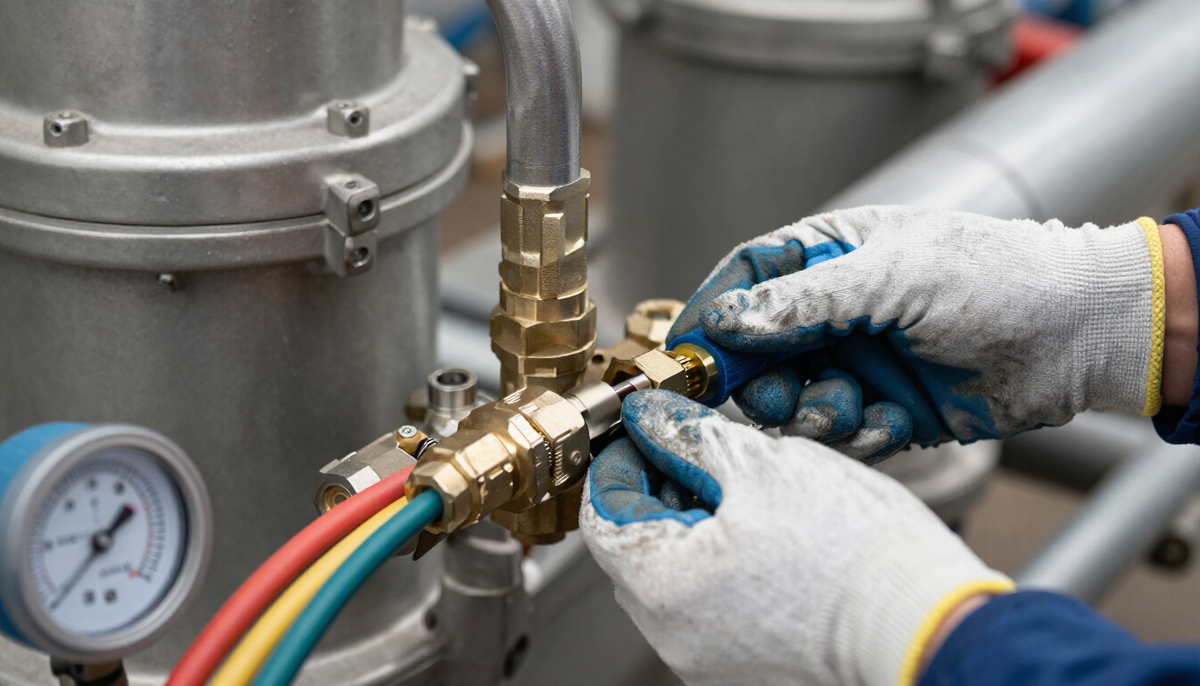
The importer must be registered in the F-gas Portal before the goods are declared for any customs procedure other than temporary storage. That registration works as an import licence: without it, customs cannot release the units, and the registration is checked electronically, so there is little room to fix it at the border.
Under Article 20 of the Regulation and Implementing Regulation (EU) 2024/2473, the registration is tied to the company that declares the import, which in practice means a company with an EU presence or an importer acting on the supplier's behalf. A manufacturer in Texas or Shenzhen cannot simply ship and leave the question for the buyer to discover at the port. This is the same structural problem we describe in our guide on how to import into the EU without an EU entity: the EU needs a responsible party it can reach.
Registration is only the first layer. For HFC pre-charged refrigeration and air-conditioning equipment, Article 19 adds a quota requirement: the HFCs inside the equipment must be covered by the EU quota system before release for free circulation. The importer either holds its own quota or, far more commonly for equipment importers, receives authorisations from a bulk HFC quota holder. The Commission's guidance on F-gas obligations for importers of equipment also notes that new-entrant bulk importers without a reference value can no longer pass quota to equipment importers, so the authorisation has to come from an established holder.
How does the HFC quota system affect the cost of imported chillers?
Quota authorisations are bought, not issued for free, and the amount you need is measured in tonnes of CO2 equivalent, not kilograms of gas. The higher the global warming potential of the refrigerant, the more quota a single chiller consumes and the more it costs to bring in.
A simple example shows the scale. A large air-cooled chiller with a 150 kg charge of R134a, which has a GWP of 1,430, carries about 214.5 tonnes of CO2 equivalent. The same charge of R1234ze, with a GWP close to 1, carries well under one tonne. One machine needs serious quota cover; the other needs almost none.
The pressure on quota keeps rising. Annex VII of the Regulation cuts the maximum quantity of HFCs that can be placed on the EU market from about 42.9 million tonnes of CO2 equivalent a year in 2025 and 2026 to about 21.7 million a year from 2027 to 2029, and the phase-down reaches zero in 2050. Half the quota from one year to the next means scarcer and more expensive authorisations for anyone still shipping high-GWP equipment.
Which chillers will be banned from the EU market from 2027?
From 1 January 2027, Annex IV of the F-gas Regulation prohibits placing on the market chillers up to 12 kW that use F-gases with a GWP of 150 or more, and chillers above 12 kW that use F-gases with a GWP of 750 or more. Small chillers up to 12 kW move to a full F-gas ban from 2032.
For data centers, the 750 threshold is the one that matters, because almost every chiller in a white space or plant room is well above 12 kW. R134a, at 1,430, and R410A, at 2,088, are out for new units placed on the market from 2027. R32, at 675, stays below the line, as do R454B, HFOs and natural refrigerants such as propane and ammonia.
The Regulation allows an exception where safety requirements at the site of operation prevent the use of a lower-GWP refrigerant, but the operator has to be able to demonstrate it. It is a narrow door, not a planning assumption. The date that counts is the date the unit is placed on the EU market, which for an imported chiller means release for free circulation. A chiller built in 2026 but cleared in February 2027 with R134a inside is caught by the ban.
| Obligation | Who is responsible | When |
|---|---|---|
| Registration in the F-gas Portal | EU importer of the equipment | Before the customs declaration |
| HFC quota coverage (authorisations) | EU importer, with quota from a bulk holder | Before release for free circulation |
| Documentation and declaration of quota compliance | EU importer | Submitted to customs at release |
| Labels with gas type, kg and CO2 equivalent | Importer, usually applied by the manufacturer | Before placing on the market |
| Customs declaration with tonnes, CO2 equivalent and registration number | Importer or its customs representative | At each import |
| Annual report and independent verification | EU importer, verified by a registered auditor | Report by 31 March, verification report by 30 April |

What has to appear on the label and the customs declaration?
The label must state that the equipment contains fluorinated greenhouse gases, name the gas, and give the quantity in kilograms and in tonnes of CO2 equivalent, together with the GWP. Article 12 sets the rule and Implementing Regulation (EU) 2024/2174 sets the format.
Labelling looks like the manufacturer's job, and in practice it is applied at the factory, but the legal responsibility sits with whoever places the equipment on the EU market. If the supplier is outside the EU, that is the importer. We recommend asking for a photo of the final label on the first unit before shipment, because a label printed in the wrong format means relabelling inside a bonded warehouse, which is slow and expensive for a two-tonne chiller.
The customs declaration carries the same data in another form. Under Article 23, it has to show the quantity of F-gases in metric tonnes and in CO2 equivalent and the importer's F-gas Portal registration number. For HFC pre-charged equipment, the declaration of quota compliance is also presented at release. Customs authorities cross-check the registration electronically, so a typo in the number or a lapsed registration stops the clearance.
What reporting continues after the cooling units are installed?
The importer reports every year, by 31 March, on the equipment and gases it imported in the previous calendar year. For HFC pre-charged equipment, the documentation and report must be verified by an independent auditor registered in the F-gas Portal, and the Commission's guidance sets 30 April as the deadline for that verification report.
The obligations do not end at the border for the operator either. Leak checks, record keeping and the use of certified technicians fall on the data center operator, not on the importer. Leaks must be repaired without undue delay, with the repair checked by a certified person within one month. It is worth agreeing in writing who keeps which file, because an auditor will ask the importer for a quota trail and the operator for leak-check records, and both sets of documents start with the same commercial invoice.
This is also where the F-gas file meets other EU product rules. The same chiller usually needs CE marking under the EU rules on machinery, pressure equipment and electromagnetic compatibility. Our guide on CE marking for IT equipment explains how the importer's role works for the technical file, which sits alongside the F-gas documentation.
Do the same refrigerant rules apply outside the EU?
Not in the same form. The F-gas Portal, the quota authorisations and the Annex IV bans are EU instruments, but the other markets we serve are tightening refrigerant rules too, through national law and the Kigali Amendment to the Montreal Protocol.
In the United States, the AIM Act and the Environmental Protection Agency's Technology Transitions rule restrict high-GWP refrigerants by sector and installation date. EPA published targeted changes to that rule in May 2026, so the limit for a specific chiller application should be checked against the current text, not against a supplier's brochure from last year. Brazil, Argentina and Uruguay have all ratified the Kigali Amendment and manage HFC imports through their environmental agencies, with bulk gas imports controlled by licence. For pre-charged equipment, the main questions in those markets are usually classification, import taxes and, in Brazil and Argentina, which tax regime the data center project uses.
If your project spans several regions, our overview of data center equipment import covers UPS batteries, racks and incentive regimes such as Redata in Brazil and RIGI in Argentina, so the cooling plan does not get separated from the rest of the build.
How can a non-EU manufacturer or operator handle F-gas compliance?
By using an EU-based importer that holds the F-gas Portal registration, sources the quota authorisations and keeps the reporting file. That is the role an Importer of Record plays: it becomes the importer in the legal sense, so the manufacturer can sell on delivered terms and the operator does not have to become an F-gas importer itself.
The practical sequence is short. Before production ends, the manufacturer confirms the refrigerant, the charge per unit and the label artwork. The importer checks the units against Annex IV, secures enough quota for the total CO2 equivalent in the shipment and prepares the declaration. At arrival, the customs declaration goes in with the registration number and the quantities, and after the year closes the importer files the report and arranges verification.
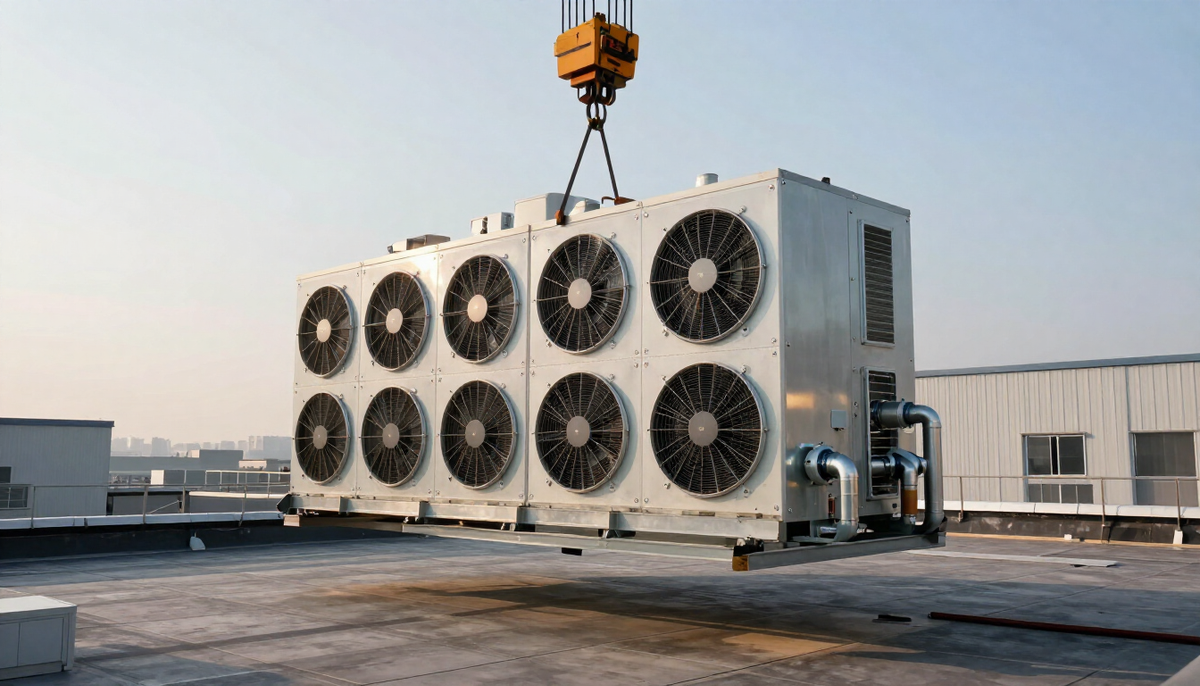
Timing is the part that most often goes wrong. Quota authorisations and portal registration are not same-day tasks, and a chiller that arrives in December may be cleared in January under a different year's quota and, in 2027, under a different set of bans. We suggest locking in the importer and the quota at the moment the purchase order is placed, not when the vessel is booked.
Getting the cooling plant into Europe on time
The F-gas Regulation is strict, but it is predictable: register first, cover the HFCs with quota, label correctly, declare the quantities and report every year. The risk sits in the gaps between supplier, operator and forwarder, where everyone assumes someone else is the importer.
If you are shipping chillers, CRAC units or liquid cooling systems into the EU and do not have a local entity, Comex IOR Services can act as your Importer of Record in the EU, check the refrigerant against the 2027 bans and organise the quota, labels and customs file before the equipment leaves the factory. Tell us what you are shipping and where it is going, and we will map the steps with you.
Frequently asked questions
Do I need to register in the F-gas Portal to import chillers into the EU?
Yes. The importer of equipment containing fluorinated gases must be registered in the F-gas Portal before the goods are declared for any customs procedure other than temporary storage. Customs checks the registration number on the declaration and will not release the units without it.
Can chillers with R134a still be imported into the EU after 2027?
Not as new units placed on the market. From 1 January 2027, Annex IV of Regulation (EU) 2024/573 bans chillers above 12 kW that use F-gases with a GWP of 750 or more, which rules out R134a and R410A. A narrow exception exists where safety requirements at the site prevent a lower-GWP refrigerant, and parts for servicing existing equipment remain allowed.
Do liquid cooling CDUs fall under the F-gas Regulation?
Only if they contain a fluorinated refrigerant or fluid. A coolant distribution unit that circulates water or a water-glycol mix has no refrigerant, but the chiller that cools that loop usually does, and some two-phase immersion fluids are fluorinated compounds that need checking.
Who pays for the HFC quota on imported cooling equipment?
The EU importer must cover the HFCs with quota authorisations, usually obtained from a bulk HFC quota holder. The cost depends on the CO2 equivalent of the refrigerant charge, so high-GWP equipment needs much more quota and is more expensive to bring in.
Can a non-EU manufacturer handle F-gas compliance without an EU company?
Yes, through an EU-based Importer of Record that holds the F-gas Portal registration, sources the quota authorisations, files the customs declaration and keeps the annual report and verification file on the supplier's behalf.