
RED cybersecurity requirements: what importers must check before wireless hardware enters the EU
By Comex IOR Services · Published · Last updated · 13 min read

In this guide
- What are the RED cybersecurity requirements?
- Which wireless hardware falls under the delegated regulation?
- How do manufacturers prove compliance, and when is a notified body needed?
- What must the importer check before placing wireless hardware on the market?
- Can customs hold a shipment over the RED cybersecurity requirements?
- What changes when the Cyber Resilience Act takes over in 2027?
- Who should act as the importer for non-EU wireless vendors?
- Frequently asked questions
RED cybersecurity requirements apply to almost every internet-connected wireless device sold in the EU since 1 August 2025. Before placing Wi-Fi access points, cellular routers or IoT gateways on the market, the importer must confirm the manufacturer assessed them against Delegated Regulation (EU) 2022/30, signed a matching declaration of conformity and affixed the CE marking.
For companies that ship enterprise wireless gear into Europe, this rule closed a gap that had been open for years. Until 2025, a Wi-Fi access point could carry the CE marking on the strength of its radio, safety and EMC tests alone. Today the same device also needs evidence that it protects the network, protects personal data and, in some cases, protects against fraud. The manufacturer does the engineering. The importer is the one who has to check the paperwork before the first unit is sold, and who answers to the market surveillance authority if something is missing.
This guide covers which wireless hardware is caught, what the requirements actually ask for, how the EN 18031 standards and their restrictions affect the conformity route, what the importer must verify, and how the rules hand over to the Cyber Resilience Act on 11 December 2027.
What are the RED cybersecurity requirements?
The RED cybersecurity requirements are three essential requirements of the Radio Equipment Directive, Directive 2014/53/EU, that stayed dormant until the European Commission activated them. Commission Delegated Regulation (EU) 2022/30 switched them on for defined categories of radio equipment, and they have been mandatory since 1 August 2025.
The three requirements sit in Article 3(3) of the directive. Point (d) requires that radio equipment does not harm the network or its functioning, nor misuse network resources in a way that degrades the service. Point (e) requires safeguards that protect the personal data and privacy of the user and subscriber. Point (f) requires features that protect against fraud. In plain terms: the device must not become a weapon against the network, must not leak the data it handles, and must not let someone move money through it without authorisation.
None of this is new in spirit, but the legal status changed. Before August 2025, a manufacturer could choose whether to address these points. Since then, a declaration of conformity for an in-scope device that ignores them is incomplete, and the CE marking on the product is making a promise the paperwork does not support. That gap is what market surveillance authorities look for, and it is the importer's name on the packaging that they contact first.
Which wireless hardware falls under the delegated regulation?
Any radio equipment that can communicate over the internet by itself, directly or through other equipment, falls under point (d). If that equipment also processes personal, traffic or location data, point (e) applies too, and point (f) applies when it lets the user transfer money or virtual currency. Most enterprise wireless products tick at least the first two.
Article 1 of the delegated regulation defines the categories. For point (e), it also captures radio equipment designed for childcare, toys and wearables, whether internet-connected or not. A few sectors governed by their own rules, such as medical devices and motor vehicles, are carved out of some of the requirements. For the IT and telecom hardware our clients ship, the exclusions rarely matter.
In practice, the following product families are almost always inside the scope:
- Wi-Fi access points, wireless controllers with radios and mesh nodes for offices, campuses and warehouses.
- Routers, firewalls and SD-WAN appliances with built-in Wi-Fi, LTE or 5G modules.
- Cellular gateways, 5G customer premises equipment and fixed wireless access terminals.
- Industrial and edge IoT gateways with Wi-Fi, Bluetooth, LoRa or cellular radios.
- Servers, edge computers and power distribution units that include a wireless management or connectivity module.
The radio is the trigger. A standard rack server, a wired data center switch or a storage array with no radio module is not radio equipment, so it falls under the Low Voltage and EMC directives today and under the Cyber Resilience Act from December 2027, but not under this delegated regulation. The moment the same chassis ships with a cellular modem for out-of-band management, it becomes radio equipment and the RED cybersecurity requirements apply. That is worth checking line by line on the bill of materials, because the same model can be configured with or without radios.

How do manufacturers prove compliance, and when is a notified body needed?
Manufacturers can self-assess against the RED cybersecurity requirements if they apply the harmonised standards EN 18031-1, EN 18031-2 and EN 18031-3 in full and no restriction attached to those standards affects the product. If a restriction applies, or the standards are not used, a notified body has to carry out an EU-type examination.
The three standards map to the three requirements. EN 18031-1:2024 covers internet-connected radio equipment and point (d). EN 18031-2:2024 covers equipment that processes data, including childcare, toy and wearable equipment, and point (e). EN 18031-3:2024 covers equipment that processes virtual money or monetary value and point (f). Their references were published in the Official Journal through Commission Implementing Decision (EU) 2025/138 of 28 January 2025, which is what gives them the presumption of conformity.
That decision came with restrictions, and they are the part importers most often miss. For all three standards, there is no presumption of conformity if the product lets users skip setting and using a password. For EN 18031-2, there is no presumption for childcare, toy and wearable products that do not ensure parental or guardian access control. For EN 18031-3, the presumption does not cover the clause on secure updates. In each case, the "rationale" and "guidance" sections of the standards also do not count toward compliance.
The practical effect is simple. A business-grade access point that forces the administrator to set a password on first boot can usually follow the self-assessment route, known as internal production control. A consumer-style router that ships with an option to keep working without any password cannot rely on the standard for that requirement, so the manufacturer needs a notified body certificate under Article 17 of the Radio Equipment Directive. As an importer, you do not need to understand every test case, but you do need to know which route the manufacturer took and to see the certificate when the route requires one.

What must the importer check before placing wireless hardware on the market?
Before the first unit is sold, the importer must confirm that the manufacturer carried out the right conformity assessment, drew up the technical documentation, affixed the CE marking and supplied the instructions and safety information in a language the user understands. For in-scope devices, that file must now cover the RED cybersecurity requirements as well.
Article 12 of the Radio Equipment Directive sets these duties. The importer adds its own name, registered trade name or trademark and postal address on the equipment or, where that is not possible, on the packaging or a document accompanying it. It must keep a copy of the EU declaration of conformity available to market surveillance authorities for 10 years after the equipment is placed on the market, and it must make sure the technical documentation can be produced on request. If the importer has reason to believe the equipment does not comply, it must not place it on the market until the problem is fixed.
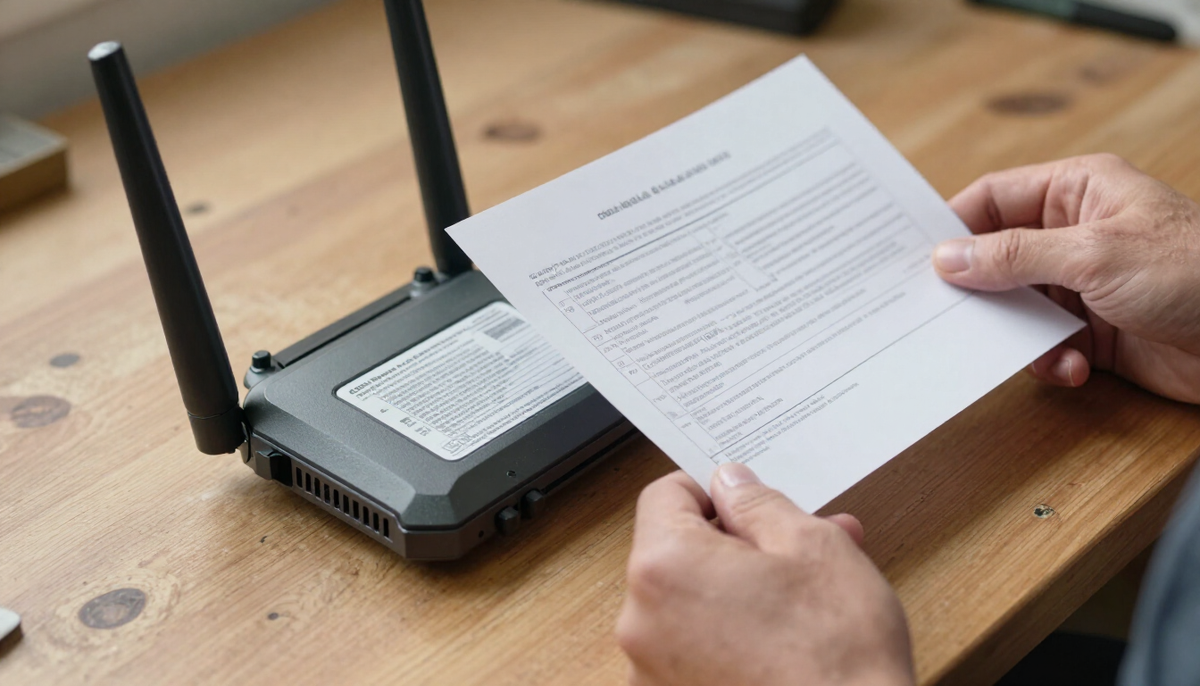
For wireless IT hardware, the cybersecurity part of the check comes down to a few concrete questions. Does the EU declaration of conformity list Delegated Regulation (EU) 2022/30, or the specific points of Article 3(3), among the requirements met? Does it cite EN 18031-1, -2 or -3, and does the product actually fall outside the restrictions? If not, is there an EU-type examination certificate from a notified body that covers Article 3(3)? Does the firmware that will ship match the version that was assessed? An access point assessed on one firmware branch and shipped on another is a question you want answered before customs, not after.
The table below sets out how the responsibilities split for a typical shipment of wireless access points or cellular routers.
| Task | Manufacturer | EU importer | Legal reference |
|---|---|---|---|
| Design the product to meet Article 3(3)(d), (e) and (f) | Yes | Checks the declaration covers them | Delegated Regulation (EU) 2022/30 |
| Apply EN 18031 standards or involve a notified body | Yes | Confirms the route and sees any certificate | Implementing Decision (EU) 2025/138; RED Article 17 |
| Draw up technical documentation | Yes | Ensures it can be produced on request | RED Article 10 and Annex V |
| Sign the EU declaration of conformity and affix CE marking | Yes | Checks presence and content | RED Articles 10, 18 and 19 |
| Put name and postal address on product or packaging | Own details | Adds importer details | RED Articles 10 and 12 |
| Keep the declaration of conformity | Yes, 10 years | Yes, 10 years | RED Articles 10 and 12 |
| Take corrective action if non-compliant | Yes | Yes, and informs authorities if there is a risk | RED Article 12 |
If you already built a file for CE marking for IT equipment under the safety and EMC directives, this is the same file with one more chapter. Many importers keep a short checklist per product family and update it each time the manufacturer releases a new hardware revision or a new major firmware version.
Can customs hold a shipment over the RED cybersecurity requirements?
Yes. Under the Market Surveillance Regulation, customs can suspend the release of products that lack the CE marking, the required documents or the details of an EU-established responsible operator, and they can refer doubtful cases to the market surveillance authority. Cybersecurity gaps tend to surface through that referral.
Regulation (EU) 2019/1020 gives customs a defined window. Once they suspend release, the market surveillance authority has to react within a short deadline, and if it finds the product non-compliant, the goods are refused release for free circulation. Customs officers rarely open the technical file themselves. What they see is the declaration, the labels and the operator data, so an inconsistency there, such as a declaration of conformity that only lists the safety and EMC directives for a device with a cellular radio, is exactly the kind of detail that triggers a check.
The same regulation requires an economic operator established in the Union for each product covered by the Radio Equipment Directive, with its contact details on the product, packaging or accompanying document. A non-EU vendor that ships directly to an end customer, without a local importer, manufacturer or authorised representative, leaves the shipment without that operator. That is why the conversation about who acts as the importer has to happen before the goods leave the factory, not when they arrive at the border.
What changes when the Cyber Resilience Act takes over in 2027?
The RED cybersecurity requirements stop applying on 11 December 2027, when the Cyber Resilience Act becomes fully applicable. Commission Delegated Regulation (EU) 2026/339, adopted on 16 February 2026 and published in the Official Journal on 29 April 2026, repeals Delegated Regulation (EU) 2022/30 from that date.
The Commission repealed the older rule to avoid two cybersecurity regimes for the same product. From December 2027, an internet-connected access point or router will follow the Cyber Resilience Act, Regulation (EU) 2024/2847, for cybersecurity, while the Radio Equipment Directive keeps covering radio performance, safety and EMC. Equipment placed on the market under the RED cybersecurity requirements before the switch stays subject to market surveillance under those rules, so the files you build now remain relevant for years.
| Point | RED cybersecurity requirements | Cyber Resilience Act |
|---|---|---|
| Products covered | Internet-connected radio equipment, plus childcare, toy and wearable radio equipment | All products with digital elements, wired or wireless |
| Applies | From 1 August 2025 until 10 December 2027 | Reporting since 11 September 2026; full obligations from 11 December 2027 |
| Main standards | EN 18031-1, -2 and -3, with restrictions | New harmonised standards under preparation |
| Support period and vulnerability handling | Not required as such | Mandatory, with a support period of at least five years in most cases |
| Importer duties | RED Article 12 | CRA Article 19 |
For wired gear, the Cyber Resilience Act is the first cybersecurity rule ever to apply, and it goes further than the RED requirements in several ways: a declared support period, vulnerability handling, security updates and incident reporting. Our guide to Cyber Resilience Act importer obligations explains those duties in detail. For wireless products, the sensible approach is to treat EN 18031 compliance as a stepping stone. Manufacturers that already meet it will find part of the work reusable, and importers that already check for it will have the habit of asking for cybersecurity evidence before shipment.
Who should act as the importer for non-EU wireless vendors?
The importer has to be an operator established in the EU that places the equipment on the market and accepts the Article 12 duties. For a vendor with no EU subsidiary, that is usually the customer, a distributor or an Importer of Record that takes on the product compliance role as well as the customs declaration.
Each option has trade-offs. When the customer acts as importer, the vendor depends on a buyer that may not have the people to review EN 18031 evidence, and every new customer starts the process again. A distributor brings market reach but also its own margins and terms. An Importer of Record can carry the customs entry, import VAT and product compliance for several customers at once, which makes sense when shipments go to many end users across different member states.
Whichever model you choose, write the roles down. The agreement should say who holds the declaration of conformity and the technical documentation, who adds the importer's details to the packaging, who receives complaints and reports of non-compliance, and who decides on a withdrawal. Some vendors prefer to work with an EU importer partner that takes on compliance duties for every shipment, so that the CE file, the customs entry and the delivery are handled by the same team.
If you are also shipping wired switches and routers alongside the wireless kit, the checks in our article on importing networking equipment fit into the same process. The European Commission keeps the legal texts, the RED guide and the latest updates on its Radio Equipment Directive guidance page, which is worth checking before each new product line.
If you have wireless access points, cellular routers or IoT gateways heading to Europe and no EU entity to stand behind them, Comex IOR Services can review the declaration and test evidence with you, take the importer role and clear the goods as one process. Tell us what you are shipping through our EU Importer of Record for wireless hardware contact form, and we will tell you plainly what the file needs before the first unit leaves the factory.
Frequently asked questions
When did the RED cybersecurity requirements become mandatory?
Delegated Regulation (EU) 2022/30 has applied since 1 August 2025. From that date, in-scope radio equipment placed on the EU market must meet Article 3(3)(d), (e) and, where relevant, (f) of the Radio Equipment Directive.
Do the RED cybersecurity requirements apply to servers and wired switches?
Only if they contain a radio module. A rack server or wired switch with no radio is not radio equipment, so it is covered by the Low Voltage and EMC directives now and by the Cyber Resilience Act from 11 December 2027.
Is a notified body always needed for EN 18031 compliance?
No. A manufacturer can self-assess if it applies EN 18031-1, -2 or -3 in full and none of the restrictions in Implementing Decision (EU) 2025/138 applies, such as letting users skip setting a password. Otherwise a notified body EU-type examination is required.
What documents should the importer keep for wireless hardware?
A copy of the EU declaration of conformity, kept for 10 years after the equipment is placed on the market, plus the ability to provide the technical documentation on request. For in-scope devices, the declaration should cover the RED cybersecurity requirements.
What happens to the RED cybersecurity requirements in December 2027?
Delegated Regulation (EU) 2026/339 repeals them from 11 December 2027, when the Cyber Resilience Act applies in full. Equipment placed on the market before that date remains subject to market surveillance under the RED rules.