Argentina electrical safety certification for IT hardware: what customs checks and who must hold the certificate
By Comex IOR Services · Published · Last updated · 13 min read
In this guide
- What is Argentina electrical safety certification today?
- Which IT hardware falls under the electrical safety rules?
- Do servers and enterprise switches count as professional equipment?
- Who must hold the certificate and sign the declaration?
- What does Argentine customs actually check?
- What did this look like in a real network equipment project?
- How should you prepare a shipment before it leaves the factory?
- Need an importer in Argentina who can sign for your hardware?
- Frequently asked questions
Argentina electrical safety certification for IT hardware now rests on a sworn declaration of conformity backed by a recognized product certificate, usually an IECEE CB certificate. The manufacturer or the Argentine importer must hold both. Customs no longer runs a prior check, but the declaration must be right and the file ready for inspection.
For years, shipping a monitor, a desktop or a power supply to Argentina meant getting a local certificate under Resolution 169/2018 and the familiar S mark before customs would release the goods. That system is gone. In February 2025 the Secretaría de Industria y Comercio replaced it with a lighter regime that accepts international certificates, moves control from the border to the market and makes the importer the party that answers for compliance.
The change is good news for vendors of servers, switches and other IT hardware, but it is also easy to misread. Less paperwork at customs does not mean no paperwork, and a foreign company without an Argentine entity still needs someone in the country to sign the declaration and keep the file. This guide explains which equipment falls under the rules, how the professional equipment exemption works, who must hold the certificate, what customs actually looks at, and how a recent project for a Mexican technology company handled it.
What is Argentina electrical safety certification today?
It is the conformity regime created by Resolución 16/2025 of the Secretaría de Industria y Comercio. Products in scope need a sworn declaration of conformity (DJC) from the manufacturer or importer, supported by a valid product certificate, and must carry a conformity mark with a QR code that links to both documents.
Resolución 16/2025 on electrical equipment safety was published in the Boletín Oficial on 25 February 2025 and took effect the next day. It repealed Resolution 169/2018 together with the older Resolutions 731/1987 and 524/1998, and it sits inside the general conformity assessment framework that Resolution 237/2024 set up in August 2024. Certificates issued under the old rules stayed valid for one year, so since late February 2026 only certificates that fit the new scheme count.
Three things changed in practice. First, a certificate issued abroad can now support the declaration: for electronics, the resolution accepts certificates issued within the IECEE CB Scheme, the international system most IT hardware makers already use. Second, the S mark has been replaced by a conformity mark plus a QR code, mandatory since 1 October 2025 after Resolution 26/2025 postponed the original date. Third, the government announced that the prior procedure involving the customs service was eliminated, so compliance is checked mainly after the goods are on the market.
The legal weight did not get lighter. Article 3 of the resolution puts the obligation on manufacturers and importers, distributors and retailers must keep a copy of the declaration, and breaches can be sanctioned under the Consumer Protection Law, Ley 24.240, and Decreto 274/2019 on fair trade practices.
Which IT hardware falls under the electrical safety rules?
Electronics and power supplies that run between 50 and 1,000 volts AC, or between 75 and 1,500 volts DC. Appendix IV covers items such as desktop computers, monitors, printers, point-of-sale terminals and ICT components for communication networks, all tested to IEC 62368-1. Appendix I covers external power supplies for IT and communication equipment.
The product list is more specific than most vendors expect. Appendix IV of Annex II names desktop computers that connect directly to the mains, computer monitors, multifunction office equipment, cash registers, ATMs and "components for information and communication technology equipment used in communication networks and cable distribution", with IEC 62368-1 or its older predecessor IEC 60950-1 as the reference standard. Appendix I applies the same standards to stand-alone power supplies for audio, video and IT equipment, which matters when a vendor ships spare PSUs or external adapters on their own.
Several exclusions and special cases can take hardware out of the full procedure. Appendix IV does not apply to equipment whose consumption exceeds 5 kVA, a threshold that some dense multi-GPU servers and large chassis switches pass. Electronics that run below 50 volts on an external power supply that is not shipped with them do not need certification, although the manual must state the compatible power supply. Parts and components integrated into a larger certified product, or supplied as spare parts requested by the manufacturer, are generally exempt from certification and marking, but they still need the declaration and the certificate of the final product. And radio modules are a separate topic: Wi-Fi, cellular or Bluetooth radios also need ENACOM approval, which we covered in our guide to ENACOM RAMATEL registration.
Do servers and enterprise switches count as professional equipment?
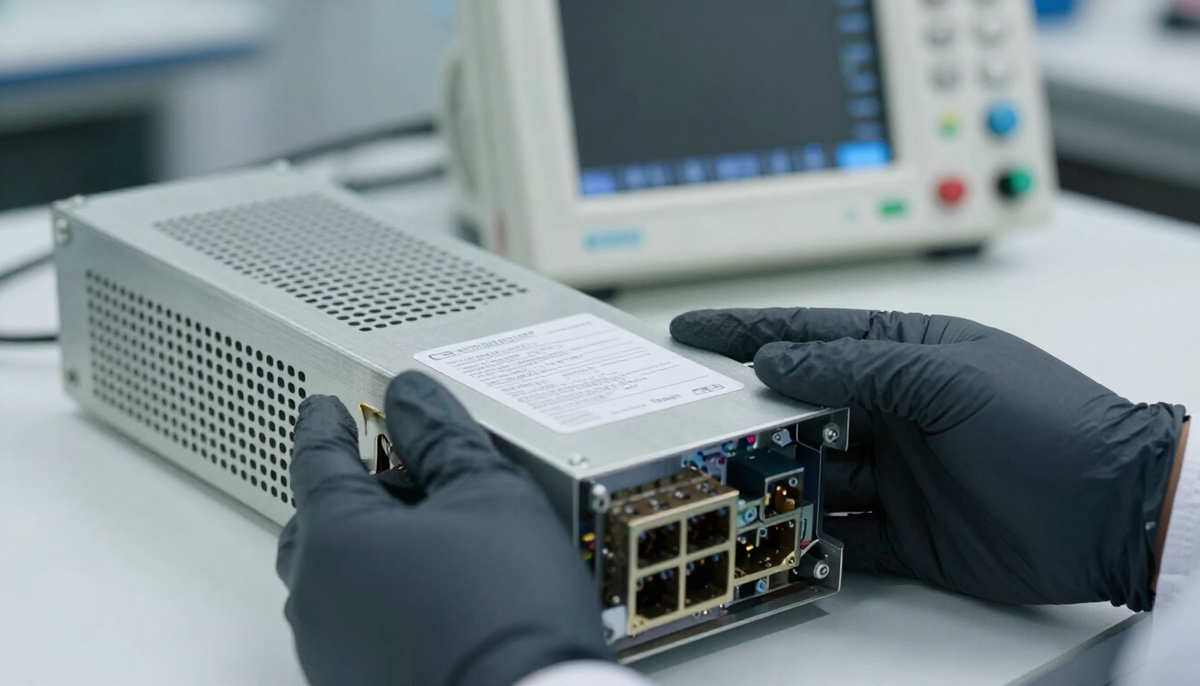
Often, yes. Appendix IV exempts professional electrical equipment, as defined in the applicable technical standards, from the certification procedure and from the conformity mark. The importer still signs a declaration of conformity, backed by the datasheet or manual that shows the equipment is for professional use.
This exemption, in point 4.2 of Appendix IV, is the most useful rule in the regime for data center and network hardware. A rack server, a storage array or a modular switch that is installed in a restricted location, sold only to businesses and documented as such by its manufacturer is a typical candidate. The exemption is not automatic, though. The importer must decide, product by product, that the equipment qualifies, keep the technical documentation that supports that decision and sign the DJC on that basis.
The exemption also has a customs consequence. When professional equipment is imported, the resolution says the customs declaration must indicate, in the corresponding computer system, that the goods fall under this case. In other words, the classification as professional equipment is a statement the importer makes to customs, and a statement that can be questioned later. If a product is sold through retail channels or marketed for home use, it is hard to defend as professional, and the full route with a certificate and the QR mark applies.
When there is genuine doubt and no certificate exists, the importer can ask the Dirección Nacional de Reglamentos Técnicos for a technical opinion through the TAD platform. A favorable answer excludes the goods from the regulation, but it takes time, so it belongs in the planning stage, not after the freight is booked.
Who must hold the certificate and sign the declaration?
The manufacturer or the importer established in Argentina. A foreign brand can own the CB certificate, but the DJC is signed by whoever places the goods on the Argentine market, and when the importer is not the certificate holder, it needs written authorization from the holder or its authorized distributor.
This is where many foreign vendors get stuck. The certificate usually belongs to the original manufacturer, sometimes to a regional distributor, and neither is registered in Argentina. The declaration of conformity, on the other hand, has to be signed by a party that can answer for it locally, keep it available for the authorities and hand a copy to distributors and customers. Guidance prepared for the Centro Despachantes de Aduana notes that the DJC is not pre-validated by the Dirección Nacional de Reglamentos Técnicos: the importer keeps it with the certificate and presents both during market inspections.
For a vendor without an Argentine company, that role falls to the importer of the goods. If the end customer is already a registered importer, it can sign. If not, an Importer of Record can take the import, sign the declaration with the manufacturer's authorization and keep the file. The importer itself must have a CUIT and an active importer profile with ARCA, which is the step explained in this guide to registering as an importer in Argentina.
The authorization deserves attention. A short letter from the certificate holder that names the importer, the models and the certificate number, plus the commercial invoice linking both parties, is usually enough to show the chain. Without it, the importer is declaring conformity on a certificate it has no right to use.
What does Argentine customs actually check?
Customs no longer runs a prior electrical safety procedure, so a missing certificate rarely stops goods at the border. What customs does check is the import declaration itself: the tariff classification, the value, any flag for professional equipment and the documents a channel review may ask for.
The government's own announcement of Resolution 16/2025 said the prior procedure and the intervention of the Dirección General de Aduanas were eliminated. That is a real relief compared with the old system, in which a missing certificate could leave a pallet of monitors in a bonded warehouse for weeks. Control now happens mostly after release, through market surveillance by the Secretaría de Industria y Comercio and complaints from competitors or customers.
That does not make the border irrelevant. The despachante de aduana files the declaration, including the indication that equipment is professional where the exemption is used, and an orange or red channel can lead to a documentary review or a physical inspection. If the declaration says professional equipment and the boxes contain retail-packaged monitors, the problem is no longer electrical safety but an inaccurate declaration, which carries its own penalties under the Customs Code. Our overview of the Importer of Record in Argentina explains how the despachante and the importer share that responsibility.
| Situation | Route under Resolución 16/2025 | What the importer keeps | QR and conformity mark |
|---|---|---|---|
| Desktop PCs, monitors, POS terminals for general sale | DJC plus product certificate (local or CB-based) | DJC, certificate, holder's authorization | Required |
| Rack servers, storage and enterprise switches for professional use | Professional equipment exemption with DJC | DJC, datasheet or manual proving professional use | Not required |
| Equipment above 5 kVA consumption | Outside Appendix IV | Technical data showing the rating | Not required |
| Spare PSUs sold on their own | Appendix I, DJC plus certificate | DJC, certificate, authorization | Required |
| Components built into a certified product | Exempt from certification and marking | DJC and certificate of the final product | Not required |
The table is a starting point, not a substitute for checking each model. The rating plate, the user manual and the way the product is sold all affect where it lands.
What did this look like in a real network equipment project?
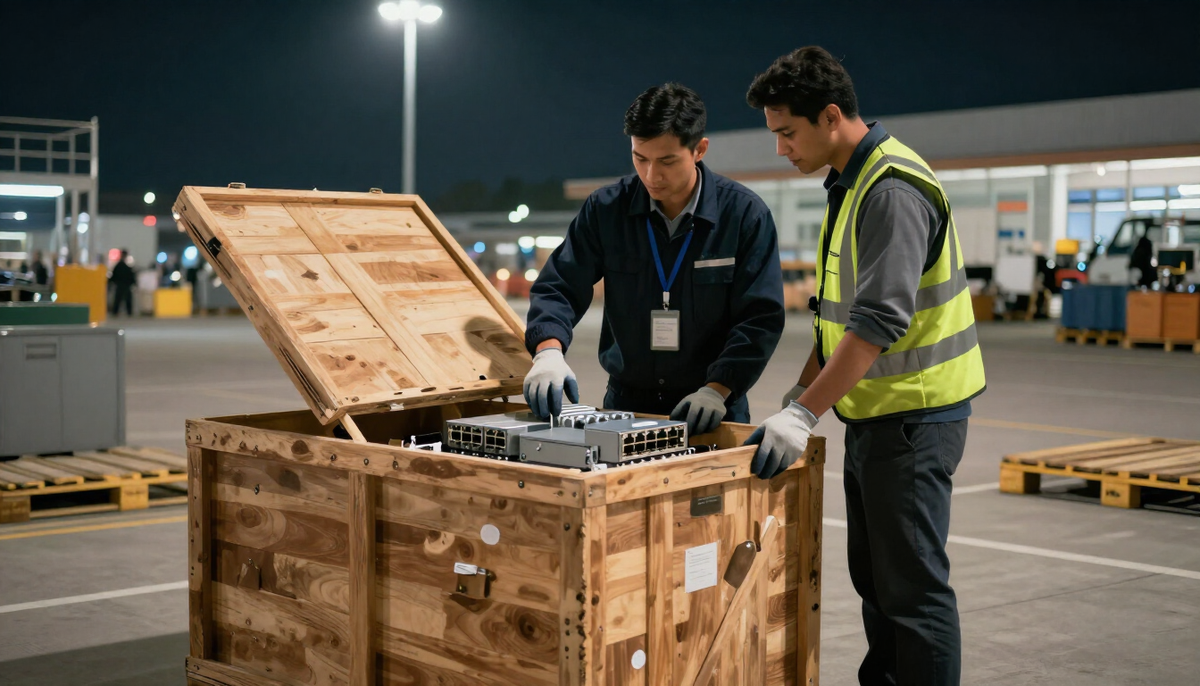
In 2026 our team in Argentina handled four imports of enterprise networking equipment for a Mexican technology company with no legal presence in Argentina. Each operation took about 30 days from document review to delivery, and the regulatory checks were planned before the goods left Mexico.
Two lessons from that project apply to most vendors. The first is that ENACOM and electrical safety are separate files with separate owners: the radio approval follows the model and its holder, while the electrical safety declaration follows the importer, and both had to be lined up before the first shipment. The second is that a DDP promise only works when the seller knows who signs as importer. Selling delivered duty paid to an Argentine customer means someone in Argentina takes the declaration, and our guide on DDP for IT hardware explains the risks of leaving that question open.
How should you prepare a shipment before it leaves the factory?
Start with the product list, not the freight booking. For each model, decide whether it is in scope, whether the professional exemption applies and who will sign the declaration, then gather the documents while the goods are still at origin.
A practical sequence looks like this:
- List every model with its rated voltage, power consumption and intended use, including spare power supplies and accessories.
- Match each model to Appendix I or IV of Resolution 16/2025, or confirm that it is excluded or qualifies as professional equipment.
- Collect the CB certificate and test report, or another certificate the framework accepts, and check that it is still valid. Under Appendix IV, product certificates last four years from issue.
- Obtain the certificate holder's written authorization for the Argentine importer and draft the DJC with the data that Disposición 1/2024 requires.
- Where the mark applies, prepare the conformity mark and QR code so they are on the product or packaging before it is sold.
- Give the despachante the classification analysis and the professional equipment decision, so the customs declaration matches the file.
None of these steps needs the goods to be in Argentina, which is exactly why they should happen before shipment. Fixing a label or chasing an authorization letter is quick at the factory and slow at Ezeiza.
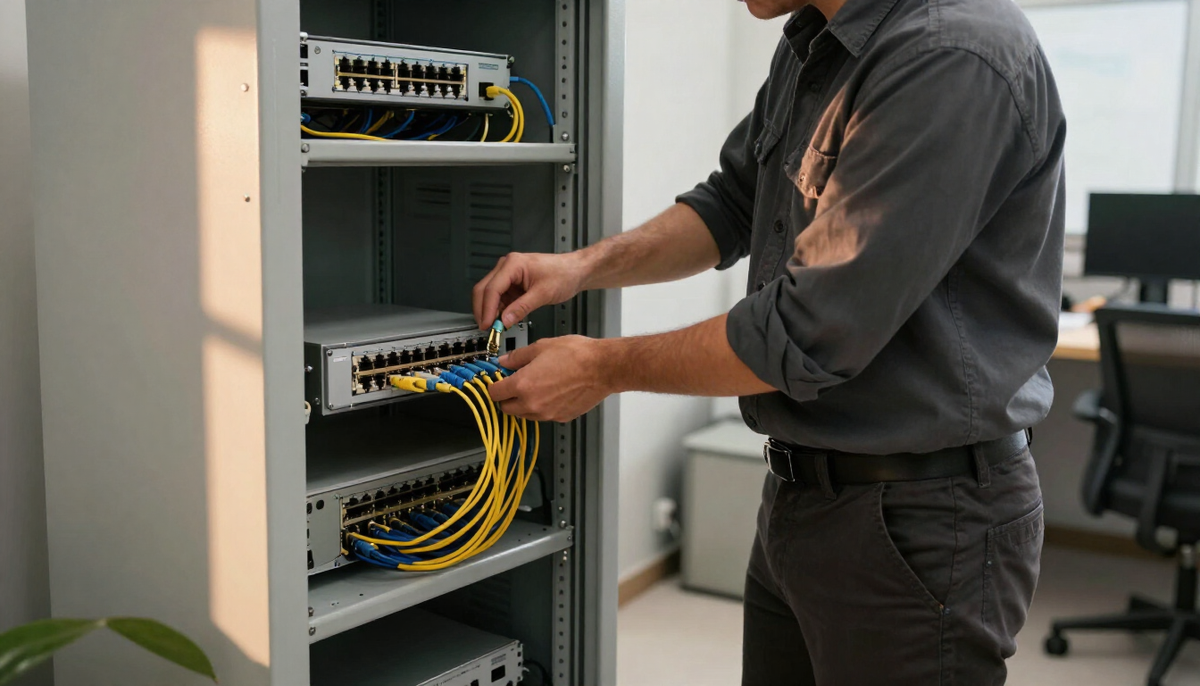
Need an importer in Argentina who can sign for your hardware?
If you sell servers, switches or other IT hardware into Argentina and have no local company, the electrical safety question is really a question of who stands behind the declaration. Settle that before the order is confirmed and the rest of the import becomes routine.
Comex IOR Services acts as importer for technology companies in Argentina, Brazil, the United States, the European Union and Uruguay, and we review the electrical safety and ENACOM position of each model before anything ships. Tell us what you are sending, where it has to be delivered and when, and we will come back with the route that fits and a landed cost. Start the conversation with our team about an Importer of Record for IT hardware in Argentina.
Frequently asked questions
Does IT hardware need electrical safety certification to be sold in Argentina?
Products in the scope of Resolución 16/2025, such as desktop computers, monitors, POS terminals and stand-alone power supplies running between 50 and 1,000 volts AC, need a declaration of conformity backed by a product certificate and a QR conformity mark. Professional equipment is exempt from certification but still needs the declaration.
Does Argentina accept IECEE CB certificates for electrical safety?
Yes. For electronics under Appendix IV of Resolución 16/2025, certificates issued within the IECEE CB Scheme are accepted to support the declaration of conformity. Product certificates under that appendix are valid for four years from issue.
Who signs the declaration of conformity if the seller has no Argentine company?
The importer in Argentina, which can be the end customer or an Importer of Record. When the importer does not hold the certificate, it needs written authorization from the certificate holder or its authorized distributor, and it keeps the declaration and certificate for inspections.
Will Argentine customs hold my servers without an electrical safety certificate?
Customs no longer runs a prior electrical safety procedure, so control happens mainly after release. The customs declaration must still be accurate, including the flag for professional equipment when that exemption is used, and breaches can be sanctioned under Ley 24.240.
Is the S mark still valid in Argentina?
No. Resolución 16/2025 repealed Resolution 169/2018, and certificates issued under the old rules stayed valid for only one year. Products in scope now carry a conformity mark with a QR code, mandatory since 1 October 2025.
Are high-power GPU servers covered by the electrical safety rules?
Appendix IV of Resolución 16/2025 excludes equipment whose consumption exceeds 5 kVA, which some dense multi-GPU servers pass. Lower-power servers sold for professional use usually rely on the professional equipment exemption with a declaration of conformity.