RIGI data center imports: how approved projects in Argentina bring in equipment duty-free
By Comex IOR Services · Published · Last updated · 14 min read

In this guide
- What is the RIGI, and can a data center qualify?
- Which data center equipment enters duty-free under the RIGI?
- Who has to be the importer in a RIGI data center import?
- RIGI data center imports compared with a regular import
- What changed with Decreto 105/2026 and the Súper RIGI bill?
- Where does an Importer of Record fit around a RIGI project?
- How should a foreign vendor plan the first shipments?
- Planning hardware imports for a large project in Argentina?
- Frequently asked questions
RIGI data center imports are imports of new servers, network gear, power and cooling equipment by a company whose investment project was approved under Argentina's Régimen de Incentivo para Grandes Inversiones. For that company, the equipment enters free of import duty, the statistics fee and customs perceptions, but only the approved project vehicle can claim the benefit.
That last condition is where most hardware vendors and integrators get caught. The RIGI is one of the most generous customs regimes Argentina has ever offered, and it now runs until July 2027, but it rewards one specific legal entity for one specific project. A foreign manufacturer shipping GPU servers to that project, a regional integrator delivering switchgear, or a cloud company testing the market before committing USD 200 million all stand in different positions, and each needs a different import plan.
This guide explains what the RIGI is, which data center equipment qualifies, who has to appear as the importer, how a RIGI import compares with a regular one, what changed in 2026 with Decreto 105/2026 and the Súper RIGI bill, and where an Importer of Record still fits. If you need the basics of the Argentine import process first, our guide on how to import technology into Argentina covers registration, ENACOM and taxes.
What is the RIGI, and can a data center qualify?
The RIGI is a 30-year incentive regime for large investments, created by Ley 27.742 in July 2024 and regulated by Decreto 749/2024. A data center can qualify if it is structured as a new project of at least USD 200 million in computable assets, run by a dedicated project vehicle and approved by the Ministry of Economy.
The law lists technology and infrastructure among the eligible sectors, alongside energy, mining, oil and gas, forestry, tourism and steel. Decreto 105/2026 rewrote the definition of the technology sector and now expressly includes software, robotics and artificial intelligence, together with biotechnology, nanotechnology, aerospace and other fields. The decree does not use the words "data center", so each project is assessed on how its activity fits those definitions, and the approval resolution is what settles the question for a given investment.
The money is the first filter. The general minimum is USD 200 million in computable assets, and the regulation can set higher floors by sector, up to USD 900 million. At least 40% of the minimum has to be invested in the first two years, although the regulation allows that share to drop to 20% in exceptional cases. The investment plan must also commit 20% of the total investment to local suppliers, as long as local supply is available on market terms of price and quality.
The second filter is structure. The benefits go to a Vehículo de Proyecto Único, or VPU: an Argentine sociedad anónima, the branch of a foreign company or a joint venture set up only for that project. An existing company can instead register a dedicated branch with its own capital and its own tax ID. ARCA, the Argentine tax and customs agency, assigns each adhered project a specific CUIT, and that CUIT is the one that appears on the import declarations that claim the exemption.
In return, the VPU gets a 25% income tax rate, accelerated depreciation, progressive freedom to keep export proceeds abroad and, most relevant for hardware, a customs package that removes most of the cost of bringing equipment in. You can read the regime's main conditions on the Ministry of Economy's official RIGI requirements page.
Which data center equipment enters duty-free under the RIGI?
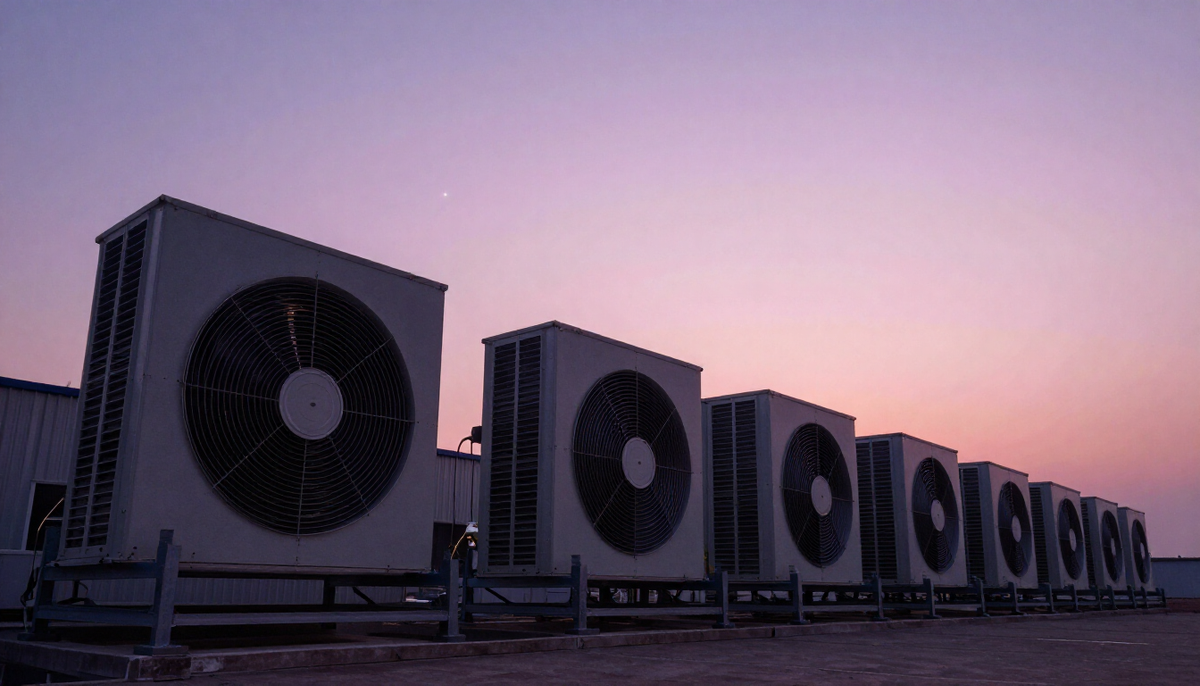
New capital goods, spare parts, parts and components imported for the approved project enter free of import duty and the 3% statistics fee, with no destination verification. That covers most of a data center bill of materials: servers, storage, switches, UPS systems, transformers, chillers and racks. Consumables, inputs and used equipment stay outside the benefit.
The exemption sits in Article 190 of Ley 27.742 and applies to both definitive imports for consumption and temporary imports. ARCA's Resolución General 5590/2024 then added that these imports are also free of the national and local perception regimes that normally collect VAT, income tax and gross income tax in advance at clearance. For a data center importing tens of millions of dollars in equipment, that removes a large cash advance that would otherwise sit with the tax agency for months.
Decreto 105/2026 narrowed the scope in one important way. It states that the tariff benefit for adhered VPUs applies to new capital goods, spare parts, parts and components, and does not apply to inputs. In practice, a GPU server, a battery cabinet or a precision cooling unit qualifies; cleaning chemicals, packaging, cabling sold by the meter for general use or office supplies do not. Where the line falls for items like copper busbars, cable trays or fiber patch cords depends on how they are classified and described in the investment plan, which is why the equipment list should be drafted with customs in mind.
The word "new" also matters. The exemption covers new goods, so refurbished servers or used power equipment pay the normal import duty even when they go into a RIGI project. Argentina no longer requires a used-goods certificate after Decreto 273/2025, but that change makes refurbished imports easier, not exempt.
There is a regulatory side to remember too. The RIGI removes duties and perceptions; it does not remove technical requirements. Wi-Fi access points, 5G equipment, microwave links and anything else with a radio still needs ENACOM registration, and electrical safety rules for the products concerned still apply. Export controls at origin are also unchanged: US-controlled GPUs need whatever license the Bureau of Industry and Security requires for Argentina, regardless of the Argentine incentive.

Who has to be the importer in a RIGI data center import?
To claim the exemption, the VPU itself, under the CUIT ARCA assigned to the project, has to be the importer on the declaration. A foreign vendor or an Importer of Record cannot pass the RIGI benefit through its own CUIT. The only other route is a supplier formally adhered to the RIGI, and it cannot import inputs for the VPU.
This is the point many sales teams miss. A hardware manufacturer that quotes DDP Buenos Aires to a RIGI project usually ends up importing under its own name or an IOR's name, which means a regular import with full duty, the statistics fee and perceptions, and then invoicing the project for goods that could have entered duty-free. The approved project pays more, and the vendor carries tax credits it may never use.
The cleaner structure for a RIGI data center import is for the VPU to buy on terms such as FCA or CIP, act as importer of record through its own despachante de aduana, and file under its project CUIT. The vendor's job becomes delivering accurate commercial invoices, packing lists with serial numbers, technical sheets and a tariff classification that matches the investment plan. Our guide to how an Importer of Record in Argentina works explains who signs what in a regular shipment, and the same roles apply here with the VPU in the importer's seat.
Decreto 105/2026 also tightened the supplier route. A supplier adhered to the RIGI can import only certain goods for the project, and the decree states that it can never supply imported inputs or intermediate goods to the VPU. For construction and infrastructure contracts, imported value is capped at 50% of the contract value. Service providers get the incentives only for capital goods and IT goods. Adhering as a supplier is a separate application before the Secretaría de Industria y Comercio, with a sworn statement on the goods and a three-year trade and foreign exchange balance, so for most foreign manufacturers the VPU-as-importer model is the realistic one.
RIGI data center imports compared with a regular import
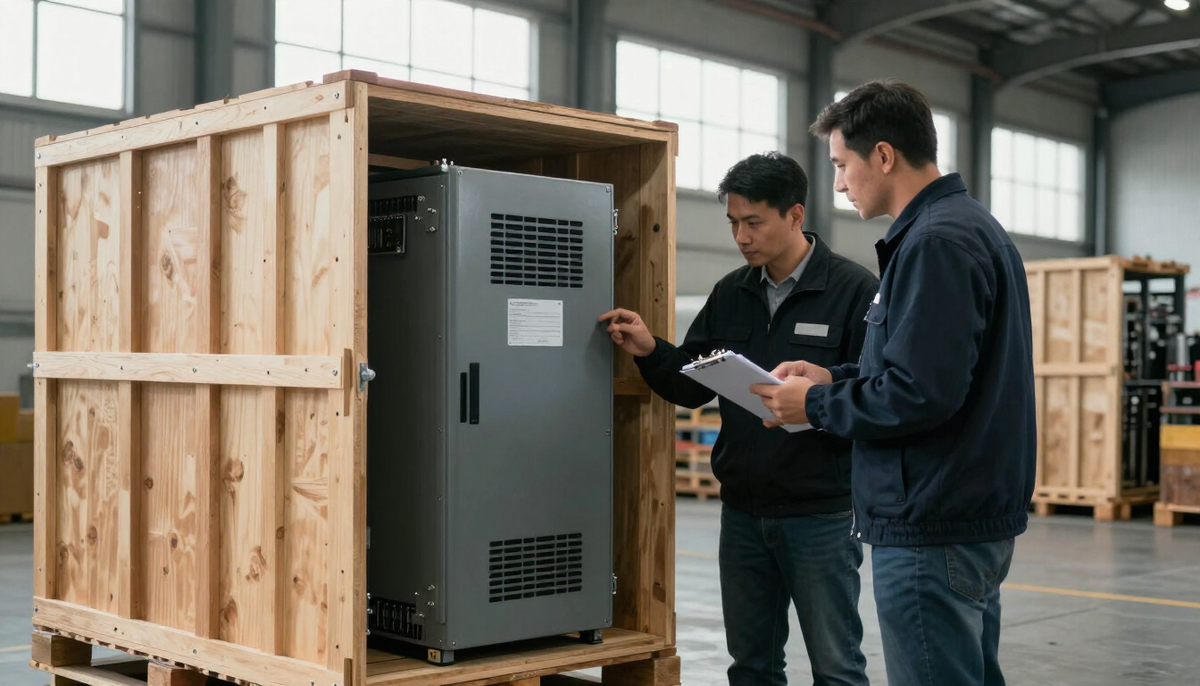
The difference is mostly in duties and cash flow, not in paperwork. A RIGI import still needs classification, valuation, technical approvals and a despachante de aduana; what changes is who files and what gets charged at clearance.
| Item | Regular import into Argentina | RIGI import by an approved VPU |
|---|---|---|
| Importer on the declaration | Any registered importer: customer, distributor or IOR | The VPU, under the CUIT assigned to the project |
| Import duty (Derecho de Importación) | Rate of the NCM tariff line, extra-zone for non-Mercosur goods | Exempt for new capital goods, spare parts, parts and components |
| Statistics fee | 3% of customs value, capped by value bracket under Decreto 1140/2024 | Exempt |
| VAT and advance perceptions | VAT at 21% or 10.5%, plus VAT, income tax and gross income perceptions | Perceptions do not apply; VAT is handled under the regime's tax credit certificate mechanism |
| Used or refurbished equipment | Allowed, with full duty | Allowed, but outside the exemption |
| Consumables and inputs | Taxed normally | Excluded from the benefit |
| ENACOM and technical approvals | Required where applicable | Still required where applicable |
| Main risk | Landed cost and cash tied up in perceptions | Using exempt goods outside the project, which triggers fines and possible loss of benefits |
The statistics fee caps are worth knowing even in a regular import. Decreto 1140/2024 extended the 3% fee until 31 December 2027 and capped it at USD 150,000 per declaration above one million dollars of value, so a large shipment of AI servers does not pay 3% on the full amount. Under the RIGI it simply disappears.
The last row is the one compliance teams should read twice. Goods imported duty-free under the RIGI must be used in the approved project. Moving GPU servers from the RIGI site to another company's facility, selling surplus equipment on the local market or using exempt spares for an unrelated client can lead to fines and, in serious cases, to loss of the regime's benefits, so asset tracking by serial number is not optional.
What changed with Decreto 105/2026 and the Súper RIGI bill?
Decreto 105/2026, published in the Boletín Oficial on 19 February 2026, extended the deadline to join the RIGI by one year from 8 July 2026, to July 2027, and added AI and software to the technology sector. Separately, a Súper RIGI bill for new industries such as AI and data centers is still waiting for the Senate.
For data center investors, the extension is the practical news. The original window was two years from the law's entry into force; a project that was not ready to file in 2026 now has until July 2027 to submit its investment plan. The decree also opened a path for technology expansions: an existing project can add a new product as a separate RIGI project through a dedicated branch, if the product differs in at least 50% of its components by value, the investment reaches USD 250 million and the product's market life is ten years or less, supported by an independent technical report.
The Súper RIGI is a different instrument. The executive sent it to Congress as Mensaje 181/2026 under the name Régimen de Incentivo para Grandes Inversiones en Nuevas Industrias. It targets activities that do not yet exist in Argentina or are only at pilot stage, including artificial intelligence, semiconductors, advanced biotechnology and digital infrastructure such as data centers, with a minimum investment of USD 1,000 million, a 15% income tax rate and exemptions from import and export duties. The Chamber of Deputies approved it on 24 June 2026 by 130 votes to 106, but in October 2026 it remained stalled in the Senate, where allied blocs were demanding stronger preferences for local suppliers.
Until the Súper RIGI becomes law, the RIGI is the regime that actually applies. A hyperscale project planning to file under the new law should still prepare its equipment list, classification and supplier structure now, because those pieces carry over to either regime.
Where does an Importer of Record fit around a RIGI project?
An Importer of Record does not replace the VPU for exempt imports, but it covers almost everything around them: equipment needed before the project is approved, shipments from vendors that cannot use the RIGI, used or refurbished hardware, spares and replacements, and goods for related sites outside the approved plan.
The timeline explains why. Building a data center starts long before the approval resolution is published. Proof-of-concept clusters, network gear for a temporary operations office, test equipment for the power design and early long-lead items often have to be in Argentina while the investment plan is still under review. Those shipments are regular imports, and if the investor's entity is not yet registered as an importer, an Importer of Record can bring them in under a clean structure and with the full tax picture visible in advance.
The same applies after approval. A foreign OEM sending replacement parts under warranty, a software company shipping a small appliance for a pilot, or a vendor supplying a facility that is not part of the approved project all need a lawful importer in Argentina, and none of them can use the VPU's CUIT. If you are new to the concept, our explainer on what an Importer of Record is sets out the responsibilities that come with the role.
Comex IOR Services works on both sides of that line. For exempt imports, the team coordinates with the VPU's despachante de aduana so that classification, valuation and documents match the approved plan. For everything that falls outside the RIGI, it acts as importer, so the equipment arrives on time without forcing the project company to stretch its exemption to goods it does not cover.
How should a foreign vendor plan the first shipments?
Start by asking whether your customer's project is already approved and which CUIT will import. Then align the Incoterm, the equipment list and the tariff classification with the investment plan before you quote, and route anything outside the RIGI through a separate importer from day one.
The order of decisions matters more than speed. If the approval resolution is published and the VPU is registered, quote FCA or CIP, let the VPU import, and make sure your commercial invoice describes each item exactly as it appears in the approved list, with serial numbers and NCM codes the customer's despachante has reviewed. If the project is still under review, split the plan: early equipment as a regular import through an Importer of Record, and the bulk of the build under the RIGI once the CUIT exists.
Landed cost is the other piece. Investors compare the RIGI scenario against a regular import to decide what to ship first and what to hold, and vendors that bring those numbers to the table close faster. ComexAR, the Argentine operation of Comex IOR Services, offers duty and landed-cost modeling for Argentina that covers duties, perceptions, port and warehouse charges and regulatory approvals line by line. For the physical side of moving UPS systems, chillers and racks on schedule, our guide to data center equipment import covers packing, transport and installation windows.
Finally, plan for the audit trail. RIGI benefits last for decades, and so does the obligation to show that every exempt server and transformer stayed in the project. Keeping a single equipment register that links purchase orders, import declarations, serial numbers and installation locations is far easier at the start than after a customs inquiry.
Planning hardware imports for a large project in Argentina?
If your company is supplying, financing or building a data center in Argentina, the import structure decides how much of the RIGI benefit actually reaches the project. Tell Comex IOR Services what you are shipping, who the buyer is and where the project stands, and our team will map which shipments go under the RIGI, which need an importer, and what each will cost. Talk to us about Importer of Record services for Argentina and get a clear plan before the first crate leaves the factory.
Frequently asked questions
What is the RIGI in Argentina?
The Régimen de Incentivo para Grandes Inversiones is a 30-year incentive regime created by Ley 27.742 for projects of at least USD 200 million. Approved projects get a 25% income tax rate, accelerated depreciation, foreign exchange flexibility and exemption from import duties on new capital goods.
Can a data center project qualify for the RIGI?
Yes, if it is structured as a new project of at least USD 200 million in computable assets, run by a dedicated project vehicle and approved by the Ministry of Economy. Decreto 105/2026 added artificial intelligence and software to the technology sector, but each project is assessed on its own investment plan.
Which data center equipment is exempt from import duty under the RIGI?
New capital goods, spare parts, parts and components for the approved project, such as servers, switches, storage, UPS systems, transformers and cooling units. They are exempt from import duty, the statistics fee and customs perceptions. Inputs, consumables and used goods are not covered.
Can a foreign vendor or an Importer of Record import under the RIGI exemption?
No. The exemption is claimed by the approved project vehicle (VPU) under the CUIT ARCA assigns to the project, or by a supplier formally adhered to the RIGI. A foreign vendor usually sells on FCA or CIP terms and lets the VPU import, while an Importer of Record handles shipments that fall outside the regime.
Does the RIGI cover refurbished servers?
No. The customs exemption applies to new goods only. Refurbished or used servers can still be imported into Argentina without a used-goods certificate since Decreto 273/2025, but they pay the normal import duty and taxes even when they go into a RIGI project.
Is the Súper RIGI for data centers already in force?
Not as of October 2026. The bill, sent as Mensaje 181/2026, sets a USD 1,000 million minimum for new industries such as AI, semiconductors and data centers. The Chamber of Deputies approved it on 24 June 2026, but it is still pending in the Senate, so the RIGI is the regime that applies today.