
ENACOM RAMATEL registration: what changes for IT and telecom hardware on December 1, 2026
By Comex IOR Services · Published · Last updated · 14 min read

In this guide
- What is ENACOM RAMATEL registration?
- What changes on December 1, 2026?
- Which IT and telecom hardware needs a RAMATEL registration?
- How does certification work under the new model?
- What happens to approvals granted before December 1?
- Who can hold the registration if you have no company in Argentina?
- Do used, refurbished and sample units need RAMATEL registration?
- How should you plan shipments around the December switchover?
- Where an Importer of Record fits in the RAMATEL process
- Frequently asked questions
ENACOM RAMATEL registration is the entry in Argentina's telecom equipment registry that a radio or telecom product needs before it can be sold there. From December 1, 2026, that registration will rest on a certificate of conformity from a private, ENACOM-registered certification agency, will no longer expire, and will be checked through market surveillance instead of renewals.
If you ship Wi-Fi access points, cellular routers, laptops, IoT gateways or 5G radio units to Argentina, this is the most important regulatory change of the year for your product line. The rules were approved in February 2026, were meant to start on September 1, and were then pushed back three months. That delay gives vendors a short window to decide whether to register under the old procedure now or wait for the new one, and the answer depends on what you sell, how fast you need to ship, and who will hold the registration in your name.
This guide explains what ENACOM RAMATEL registration is, what changes on December 1, which hardware is affected, what happens to approvals granted before the switch, and how a foreign company without an Argentine entity can keep control of its product. For the wider picture across our five destinations, our overview of telecom equipment homologation by country compares Argentina with Brazil, the United States, the European Union and Uruguay.
What is ENACOM RAMATEL registration?
RAMATEL is the Registro de Actividades y Materiales de Telecomunicaciones, the registry kept by ENACOM, Argentina's communications regulator. It has two sides: one for the companies that make, import or represent telecom equipment, and one for the equipment itself. A product has to be listed in RAMATEL before it can be marketed in Argentina.
The company side matters first. Manufacturers, importers and local representatives of foreign manufacturers must register in the activities registry before they can apply for any equipment approval. Under the current procedure, ENACOM divides that registry into a manufacturing section for local producers and a commercialization section for importers and representatives. A foreign vendor that has no Argentine entity cannot simply sign up on its own; someone with a local legal presence has to appear as the registered party.
The equipment side is where the approval lives. Today, ENACOM recognizes three outcomes. Homologación confirms that a product meets the applicable Argentine technical standards. Codificación is used for equipment that has no specific technical standard. Autorización follows a similar path but restricts the use of the equipment to the registration holder, which suits private networks and internal deployments rather than resale.
For importers, the practical consequence is simple. A radio product that is not in RAMATEL cannot be legally commercialized in Argentina, and the registration is tied to a specific holder. That makes the RAMATEL entry a commercial asset in its own right, and it is why the question of who holds it deserves as much attention as the testing itself.
What changes on December 1, 2026?
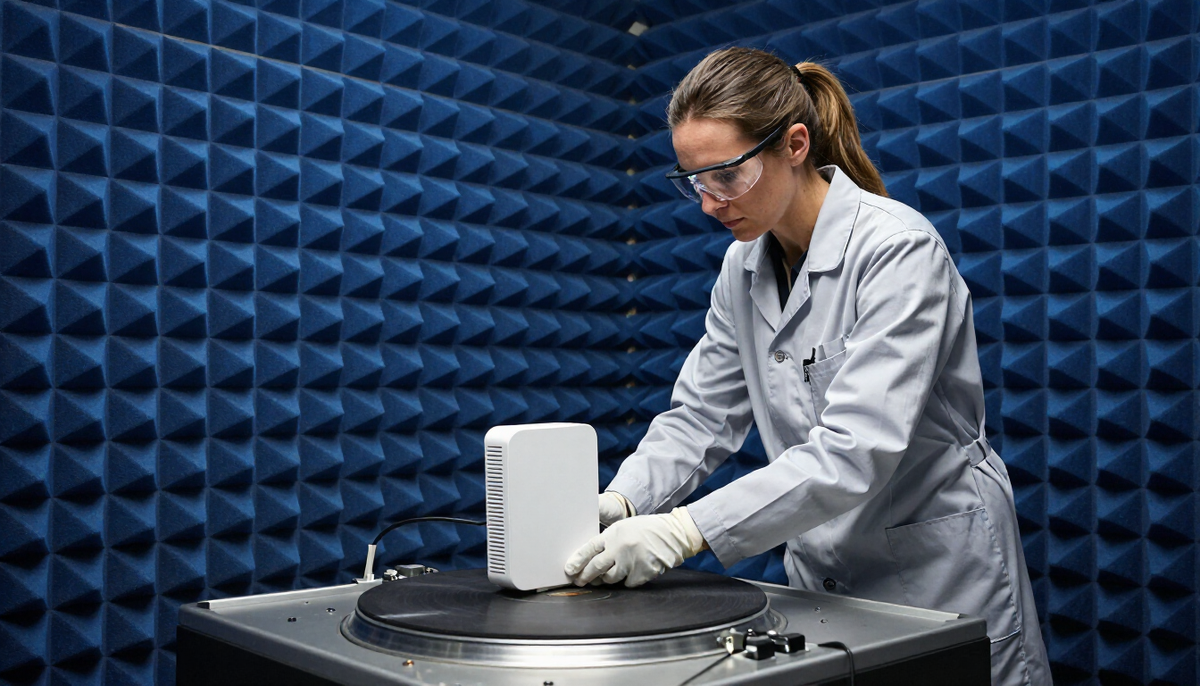
On December 1, 2026, Argentina moves from approvals reviewed directly by ENACOM to approvals based on certificates of conformity issued by private certification agencies. Registrations stop expiring, products can be registered in families, and compliance is checked after the product is on sale through audits and market surveillance.
The new framework comes from Resolución ENACOM 57/2026, published in the Boletín Oficial on February 26, 2026 and in force from the next day. It approved three instruments: a new RAMATEL regulation, a registry of certification agencies for telecom materials, and a registry of testing laboratories. The RAMATEL regulation was due to apply from September 1, 2026. Resolución ENACOM 843/2026, published on August 28, 2026, moved that date to December 1, 2026, after the regulator concluded that the conditions for a correct rollout were not yet in place. The repeal of the old rules, including Resolución 729/80 of the former Secretaría de Estado de Comunicaciones, was pushed back to the same day.
At the time of writing, the ENACOM guidance on RAMATEL registration still states that the new rules take full effect on December 1, 2026 and that registrations continue under Resolution 729/80 until then. If you are planning a launch for the first quarter of 2027, that is the date to work with, while keeping an eye on any further announcement from the regulator.
The table below summarizes the shift for a hardware vendor.
| Topic | Until November 30, 2026 | From December 1, 2026 |
|---|---|---|
| Legal basis | Resolution 729/80 and related rules | Resolución ENACOM 57/2026, as amended by Resolution 843/2026 |
| Who assesses conformity | ENACOM reviews the file and lab reports | A registered certification agency issues a certificate of conformity; ENACOM grants the homologation when requirements are met |
| Validity of a registration | Limited term, renewal required | No expiry; continuous certification and surveillance |
| Scope of one registration | Model by model | Single models or product families with similar technical characteristics |
| Control after approval | Mainly at the time of approval | Audits and market surveillance; Class A products controlled every two years |
| Online sales | No specific listing rule | Every web listing must show the RAMATEL number |
Which IT and telecom hardware needs a RAMATEL registration?
Anything that transmits or receives radio signals is in scope, along with a list of telecom terminals that ENACOM publishes and updates. For IT buyers, that means laptops, tablets, modems, Wi-Fi and Bluetooth devices, IoT sensors and cellular modules, plus professional gear such as 2G to 5G base stations and repeaters.
The new regulation splits equipment into two classes. Class A covers products for the general public, such as phones, tablets, Wi-Fi routers, Bluetooth devices and IoT sensors. Class B covers professional and infrastructure equipment, such as radio base stations, broadcast transmitters, repeaters and intelligent transport radars. The class decides how much post-market control applies: Class A products are subject to surveillance by the certification agency every two years, while Class B rests mainly on the initial evaluation.
Where does data center and enterprise hardware sit? A rack server, a storage array or a wired switch with no radio module is not the kind of product the RAMATEL list targets, so it usually moves through customs on the general rules covered in our guide to import technology into Argentina. The picture changes as soon as a radio is inside the box. Out-of-band management cards with cellular backup, branch routers with LTE failover, Wi-Fi access points, private 5G radio units and edge gateways with Bluetooth all bring the shipment into ENACOM territory. Check the bill of materials, not just the product category, because a single embedded module can be enough.
How does certification work under the new model?
Under the new model, an accredited laboratory tests the product, a registered certification agency reviews the test reports and technical file and issues a certificate of conformity, and ENACOM then grants the homologation and records it in RAMATEL. The regulator steps back from the technical review and keeps the role of registrar, auditor and enforcer.
The certification agencies have to meet demanding conditions. According to summaries of the regulation published by Argentine law firms, an agency must have legal personality in Argentina, be accredited by the Organismo Argentino de Acreditación, appoint a responsible director with a valid professional registration, and keep specialized staff in the country. Testing laboratories must be accredited by the same body under IRAM-ISO/IEC 17025, appoint a technical director and accept ENACOM audits. In other words, the private route is new, but it is still an Argentine route, run by local entities that the regulator can supervise.
Product families are the change that will save the most money for vendors with large catalogs. Models that share brand, manufacturer, technology, functionality and radio characteristics can be registered together, with testing focused on the most representative model. A company that sells six variants of the same access point, differing only in housing or memory, no longer has to run six separate approvals.
The other side of the bargain is accountability after launch. Registrations no longer expire, but they can be suspended or cancelled if the certificate of conformity is withdrawn or if the product fails a market check. Every online listing, whether on the vendor's own store or on a marketplace, must display the RAMATEL number. For a brand that sells through distributors and resellers, this means one non-compliant listing by a third party can draw attention to the whole product family, so the registration holder needs visibility over the channel.
What happens to approvals granted before December 1?
Registrations obtained under the old procedure stay valid for three years and then have to be migrated to the new regulation. If they are not adapted in time, they are cancelled automatically. Summaries of Resolution 57/2026 place the end of that transition on February 26, 2029.
This creates a real choice for products launching in late 2026. Registering under Resolution 729/80 before November 30 uses a procedure that ENACOM, labs and consultants already know, and it gives you a registration that will hold until early 2029. The cost is that you will have to go through the new certification route later anyway, and you lose the benefit of family registration for now. Waiting for December 1 puts you on the permanent model from day one, with no expiry and the chance to group models, but it also means depending on certification agencies and laboratories in their first weeks of operation, when queues and interpretation questions are likely.
As a rule of thumb, if the product has to be on sale in Argentina before the end of the first quarter of 2027 and the file is ready, finishing it under the current procedure is the safer route. If the launch is later, or the catalog is large enough that family registration changes the economics, preparing for the new model makes more sense. Either way, the activities registration of the holder has to be in place first, and that step is often the slowest for a foreign company.
Who can hold the registration if you have no company in Argentina?
The registration must be held by a party registered in RAMATEL's activities registry, which means a manufacturer, importer or local representative with a legal presence in Argentina. A foreign vendor without an entity needs a local partner to appear as the holder, and the choice of that partner decides who controls the product's access to the market.
Many vendors let their first distributor register the product because it is the fastest path. The problem appears later. If the relationship ends, the registration stays with the distributor, and the vendor's own product may not be sold through anyone else until a new registration is obtained in another name. Under the new model, where registrations no longer expire, that dependence can last indefinitely.
A neutral holder avoids the trap. An Importer of Record, or a local representative that works for the vendor rather than for a single reseller, can hold or coordinate the registration, import the goods under its own tax ID, and supply several distributors without tying the product to any one of them. If you are new to the model, our explainer on what an Importer of Record does covers the legal responsibilities involved. The customs side still has to be handled by a licensed customs broker; for clients who need that service directly in Argentina, our sister operation ComexAR has a customs brokerage team in Argentina that works alongside the importer.

Do used, refurbished and sample units need RAMATEL registration?
According to summaries of Resolution 57/2026, refurbished, used, handcrafted, sample and experimental-use materials are exempt from the approval requirement, although they must still comply with the applicable technical rules. That is a meaningful relief for test units and secondary-market hardware, but it does not remove customs or tax obligations.
Two cautions apply. First, the exemption concerns the approval, not the rest of the import. Used goods face their own restrictions and valuation questions at Argentine customs, which we cover in our guide to importing refurbished servers. Second, sample status should match reality. A batch of fifty "samples" that ends up installed at a customer site is a commercial shipment, and the RAMATEL rules on commercialization will apply to it. Keep sample quantities small, document their purpose and keep them under the control of the importer.
How should you plan shipments around the December switchover?
Plan backwards from the date the product must be on sale, and make the RAMATEL decision part of the shipping plan instead of a separate compliance project. The main risks are a registration held by the wrong party, a file caught between two procedures, and stock arriving in Argentina before the product can legally be sold.
A practical sequence for the next few months looks like this:
- Confirm whether each product contains a radio or appears on ENACOM's list, using the bill of materials rather than the marketing name.
- Decide who will hold the registration and get that party into the RAMATEL activities registry before any equipment application.
- Choose the route: finish under Resolution 729/80 before November 30, or prepare a family file for a certification agency after December 1.
- Align lab testing, labels and the technical file with the chosen route, and keep the test reports in a form that can be reused when the old registration has to be migrated.
- Schedule the first commercial shipment for after the registration is granted, and ship only documented samples before that.
| Situation | Recommended route | Main watch point |
|---|---|---|
| File ready, launch before Q1 2027 | Finish under the current procedure | Plan the migration before February 2029 |
| Large catalog of similar models | Wait for a family registration under the new model | Early queues at agencies and labs |
| Professional Class B gear for one project | Assess autorización for the project owner or a registration held by a neutral IOR | Use restricted to the holder under autorización |
| Used or refurbished units | Approval exemption, with technical compliance | Customs restrictions on used goods |
Where an Importer of Record fits in the RAMATEL process
An Importer of Record gives a foreign vendor a local legal party that can import, pay duties and taxes, and hold or coordinate regulatory registrations without the vendor setting up a company. For RAMATEL, that means the registration stays independent from any single distributor and the vendor keeps control of its product in Argentina.
The value is clearest in the transition period. A vendor with products already approved under the old rules needs someone to track the 2029 deadline and run the migration. A vendor launching new radio products needs a holder registered in the activities registry before the first test report is even submitted. And a vendor selling through several channels needs one party that can see where the product is listed and whether the RAMATEL number is shown. Those are the tasks an IOR with telecom experience already handles every day.
If you are preparing a launch in Argentina for late 2026 or 2027 and want to decide which route fits your products, talk to the team at Comex IOR Services. We can review your bill of materials, tell you which items fall under ENACOM RAMATEL registration, and act as your importer of record for telecom hardware in Argentina so that the registration, the customs clearance and the tax side stay under one plan.
Frequently asked questions
What is ENACOM RAMATEL registration?
It is the entry in RAMATEL, the Registro de Actividades y Materiales de Telecomunicaciones kept by ENACOM, Argentina's communications regulator. Radio and telecom equipment must be registered there before it can be marketed in Argentina, and the holder must also be registered as a manufacturer, importer or local representative.
When do the new RAMATEL rules start?
On December 1, 2026. Resolución ENACOM 57/2026 set the original start for September 1, 2026, and Resolución ENACOM 843/2026, published on August 28, 2026, moved it to December 1. Until then, registrations continue under Resolution 729/80.
Are RAMATEL registrations granted before December 1, 2026 still valid?
Yes. They stay valid for three years and must then be adapted to the new regulation, or they are cancelled automatically. Summaries of Resolution 57/2026 place the end of the transition on February 26, 2029.
Do servers and storage need RAMATEL registration?
A server, storage array or wired switch with no radio module is not the type of product the RAMATEL list targets. Any device with Wi-Fi, Bluetooth, cellular, LoRa or other radio modules, including management cards with cellular backup, should be checked against ENACOM's list.
Can a foreign company hold a RAMATEL registration without an Argentine entity?
Not directly. The holder must be registered in RAMATEL's activities registry with a legal presence in Argentina. Foreign vendors usually rely on a distributor, a local representative or an Importer of Record, and a neutral holder keeps the vendor in control of its product.
Do samples and used equipment need RAMATEL registration?
Summaries of Resolution 57/2026 say refurbished, used, sample and experimental-use materials are exempt from approval, though they must still meet the applicable technical rules. Customs restrictions on used goods and normal import taxes still apply.