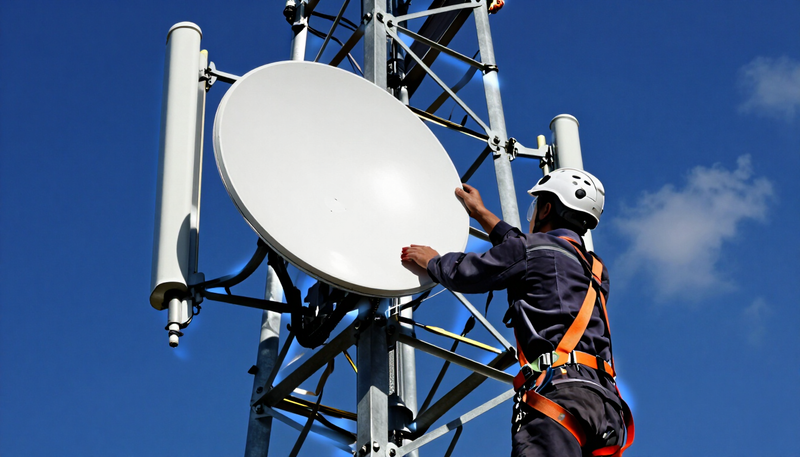
How to import GNSS receivers and autosteer systems: radio approvals, classification and timelines by country
By Comex IOR Services · Published · Last updated · 15 min read

In this guide
- Why are GNSS receivers and autosteer kits harder to import than they look?
- How are GNSS receivers and autosteer components classified?
- Which radio approvals does each country require for GNSS receivers?
- Do RTK correction radios need a frequency license as well as approval?
- What does a real shipment from Spain to Argentina look like?
- How long does it take to import GNSS receivers in each market?
- Are GNSS receivers export-controlled when they leave the EU or the US?
- Who should act as importer for precision agriculture hardware?
- Planning your next guidance system shipment
- Frequently asked questions
To import GNSS receivers and autosteer systems, you need three things in each destination: the right tariff code for every component, radio approval for anything that transmits, and a local importer able to hold those approvals. Receive-only satellite antennas face light rules; RTK correction radios and cellular modems drive most of the delays.
Precision agriculture has turned the tractor cab into a small telecom site. A typical autosteer kit combines a multi-constellation GNSS receiver, a guidance display, an electric steering motor or hydraulic valve, an inertial sensor, and a link for real-time kinematic (RTK) corrections, either a UHF radio or a cellular modem. Each of those parts is regulated differently, and customs officers see a box of electronics, not a farming solution.
That gap is where shipments stall. A manufacturer in Spain, Germany or the United States may have sold the same kit for years at home, yet discover at the border in Brazil or Argentina that the modem inside the display has no local approval, or that the importer named on the paperwork cannot hold one. This guide explains how classification, radio approvals and timelines work in the five markets Comex IOR Services covers: Argentina, Brazil, the United States, the European Union and Uruguay. It is written for equipment makers, dealers and integrators who sell guidance systems to growers and contractors and need them delivered without a local company of their own.
Why are GNSS receivers and autosteer kits harder to import than they look?
Because an autosteer kit is several regulated products packed together. The satellite receiver itself is usually simple to clear, but the radios, modems and steering hardware that travel with it each bring their own tariff line, approval and paperwork, and one missing approval can hold the whole shipment.
The receiver only listens. GNSS signals from GPS, Galileo, GLONASS and BeiDou arrive in the L-band, above 1 GHz, and a receive-only device does not emit anything on purpose. Regulators treat that very differently from a transmitter. The trouble starts with what surrounds the receiver. RTK guidance needs a stream of corrections from a base station or a network, and that stream arrives through a UHF radio, a cellular modem, or both. Many displays also carry Wi-Fi and Bluetooth for data transfer and remote support.
Then there is the steering side. An electric motor that replaces the steering wheel, a hydraulic valve block, angle sensors, cables and brackets are mechanical and electrical goods with their own classification. If the kit ships as a set, the importer has to decide whether it can be declared as one functional unit or must be split line by line. That decision changes duties, approvals and the documents the customs broker will ask for.
How are GNSS receivers and autosteer components classified?
GNSS receivers are normally classified in HS subheading 8526.91, radio navigational aid apparatus. Displays, steering motors, valves and cables can fall elsewhere, unless the kit qualifies as a functional unit under Note 4 to Section XVI of the Harmonized System, which lets customs classify the whole system by its main function.
The receiver position is well settled. In ruling N319428 of June 7, 2021, US Customs and Border Protection classified GNSS/INS receivers with an integrated inertial unit under HTSUS 8526.91.0040, with a general duty rate of free. In Brazil, the Receita Federal reached the same heading for RTK GNSS receivers used in precision agriculture in Solução de Consulta COSIT nº 98.029 of February 4, 2025, placing them in NCM 8526.91.00. In the EU Combined Nomenclature, radio navigational receivers sit in CN 8526 91 20, and the same six-digit base applies across the Mercosur tariff used by Argentina, Brazil and Uruguay.
The rest of the kit needs more care. A guidance display that runs its own software can look like a data processing machine or a monitor when shipped alone. A steering motor is an electric motor until it is presented as part of a guidance system. Note 4 to Section XVI allows a combination of machines that together perform a clearly defined function to be classified under the heading for that function, but only when the components are intended to work together and are declared that way. In practice, the importer should hold a technical description of the kit, the bill of materials and, where the stakes justify it, a binding ruling. Our guide on HS codes for servers and network hardware explains how binding rulings work in each market, and the same logic applies here.

Which radio approvals does each country require for GNSS receivers?
Receive-only GNSS receivers face light rules in most markets, while the radios and modems that carry RTK corrections need full approval almost everywhere. The table below summarizes where each market draws the line and who can hold the approval, which is the question foreign makers most often get wrong.
| Market | Receive-only GNSS receiver | UHF correction radio, cellular modem, Wi-Fi | Who can hold the approval |
|---|---|---|---|
| United States | Exempt from FCC technical provisions above 960 MHz, but must not cause interference | FCC certification for transmitters; displays and digital electronics need SDoC or certification | A US responsible party for SDoC; certification grantee can be foreign |
| European Union | In scope of the Radio Equipment Directive; CE marking, usually tested against EN 303 413 | Same directive, with the cybersecurity requirements for internet-connected radios | Manufacturer issues the declaration; the EU importer's name must appear on the product |
| Brazil | Check the model against Anatel's conformity assessment rules | Anatel homologation | A company established in Brazil |
| Argentina | Check the model against ENACOM's list | ENACOM registration in RAMATEL, new regime from December 1, 2026 | A party registered in RAMATEL with legal presence in Argentina |
| Uruguay | Check with URSEC | URSEC homologation and import certificate via VUCE, except Wi-Fi or Bluetooth-only devices | Local importer through a licensed customs broker |
United States
Under 47 CFR 15.101(b), only receivers that tune between 30 and 960 MHz need FCC equipment authorization as receivers, so a GNSS receiver working in the L-band is exempt from the technical rules of Part 15. It is still bound by the general duty not to cause harmful interference in section 15.5. The exemption covers the receiver alone. A display with a processor is a digital device that needs a Supplier's Declaration of Conformity or certification, and any UHF radio or cellular modem must be certified before it is imported for sale.
European Union
The EU takes the opposite view. The Radio Equipment Directive, applicable since June 13, 2016, covers equipment that receives radio waves for radiodetermination, so a receive-only GNSS receiver needs CE marking, a declaration of conformity and technical documentation, usually built on the harmonised standard EN 303 413. Under the directive, the importer must also put its name, registered trade name or mark and postal address on the equipment or, where that is not possible, on its packaging or an accompanying document. Internet-connected radio equipment, such as displays with cellular or Wi-Fi links, must also meet the cybersecurity requirements of Delegated Regulation (EU) 2022/30, which applied from August 2025. The European Commission notes that Delegated Regulation (EU) 2026/339 repeals it with effect from December 11, 2027, when the main obligations of the Cyber Resilience Act start to apply.
Brazil
Anatel homologation is required for radio and telecom equipment before it is sold or used in Brazil, and the holder must be a company established there. For autosteer kits, the cellular modem, Wi-Fi and Bluetooth modules and any UHF radio are the parts to check first, each by exact model. Our article on telecom equipment homologation by country covers the Anatel process in more depth.
Argentina
Argentina is in the middle of a regulatory change. Resolución ENACOM 57/2026 created a new RAMATEL regime based on private certification bodies, and Resolución ENACOM 843/2026, published in the Boletín Oficial on August 28, 2026, moved its start to December 1, 2026. Registrations granted under the previous regime stay valid for three years and must then be adapted. A guidance display with a cellular modem or a UHF radio needs a RAMATEL registration held by a party with legal presence in the country. Our guide to ENACOM RAMATEL registration explains what the new regime changes for hardware.
Uruguay
URSEC exempts devices that use only Wi-Fi 4, 5 or 6 or Bluetooth from its intervention under Resolutions 275/2021 and 297/2021. Other radio equipment, including UHF correction radios and cellular modules, needs URSEC homologation and an import certificate requested through Uruguay's foreign trade single window, VUCE.
Do RTK correction radios need a frequency license as well as approval?
Often, yes. Approval says the model may be sold and imported; a frequency license says a specific user may transmit on a specific channel. UHF base stations for RTK usually need both, while cellular corrections ride on the mobile operator's license and avoid the second step.
This distinction surprises many buyers. In several markets, the UHF bands used by RTK radios are assigned to licensed private mobile services, and the farmer or contractor running a base station has to obtain the license, not the importer. A model with full approval can still be illegal to operate on a channel the user is not licensed for. For an exporter, that has two consequences. The sales offer should state whether corrections come by radio or by cellular network, and the documentation sent with the shipment should list the radio's frequency range and output power, so the importer and the end user can check both the approval and the license.
Cellular corrections, delivered through an NTRIP service, simplify the regulatory side because the modem is approved once and the network operator holds the spectrum. They depend on coverage in rural areas, though, which is why many kits ship with both options. When they do, both radios have to be approved in the destination, even if the customer only plans to use one.
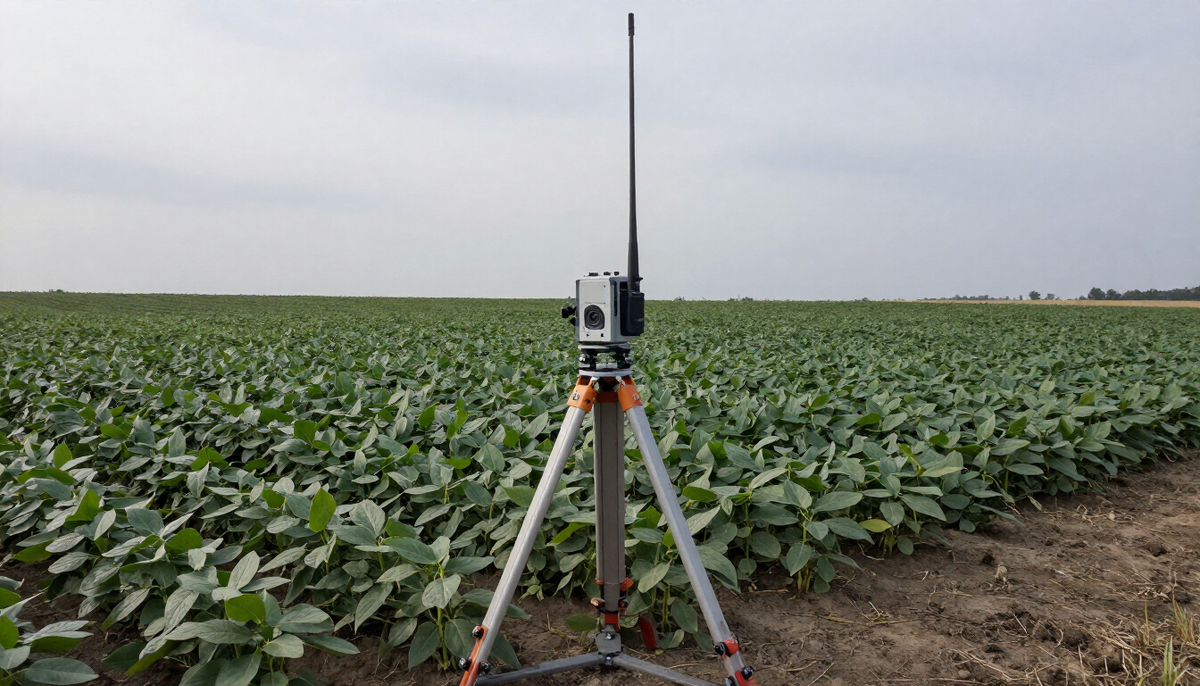
What does a real shipment from Spain to Argentina look like?
In 2026, our team in Argentina imported autosteer and 3D land-leveling systems shipped from Bilbao to Córdoba, acting as Importer of Record and handling customs clearance and logistics from origin to destination. The project took between 6 and 8 weeks, driven mostly by the regulatory steps this type of equipment requires.
The client was a European agricultural technology company with growers in Córdoba ready to install, but with no legal entity in Argentina. Before the goods left Bilbao, the work focused on the documents customs and regulators would ask for: a detailed commercial invoice and packing list by component, the technical sheets of every radio module, the tariff analysis of the receivers, displays and leveling controllers, and confirmation of which items needed a radio approval in Argentina. With that file in place, the shipment moved through clearance without the back-and-forth that usually adds weeks.
Most of the 6 to 8 weeks went into those regulatory steps, not into transport. Experience with technology equipment shortened them, because the questions customs and ENACOM tend to raise were answered before they were asked. The commercial result was what mattered to the client: equipment delivered to the farms with taxes paid by a registered local importer, so the end customers could start the season on time. For companies that need importer of record coverage on the ground in Argentina, our sister operation in Buenos Aires works with the same team.
On the cost side, every import into Argentina also pays the 3% statistics fee on the customs value, extended by Decreto 1140/2024 until December 31, 2027, on top of duties, VAT and perceptions. VAT and the perceptions are credits only for a registered local importer, which is another reason the importer's identity matters as much as the paperwork.
How long does it take to import GNSS receivers in each market?
Transport is rarely the bottleneck. The timeline depends on whether every radio in the kit is already approved in the destination, whether the importer is ready to hold those approvals, and whether classification has been settled before the goods ship. With all three in place, clearance itself is usually short.
The sequence below is the one that works in every market we cover:
- Map the kit by component, with model numbers, radio modules, frequency ranges and the country of origin of each part.
- Settle the tariff codes and, for high-volume programs, request a binding ruling.
- Check each radio module against the destination's approval rules and start any homologation or registration first, because it is the longest step.
- Agree who acts as importer and holds the approvals, and align the incoterm and invoice with that choice.
- Ship, clear and deliver, with the approval references and technical sheets attached to the customs file.
The table below shows where time usually goes and who controls each step.
| Step | Who leads it | What decides the timing |
|---|---|---|
| Component map and technical file | Manufacturer or exporter | How quickly radio module data sheets and test reports can be gathered |
| Tariff classification | Importer and customs broker | Whether the kit is declared as a functional unit or split by component |
| Radio approvals | Approval holder in the destination | Whether test reports from FCC or CE work can support the local application |
| Importer setup | Importer of Record or local buyer | Registration status with the customs and tax authorities |
| Clearance and delivery | Customs broker and carrier | Completeness of the file and the inspection channel assigned |
The pattern is consistent: when the approval step starts after the goods have shipped, the equipment waits in a bonded warehouse while storage fees run. When it starts at the quotation stage, the season is usually saved.
Are GNSS receivers export-controlled when they leave the EU or the US?
Civilian GNSS receivers used in agriculture are generally not controlled, but some features change that. Receivers that use decryption to access restricted signals or adaptive antennas to resist jamming can fall under entry 7A005 of the EU dual-use list and the equivalent US controls, so the exporter should confirm the classification before shipping.
For an autosteer kit sold to farms, the export side is normally simple. The manufacturer confirms that the receiver works with open civilian signals, notes the export classification on the commercial invoice and keeps the evidence with its shipping records. Problems appear when a high-end survey or defense-grade receiver is mixed into a precision agriculture order, or when the destination customer is a state entity with a broader mission. In those cases, the exporter should check the classification before quoting rather than at the warehouse door.

Who should act as importer for precision agriculture hardware?
The importer should be a party established in the destination that can hold the radio approvals, pay and recover the import taxes, and answer to customs after release. For a foreign maker without a subsidiary, that is either the local dealer or an Importer of Record working on the maker's behalf.
Using the dealer is the classic route, and it works when the dealer is solid, registered and willing to hold approvals for products it does not own. The risk is control. If the approval sits with a dealer and the relationship ends, the manufacturer may lose its ability to sell that model in the market until a new holder is approved. A neutral Importer of Record keeps the approvals, customs records and tax credits under an arrangement the manufacturer controls, and lets it sell to several dealers or directly to large growers. If the concept is new to you, our guide on what an Importer of Record does explains the role and its limits.
The choice also shapes pricing. A maker that sells delivered and duty paid needs a registered importer to carry the taxes, while one that sells ex works or FCA hands the whole problem to the buyer, who may not be equipped to solve it. Many guidance system makers now use an Importer of Record for the first seasons in a new market and move to a local structure once volumes justify it.
Planning your next guidance system shipment
If you are preparing to sell autosteer kits, RTK base stations or GNSS receivers in Argentina, Brazil, the United States, the European Union or Uruguay, start with the component list and the radio modules, not with the freight booking. Comex IOR Services can review the kit, tell you which approvals and tariff lines apply in each market, and act as the local importer while you build your dealer network. Talk to our team about how to import GNSS receivers with an Importer of Record and get a clear plan before the next season starts.
Frequently asked questions
What is the HS code for a GNSS receiver?
GNSS receivers are normally classified in subheading 8526.91, radio navigational aid apparatus. CBP ruling N319428 placed GNSS/INS receivers in HTSUS 8526.91.0040, duty-free, and Brazil's Solução de Consulta COSIT nº 98.029/2025 placed RTK GNSS receivers for agriculture in NCM 8526.91.00.
Does a receive-only GNSS receiver need FCC approval?
Not as a receiver. Under 47 CFR 15.101(b), only receivers tuning between 30 and 960 MHz need authorization, so L-band GNSS receivers are exempt from the technical rules of Part 15, though they must not cause harmful interference. Displays, modems and radios in the same kit still need SDoC or certification.
Do GNSS receivers need CE marking in the EU?
Yes. The Radio Equipment Directive covers equipment that receives radio waves for radiodetermination, so GNSS receivers need CE marking and a declaration of conformity, usually based on EN 303 413. The EU importer's name and address must also appear on the product or, if that is not possible, on its packaging.
Does an autosteer system need ENACOM registration in Argentina?
Any part with a radio transmitter, such as a cellular modem or a UHF correction radio, needs a RAMATEL registration held by a party with legal presence in Argentina. The new RAMATEL regime starts on December 1, 2026, under Resolución ENACOM 843/2026, and earlier registrations stay valid for three years.
Who needs the license for an RTK base station radio?
Usually the operator of the base station, such as the farmer or contractor, not the importer. Approval allows the model to be imported and sold, while a frequency license allows a specific user to transmit. Cellular RTK corrections use the mobile operator's spectrum and avoid that license.
How long does it take to import an autosteer system into Argentina?
It depends on the radio approvals. A 2026 shipment of autosteer and 3D leveling systems from Bilbao to Córdoba, handled by our team as Importer of Record, took 6 to 8 weeks, mostly because of regulatory steps. Starting the approvals before shipping is what shortens it.