
EU Battery Regulation importer obligations: what UPS and server importers must do in 2026 and 2027
By Comex IOR Services · Published · Last updated · 13 min read

In this guide
- What does the EU Battery Regulation mean for importers?
- Which batteries in UPS systems and servers are covered?
- What must an importer check before placing batteries on the EU market?
- Which EU Battery Regulation deadlines matter in 2026 and 2027?
- Who registers as producer and pays for collection?
- What changes with the battery passport in February 2027?
- How a non-EU manufacturer can meet these duties without an EU entity
- A practical checklist for your next UPS or server shipment to the EU
- Frequently asked questions
Under the EU Battery Regulation, importer obligations start before the pallet lands: the importer must check the conformity assessment, CE marking and labels, put its own contact details on the battery or packaging, keep the declaration of conformity for 10 years and make sure a registered producer finances collection. UPS batteries and servers with built-in cells are both in scope.
If you ship UPS systems, battery cabinets or servers into Europe, Regulation (EU) 2023/1542 now touches almost every shipment. It replaced the old Batteries Directive 2006/66/EC, has applied since 18 February 2024 and switches on new duties in stages until 2031. Most of the stages that matter to hardware importers fall between August 2026 and August 2027, which is why this is a good moment to look at how your supply chain handles them.
This guide explains the EU Battery Regulation importer obligations in practical terms for companies that sell data center power equipment and servers in the EU, especially manufacturers based outside the Union that rely on an Importer of Record to bring goods in. It covers which batteries are affected, what the importer has to verify, the deadlines for 2026 and 2027, producer registration and the battery passport.
What does the EU Battery Regulation mean for importers?
For importers, the EU Battery Regulation turns batteries into regulated products in their own right, with the same logic as other EU product law. The importer is the company established in the EU that places a battery from a third country on the market, and it answers to market surveillance authorities if that battery does not comply.
Article 41 of the regulation lists what the importer must do. In short, it may only place compliant batteries on the market, and before doing so it has to confirm that the manufacturer carried out the right conformity assessment, drew up the technical documentation, affixed the CE marking and applied the required labels and information. The importer adds its own name, registered trade name or trademark, postal address and contact details on the battery, or on the packaging or an accompanying document when the battery is too small. It keeps a copy of the EU declaration of conformity for 10 years and must hand over technical documentation when a national authority asks for it.
There is also an ongoing duty. While batteries are in the importer's storage or transport, conditions must not put conformity at risk, and if the importer has reason to believe a battery does not comply, it must not place it on the market and must take corrective action, up to withdrawal or recall. An importer that sells batteries under its own brand, or modifies batteries already on the market, is treated as a manufacturer and takes on the full set of manufacturer duties.
The practical consequence is simple: a non-EU manufacturer cannot be the importer under EU product law, because the role requires an entity established in the Union. Someone in the EU has to sign up for these responsibilities on every shipment.
Which batteries in UPS systems and servers are covered?
All of them, in one category or another. The regulation covers batteries on their own and batteries incorporated in or supplied with other products, so a battery inside a UPS or a server is in scope just like a spare module shipped in a box.
The category decides which rules apply. The regulation defines five categories: portable, light means of transport, starting, lighting and ignition, electric vehicle and industrial batteries. A portable battery is sealed, weighs 5 kg or less, is not designed specifically for industrial use and does not fall into the other categories. An industrial battery is one designed for industrial uses, or any other battery above 5 kg that is not an EV, LMT or SLI battery.
For data center hardware, that usually gives a clear split. Lead-acid blocks and lithium-ion modules for UPS systems and battery cabinets are typically industrial batteries. The coin cell that keeps a server's real-time clock running, or a small backup pack on a storage controller, is typically a portable battery incorporated in a product. A large stationary battery energy storage system installed next to a data center is an industrial battery with additional safety requirements of its own.
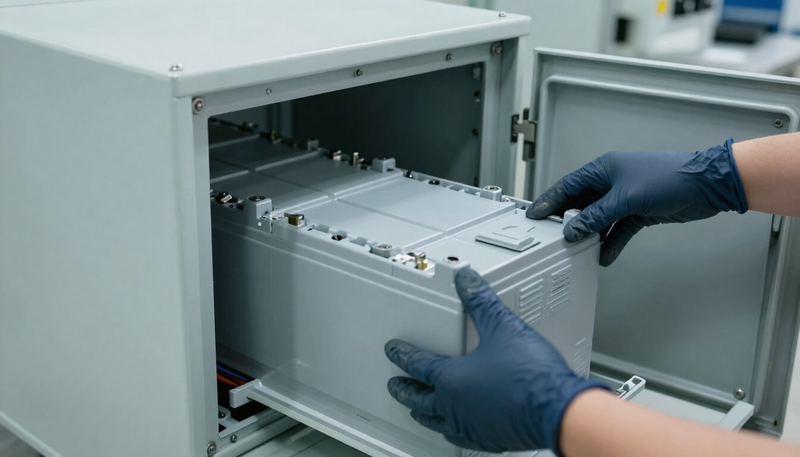
Capacity matters as well. Several of the heavier obligations, including the battery passport, the performance and durability documentation and the carbon footprint declaration, apply to rechargeable industrial batteries with a capacity above 2 kWh. Many UPS battery cabinets and some individual lithium-ion modules cross that line, so it is worth checking the rated capacity of each item on the commercial invoice.
What must an importer check before placing batteries on the EU market?
Before the first unit is sold, the importer should hold or have access to the EU declaration of conformity, the technical documentation and evidence that the CE marking and labels are correct. Since 18 August 2024, conformity assessment and the economic operator obligations of the regulation have applied, so batteries without them should not be released for sale.
In practice, we ask manufacturers for a short compliance file before the first shipment. It should include the EU declaration of conformity that names Regulation (EU) 2023/1542, the conformity assessment module used, the battery category and chemistry, the rated capacity in Wh or kWh, the label artwork and, for rechargeable industrial batteries above 2 kWh, the performance and durability information the regulation requires.
Labels deserve attention because they change in stages. The crossed-out wheeled bin symbol for separate collection has been mandatory since 18 August 2025. The general information label, showing details such as the manufacturer, battery category, chemistry and capacity, applies from 18 August 2026 or 18 months after the Commission's implementing act on label specifications enters into force, whichever is later. That implementing act had not been published by late October 2026, so the date is still moving, but it is safer to have compliant labels now than to relabel stock at a warehouse later. The QR code that links to battery information becomes mandatory on 18 February 2027 with no conditions attached.
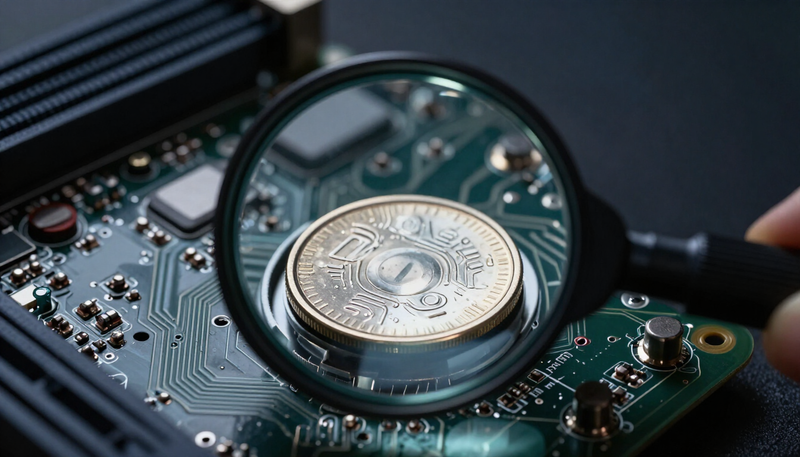
The importer's details are the step most often forgotten. A server built in Asia and shipped to a European customer usually carries only the manufacturer's name. The importer needs its own name and address on the battery, its packaging or the accompanying documents, and for batteries hidden inside a server the accompanying document is normally the realistic option.
Which EU Battery Regulation deadlines matter in 2026 and 2027?
Four dates drive most of the work for UPS and server importers: the label date in August 2026, the QR code and battery passport in February 2027 and due diligence in August 2027. The table below shows how each one applies to a typical UPS battery and to a server with a small built-in cell.
| Obligation | Applies from | UPS battery module or cabinet (industrial) | Server with coin cell or backup pack (portable) |
|---|---|---|---|
| Conformity assessment, CE marking, importer duties | 18 August 2024 | Yes | Yes |
| Separate collection symbol and producer responsibility | 18 August 2025 | Yes | Yes |
| General information and capacity labels | 18 August 2026, or 18 months after the implementing act, whichever is later | Yes | Yes |
| QR code on the battery | 18 February 2027 | Yes | Yes |
| Digital battery passport | 18 February 2027 | Yes, if rechargeable and above 2 kWh | No |
| Supply chain due diligence policy | 18 August 2027 | Yes, for operators above the turnover threshold | Yes, for operators above the turnover threshold |
| Carbon footprint declaration | Date set by a delegated act still pending | Yes, rechargeable above 2 kWh | No |
| Minimum recycled content (cobalt 16%, lead 85%, lithium 6%, nickel 6%) | 18 August 2031 | Yes, above 2 kWh | No |
The due diligence date is a good example of why it pays to follow the official text. The original regulation set it for 18 August 2025. Regulation (EU) 2025/1561, published in the Official Journal on 30 July 2025, moved it to 18 August 2027. Under the current text, companies below 40 million euros in net turnover are outside its scope, and a separate proposal under discussion would raise that threshold to 150 million euros.
A broader simplification package, known as Omnibus VIII, is also under negotiation. The Council agreed its position on 24 June 2026, but the changes are not law yet, and they touch the producer definition, substance labelling and removability for light vehicle batteries rather than the passport or the deadlines in the table.
Who registers as producer and pays for collection?
The producer is the operator that first makes a battery available on the market of a Member State, and it must be registered there before selling. For imported hardware, that is very often the importer, because it is the first company to supply the battery in that country.
Extended producer responsibility under Chapter VIII of the regulation has applied since 18 August 2025. A producer may only sell batteries in a Member State where it, or its authorised representative for producer responsibility, appears in the national register. Registration is national, so a manufacturer that ships UPS cabinets to Germany, Spain and the Netherlands may need three registrations, each with its own reporting and fees, usually handled through a producer responsibility organisation.
For industrial batteries, producers must take back waste batteries free of charge from end users, regardless of chemistry or origin, and finance their treatment and recycling. That obligation is easy to underestimate in data center projects, where a single UPS refresh can generate several tonnes of spent modules. It also sits next to, not instead of, the electronics rules. A server is electrical equipment under the WEEE framework, and its built-in battery is reported under the Battery Regulation, a split we explain in our guide to WEEE compliance for IT hardware.
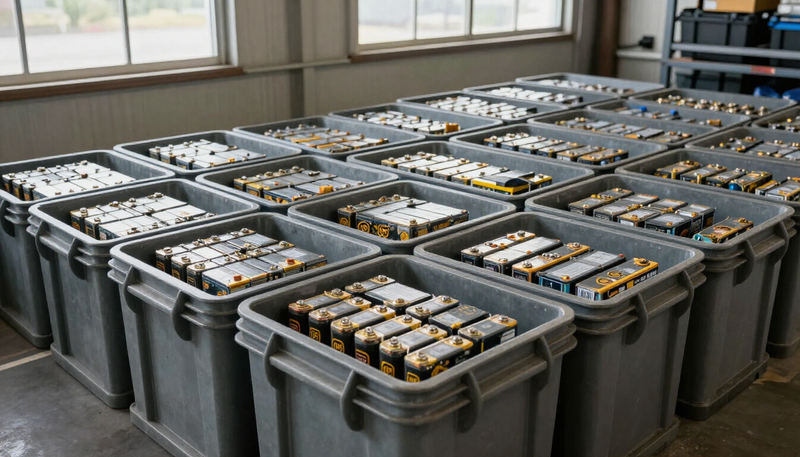
Non-EU manufacturers often ask whether they can avoid registering by letting the customer act as producer. Sometimes the contract structure allows it, but the customer must be the one that first makes the battery available in that country, and most data center operators do not want that role. Agreeing who the producer is before the first shipment saves weeks of discussion at the border.
What changes with the battery passport in February 2027?
From 18 February 2027, every rechargeable industrial battery above 2 kWh placed on the EU market needs a digital battery passport, accessible through the QR code. The passport is the responsibility of the economic operator that places the battery on the market, which for imported UPS modules is often the importer.
The passport is a structured data record for each individual battery. It carries general information about the manufacturer and model, the materials and chemistry, the carbon footprint information once that applies, performance and durability data and information on dismantling and end of life. Part of the data is public, and part is restricted to authorities, recyclers and other parties with a legitimate interest.
The obligation applies to each battery placed on the market from that date, not only to new models. A UPS battery cabinet sitting in a European warehouse in January 2027 and sold in March 2027 needs a passport if it is placed on the market after the deadline. Inventory planning for the first quarter of 2027 should take that into account, and so should orders for spare modules that will be shipped as replacements.
For integrated battery systems, the 2 kWh threshold is assessed on the battery as placed on the market. If a cabinet with shared management electronics is sold as one battery, its combined capacity counts. If modules are sold and used independently, each module is assessed on its own. This is a technical call that the manufacturer should document, because the importer will be the one explaining it to an inspector.
How a non-EU manufacturer can meet these duties without an EU entity
A manufacturer based in the United States, China, Brazil or anywhere else outside the EU can sell batteries and battery-powered hardware in Europe without opening a subsidiary. It needs an EU-established company to act as importer and, where required, as producer or authorised representative, with the compliance file and labels ready before shipment.
That is the role an Importer of Record plays. The IOR declares the goods to customs, pays duties and import VAT, appears as importer on the product and keeps the documentation that market surveillance authorities can request. Setting up EORI, VAT and CE responsibilities is covered in our guide on how to import into the EU without an EU entity.
Customs and battery compliance meet at the border more often than people expect. Lithium-ion modules also travel as dangerous goods, with their own UN numbers, state-of-charge rules and air freight limits, which we cover in detail in lithium UPS battery shipping. A shipment with a perfect battery passport can still be held if the dangerous goods declaration is wrong, and the reverse is also true.
A practical checklist for your next UPS or server shipment to the EU
The checklist below is the one we run through with clients before the first shipment of battery-powered hardware to Europe. It takes a few days to complete and avoids most of the questions that slow down clearance and market launch.
- Classify every battery in the shipment as portable or industrial, and record the rated capacity of each rechargeable industrial battery.
- Obtain the EU declaration of conformity under Regulation (EU) 2023/1542 and confirm the CE marking and the conformity assessment module.
- Check the labels: collection symbol now, general information label for the August 2026 date, QR code for February 2027.
- Add the importer's name, address and contact details to the battery, packaging or accompanying documents.
- Decide who the producer is in each Member State and complete national registrations before the first sale.
- For industrial batteries above 2 kWh, confirm who will create and maintain the battery passport from 18 February 2027.
- Align the dangerous goods paperwork, the commercial invoice and the battery data so customs and market surveillance see the same product.
None of these steps is difficult on its own. The risk comes from splitting them between a manufacturer outside the EU, a freight forwarder and a customer who assumes someone else is responsible. For the full text and official guidance, the European Commission maintains a page on the EU Batteries Regulation with the regulation and its implementing measures.
If you are planning UPS deliveries, battery cabinets or server rollouts in Europe for 2026 and 2027, Comex IOR Services can act as your Importer of Record in the European Union, review your battery compliance file before shipping and coordinate customs, VAT and producer obligations with your team. Tell us what you are shipping and where, and we will map out what needs to be in place before the first pallet leaves your factory.
Frequently asked questions
Who is the importer under the EU Battery Regulation?
The importer is the company established in the EU that places a battery from a third country on the EU market. A manufacturer based outside the EU cannot hold this role itself, so it needs an EU subsidiary, a distributor or an Importer of Record to act as importer.
Are UPS batteries industrial or portable batteries?
UPS battery modules and cabinets are typically industrial batteries, because they are designed for industrial use or weigh more than 5 kg. The small coin cell or backup pack inside a server is typically a portable battery incorporated in a product.
When does the EU battery passport become mandatory?
From 18 February 2027, every rechargeable industrial battery above 2 kWh, every light means of transport battery and every electric vehicle battery placed on the EU market needs a digital battery passport, accessible through a QR code on the battery.
Do servers with a built-in coin cell fall under the Battery Regulation?
Yes. Batteries incorporated in products are in scope, so the coin cell in a server needs the right labels and collection symbol, and the producer that first sells it in each Member State must be registered under extended producer responsibility rules.
How long must an importer keep the EU declaration of conformity?
Article 41 of Regulation (EU) 2023/1542 requires the importer to keep a copy of the EU declaration of conformity for 10 years and to provide the technical documentation to national authorities on request.
Was the battery due diligence deadline postponed?
Yes. Regulation (EU) 2025/1561 moved the supply chain due diligence obligations from 18 August 2025 to 18 August 2027. Companies below 40 million euros in net turnover are outside their scope under the current text.