
Bonded warehouse for IT spare parts: how to keep server and network spares close to customers in Argentina, Brazil and the US
By Comex IOR Services · Published · Last updated · 13 min read

In this guide
- What is a bonded warehouse for IT spare parts, and why use one?
- How long can spare parts stay in a bonded warehouse in each market?
- How does a US bonded warehouse work for server spares?
- Can you hold spare parts under entreposto aduaneiro in Brazil?
- Why does Argentina need a different spares strategy?
- What about the European Union and Uruguay?
- Who should own the stock and act as importer?
- How do you size a spares pool before choosing a warehouse?
- Frequently asked questions
A bonded warehouse for IT spare parts lets you store server, storage and network spares near your customers without paying import duties and taxes until each part is actually used. In the United States and Brazil that works for years; in Argentina the storage window is measured in months, so the spares plan has to be different.
If you sell servers, switches or storage arrays under a support contract with a four-hour or next-business-day replacement promise, you already know the problem. The faulty power supply, the failed drive or the dead line card has to be swapped quickly, and shipping each part from a central depot in another country means waiting for an international courier, a customs declaration and a tax payment every single time. One delayed part can cost more in service credits than the part itself.
Keeping a local stock solves the speed problem but creates a cash problem. Import a full spares kit outright and you pay duties and taxes on hardware that may sit on a shelf for two years, or never be used at all. A bonded warehouse sits in between: the parts are physically close to the customer, but legally they have not yet been imported for consumption. This guide explains how that works in the three markets in the title, what changes in the European Union and Uruguay, and who should hold the stock when your company has no entity in the country.
What is a bonded warehouse for IT spare parts, and why use one?
A bonded warehouse is a facility approved and supervised by customs where imported goods can be stored with duties and import taxes suspended. For IT spare parts, it means a vendor can position drives, power supplies, fans, memory and optics close to customers and pay tax only on the units withdrawn for a repair.
The suspension is the whole point. Customs treats the stored parts as goods still under its control, so the tax bill is triggered by the withdrawal, not by the arrival. When a technician needs a replacement controller for a customer in São Paulo or a hard drive for a data center in Virginia, the part leaves the warehouse under an import declaration for that one unit, duties and taxes are paid on it, and the rest of the stock stays suspended.
There is a second benefit that hardware companies often overlook. Parts that are never used can usually leave the warehouse for another country without ever having been taxed in the first one. If a product line reaches end of support, or a regional stock turns out to be oversized, the spares can be re-exported to where they are needed. Imported outright, the same parts would carry a tax cost you could not recover.
The trade-off is control. A bonded warehouse is run under strict rules: every movement in and out is recorded, inventory has to match the customs records, and the operator answers to customs for any difference. That is why the role of the party that owns and declares the stock matters as much as the warehouse itself, a point we come back to below.
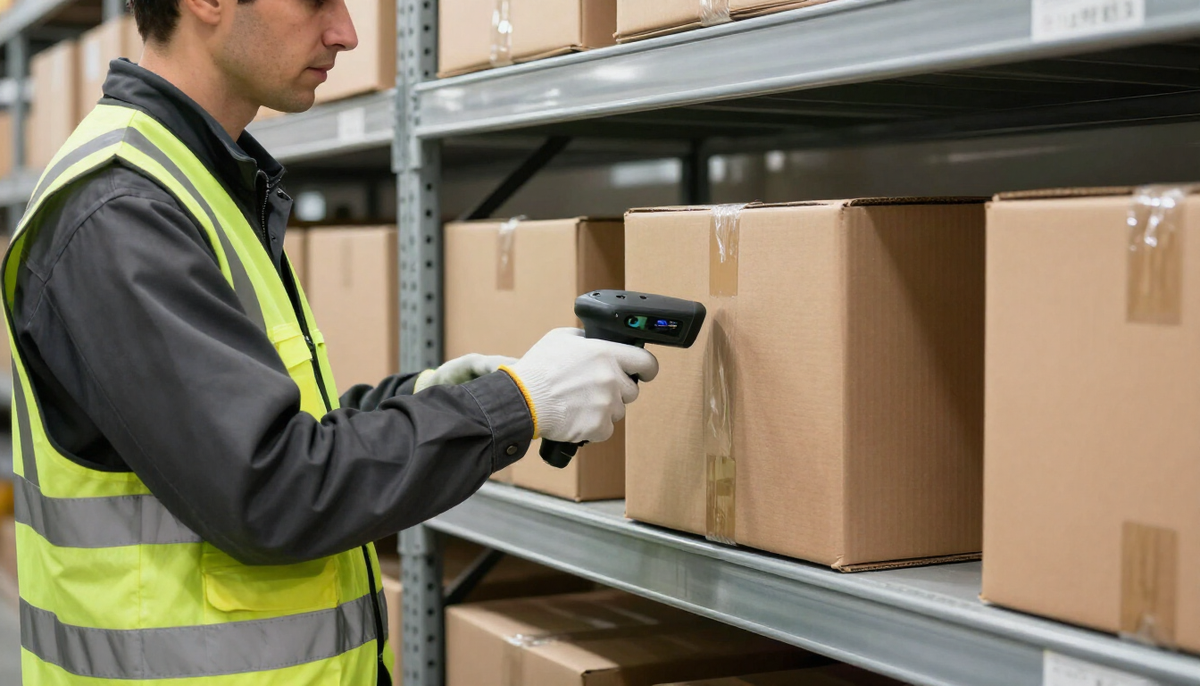
How long can spare parts stay in a bonded warehouse in each market?
It depends on the country more than on the product. The United States allows up to five years, Brazil one year extendable to a maximum of three, and Argentina only one to three months under its storage destination. The table below summarises the regimes for the markets Comex IOR Services covers.
| Market | Regime for stored spares | Maximum storage period | What happens at the end |
|---|---|---|---|
| United States | Bonded warehouse (19 CFR Parts 19 and 144) | 5 years from the date of importation, longer only with CBP approval | Withdraw for consumption paying duty, export, or move to another warehouse |
| Brazil | Entreposto aduaneiro na importação (IN SRF 241/2002) | 1 year from admission, extendable in special situations up to 3 years | Import for consumption, re-export, export or transfer to another special regime |
| Argentina | Depósito de almacenamiento (Código Aduanero, Decreto 1001/1982) | 3 months by sea or river, 1 month by land or air, with limited extensions | Give the goods another destination, or customs sells them |
| European Union | Customs warehousing under the Union Customs Code | Set by the procedure and the authorisation | Release for free circulation, re-export or another special procedure |
| Uruguay | Depósito aduanero and free zones | Depends on the regime chosen | Import for consumption or re-export |
The numbers explain most strategic decisions. A five-year window in the United States is long enough to cover the full support life of most enterprise hardware. Three years in Brazil covers most of it, with the right paperwork. One to three months in Argentina is a buffer for clearance, not a place to keep a spares pool.
How does a US bonded warehouse work for server spares?
In the United States, imported merchandise can stay in a CBP bonded warehouse for up to five years from the date of importation, with duties paid only when goods are withdrawn for consumption. For server and network spares, that usually means a public warehouse near a hub airport and a withdrawal entry for each part or batch released.
The federal rules sit in two places. 19 CFR Part 19 defines the classes of customs warehouses, and the relevant ones for spare parts are Class 3, a public bonded warehouse used exclusively for imported merchandise, and Class 2, an importer's private bonded warehouse used only for goods belonging or consigned to its proprietor. Most foreign vendors use a Class 3 facility run by a logistics provider, because setting up a private warehouse means applying to CBP for your own premises. The storage period and the withdrawal rules are in the CBP bonded warehouse regulations in 19 CFR Part 144, which state that merchandise must not remain in a bonded warehouse beyond five years from the date of importation, unless CBP allows a longer period on request.
Two practical details matter for IT hardware. First, simple handling such as relabelling, repacking or sorting kits is allowed only in a warehouse designated for manipulation, Class 8, or one that holds that designation, and each manipulation needs a prior permit from the port director. Second, the importer that enters the goods into the warehouse needs a customs bond and an importer number, so a foreign company without a US entity has to solve that before the first pallet arrives. Our guide on the customs bond for non-resident importers covers which bond type fits a recurring spares flow.
Remember that duty is calculated when the part is withdrawn, under the rules in force on that date. If an additional tariff applies to a product's country of origin by the time you withdraw it, the stored part is not protected from it just because it arrived earlier.
Can you hold spare parts under entreposto aduaneiro in Brazil?
Yes. Brazil's entreposto aduaneiro na importação, regulated by IN SRF 241/2002, lets imported parts stay in an authorised customs facility with federal taxes suspended for one year from admission, extendable in special situations up to a maximum of three years. Replacement and repair parts for machines and equipment are expressly covered.
The regime was designed with exactly this use in mind. Article 16 of IN SRF 241/2002 lists, for dry ports, parts and other materials for the replacement, maintenance or repair of vehicles, machines and equipment, and machines with serial numbers imported for maintenance or repair and later returned abroad. Article 25 sets the one-year period and Article 27 allows successive extensions up to three years when the beneficiary justifies the request.
The detail that catches foreign vendors is ownership and payment. The regime only admits goods imported without foreign exchange cover, which in practice means the parts still belong to the foreign supplier while they sit in the facility. The beneficiary is the consignee, a legal entity established in Brazil, and when the parts are sold the buyer files the import for consumption based on a deal made directly with the owner abroad. That structure suits a vendor who wants to keep ownership until the moment of use, but it requires a Brazilian party that can act as consignee and declarant, plus a facility, usually a dry port or an airport bonded area, that offers the regime.
Each withdrawal is then a normal import: the part pays import duty, IPI, PIS and Cofins, and ICMS on the value at that moment. Before you size a Brazilian stock, map the full tax cost of a single withdrawal, because ICMS rates vary by state and change the comparison with on-demand shipping.

Why does Argentina need a different spares strategy?
Because Argentina's storage destination is short. Under the Código Aduanero and Decreto 1001/1982, goods can remain in depósito de almacenamiento for three months when they arrive by sea or river and one month by land or air, and extensions are limited. After that, customs can sell them.
Article 286 of the Código Aduanero defines the depósito de almacenamiento as the destination that lets imported goods stay stored under customs control for a fixed period before receiving another authorised destination, and Article 291 leaves the period to the regulations. Decreto 1001/1982 sets it at three months or one month depending on the mode of transport, allows the customs authority to extend it when the nature of the goods justifies it, and caps an exceptional extension at the length of the original period. That is useful for timing a clearance, for example while a technical certificate is being issued, but it does not support a stock of spares meant to last the length of a three-year support contract.
So in Argentina most vendors choose one of two routes. The first is to import a smaller, carefully sized spares kit for consumption, through a local importer, and accept the tax cost up front on the parts with the highest failure rates. The second is to keep the pool outside the country, in the United States, Uruguay or Brazil, and ship each part on demand under an express or regular import with a pre-arranged importer. Which route is cheaper depends on duties, the advance VAT and income tax collections, and the value of the hardware you would be immobilising, so it pays to run a landed-cost review before stocking spares in Argentina rather than deciding by instinct.
Whichever route you choose, someone in Argentina has to be the registered importer for each part. Our guide to the Importer of Record in Argentina explains how that role works when your company has no local entity.
What about the European Union and Uruguay?
Both have regimes that work for spares. The EU offers customs warehousing under the Union Customs Code, with duties and import VAT suspended while goods are stored, and Uruguay lists the depósito aduanero among its customs regimes and adds free zones, which many vendors use as a regional hub.
In the EU, the customs warehousing procedure needs an authorisation from the customs authority of a member state, and the storage facility can be public or private. For a non-EU hardware vendor, the questions are who holds the authorisation, who is the declarant when parts are released for free circulation, and how import VAT is handled at that moment. Releasing a part in one member state and using it in another also has VAT consequences that should be planned before the stock is placed.
Uruguay's Código Aduanero, approved by Law 19.276, names the depósito aduanero as one of its customs regimes, and the country's free zones are widely used to hold regional stock that serves Argentina, Brazil and Paraguay. For a spares pool that covers several South American customers, a Uruguayan hub can be the practical answer to Argentina's short storage window.
Who should own the stock and act as importer?
The party that owns the parts and the party that declares them to customs do not have to be the same, but both roles must be clear before the first shipment. For a vendor without a local entity, an Importer of Record usually declares the withdrawals and answers to customs, while ownership stays with the vendor until each part is used.
This matters for three reasons. First, every withdrawal is an import, and the importer is responsible for the classification, the customs value and the product rules on that part, including telecom approvals for optics or radio modules where they apply. Second, the importer pays or advances the duties and taxes, so the commercial agreement has to say how those are recovered. Third, when a defective part comes back for repair or replacement, the return leg links to the original entry, and only the party that holds that entry can claim the relief available. Our guide to hardware RMA returns covers that return flow in each market.
If the concept of an Importer of Record is new to your team, start with what an Importer of Record is and when you need one, then decide market by market whether a bonded stock, a small imported kit or on-demand shipping fits your service levels best.
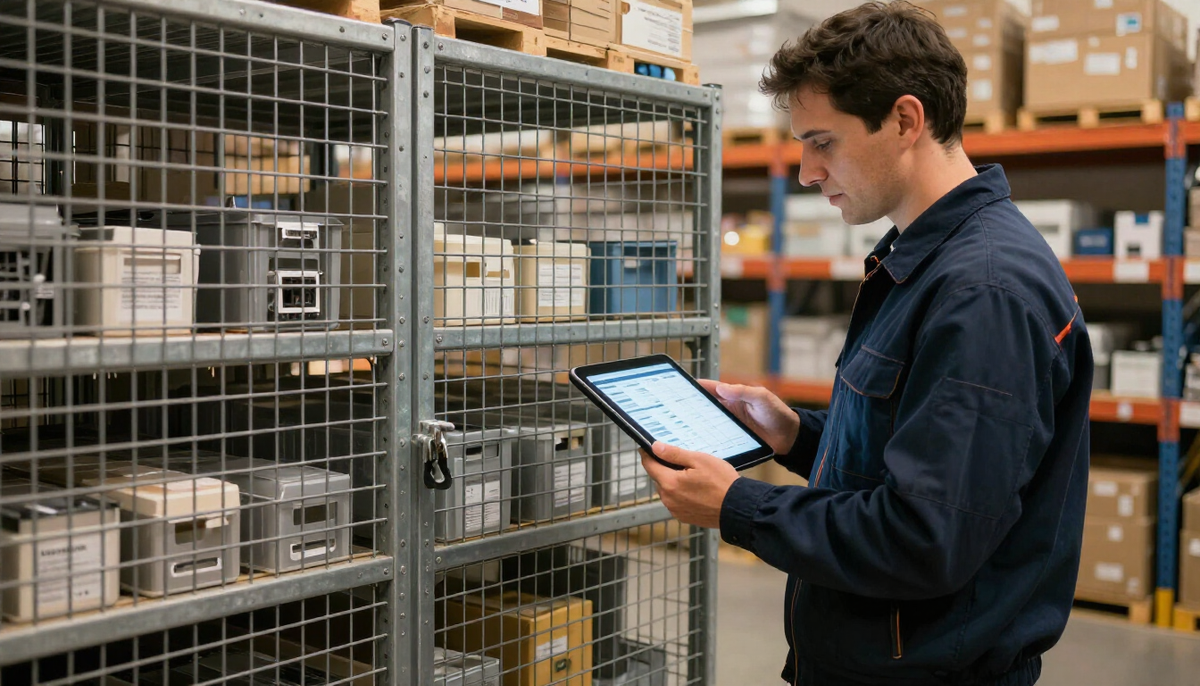
How do you size a spares pool before choosing a warehouse?
Start from the service level and the installed base, not from the warehouse. The parts worth holding locally are the ones that fail often, are needed fast and are expensive to ship urgently; everything else can stay in a central depot.
A practical sizing exercise looks at the contracted response times, the historic failure rates per part number, the number of units installed in each country and the lead time from your central stock. Drives, power supplies and fans usually justify local stock in every market; motherboards, GPU modules and chassis often do not, because they fail rarely and are expensive to immobilise. Once the list is clear, the choice between a US bonded warehouse, a Brazilian entreposto, an imported kit in Argentina or a Uruguayan hub becomes a cost comparison rather than a guess.
Keeping spares close to customers is one of the simplest ways to protect support margins, as long as the customs structure behind the stock is right from day one. If you want to set up a spares pool in Argentina, Brazil, the United States, the European Union or Uruguay without opening a local company, talk to Comex IOR Services about our Importer of Record service for spare parts. We will help you choose the regime, hold the importer role and keep every withdrawal compliant.
Frequently asked questions
What is a bonded warehouse for IT spare parts?
It is a customs-approved facility where imported spare parts such as drives, power supplies and optics are stored with duties and import taxes suspended. Taxes are paid only on the parts withdrawn for a repair, and unused parts can usually be re-exported without being taxed.
How long can spare parts stay in a US bonded warehouse?
Up to five years from the date of importation under 19 CFR 144.5, or longer if CBP approves a request. Duty is calculated when each part is withdrawn for consumption, under the rules in force on that date.
Does Brazil allow spare parts to be stored without paying import taxes?
Yes. Under the entreposto aduaneiro na importação regulated by IN SRF 241/2002, parts for the maintenance and repair of machines and equipment can stay in an authorised facility for one year, extendable in special situations up to three years, with federal taxes suspended. The goods must be imported without foreign exchange cover and consigned to a company established in Brazil.
Can I keep a spares pool in a bonded warehouse in Argentina?
Not for long. Decreto 1001/1982 limits the depósito de almacenamiento to three months for goods arriving by sea or river and one month by land or air, with limited extensions. Most vendors import a small kit for consumption or serve Argentina from a hub abroad.
Who declares the withdrawals if my company has no local entity?
An Importer of Record can declare each withdrawal, pay or advance the duties and taxes and answer to customs, while ownership of the stock stays with the vendor until each part is used. The same importer should handle repair returns linked to the original entry.